

 Products & Services







 400 676 5650
In our previous article, we provided a comprehensive overview of the development background and future trends of the fastener industry. This time, we delve deeper into the topic, thoroughly analyzing the multiple challenges currently facing the fastener industry and systematically introducing effective strategies and solutions.
Three Major Dilemmas Stifling the Fastener Industry
Under future industry trends, the fastener industry faces challenges in production management, supply chain coordination, cost control, and more. These issues not only affect operational efficiency but also constrain the overall upgrade of the sector.
01Production Management Challenges
Under future industry trends, the fastener industry faces challenges in production management, supply chain coordination, cost control, and more. These issues not only affect operational efficiency but also constrain the overall upgrade of the sector.
1. Limited Process Upgrades, Slow High-End Development
Statistics show that the current Chinese fastener industry primarily produces low-to-mid-end products, accounting for up to 83%. This has led to overcapacity in low-end segments and severe homogenization competition. Meanwhile, high-end fields (e.g., new energy vehicles, aerospace) remain reliant on imports due to insufficient domestic supply. Companies aiming for quality improvement lack effective data support, with process optimization largely dependent on experience rather than data-driven analysis, slowing progress. High-end fasteners demand stringent temperature control, precision, and timing parameters, requiring a robust quality management and traceability system.
Furthermore, general fastener production batches are typically measured in buckets or boxes. Due to the sheer volume, similar appearance and dimensions, and complex workshop environments, paper records are prone to illegibility. This makes manual reporting and material tracking ineffective, preventing accurate distinction of process parameters and error-proofing data for each batch. Transparency and intelligent management of production processes remain areas needing breakthroughs.
2. Fragmented Orders and Low On-Time Delivery Rates
The normalization of small-batch orders differs from traditional mass production. Order quantities per batch decrease while total order count increases, with rapid market changes often leading to urgent orders or schedule adjustments.
- Delivery Guarantee Issues: When sales teams accept orders, the planning department cannot provide accurate delivery timelines in time, resulting in delays and harming corporate reputation.
- Slow Order Response: High order volumes, frequent urgent insertions, complex rules and constraints, and manual scheduling slow response times, making it difficult to assess impacts on other orders. This triggers priority conflicts between processes, disrupting production rhythm and on-site stability.
- Inefficient Resource Allocation: The coexistence of standard and non-standard fasteners, combined with varying specifications, materials, and surface treatments, creates an extremely large number of SKUs. Each SKU may correspond to different process routes, material requirements, and production cycles. Manual scheduling cannot handle the massive and complex data, failing to produce globally optimal production plans. For example, a cold heading changeover takes at least 4-5 hours; improper planning leads to downtime waste from frequent changeovers.
02Supply Chain Coordination Challenges
Beyond production management, supply chain instability also poses challenges to the industry, as detailed below:
1. Severe Information Silos
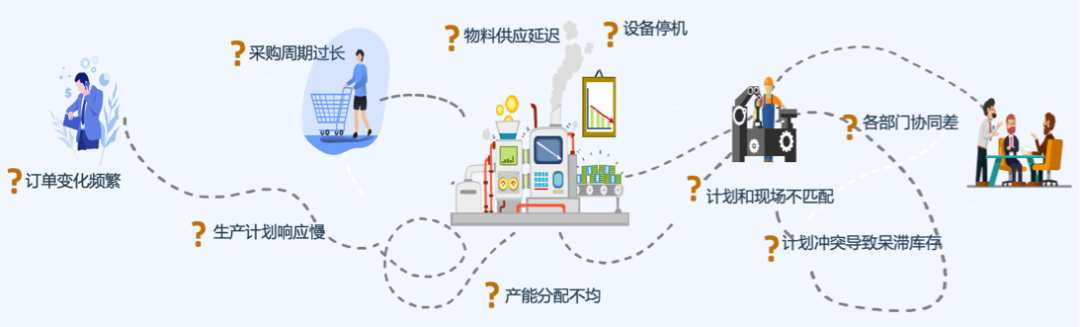
Fastener production involves multiple departments such as planning, procurement, engineering, design, production, quality, and sales. The lack of a unified management system scatters key data like production plans, semi-finished/finished goods inventory, equipment load, and order progress. Departments lack data interconnectivity, preventing management from obtaining a holistic view. Digital systems operate in isolation, failing to achieve expected outcomes.
2. Opaque Multi-Plant Collaboration Progress
Some fastener companies outsource processes (e.g., heat treatment, electroplating) to third parties or collaborate across multiple plants. In such cases, the capacity, delivery, and quality of outsourced partners and plants directly impact final customer deliveries. However, opaque information, communication delays, and poor coordination often disrupt production plans and reduce overall delivery capability.
3. Insufficient Supply Chain Resilience
The fastener industry has numerous supply chain links—raw material procurement, production, sales, transportation, etc.—all interconnected. The current blockchain supply chain management system is inadequate and lacks the flexibility to respond to market fluctuations.
03Cost Control Challenges
As market competition intensifies, cost control remains a key challenge for the fastener industry. Key aspects include:
1. Raw Material Price Volatility
Market prices of basic raw materials like steel and aluminum fluctuate frequently due to supply-demand dynamics and international trade policies, putting pressure on cost control. Scientific production and sales forecasting combined with dynamic optimization strategies are urgently needed to ensure production continuity and effectively manage costs.
2. Rising Labor Costs
In recent years, labor costs have increased year by year, and recruitment difficulties have emerged. However, most companies still rely heavily on manual scheduling and management, with low automation levels. High employee turnover also hinders knowledge transfer, further raising costs.
3. Constrained Capacity Enhancement
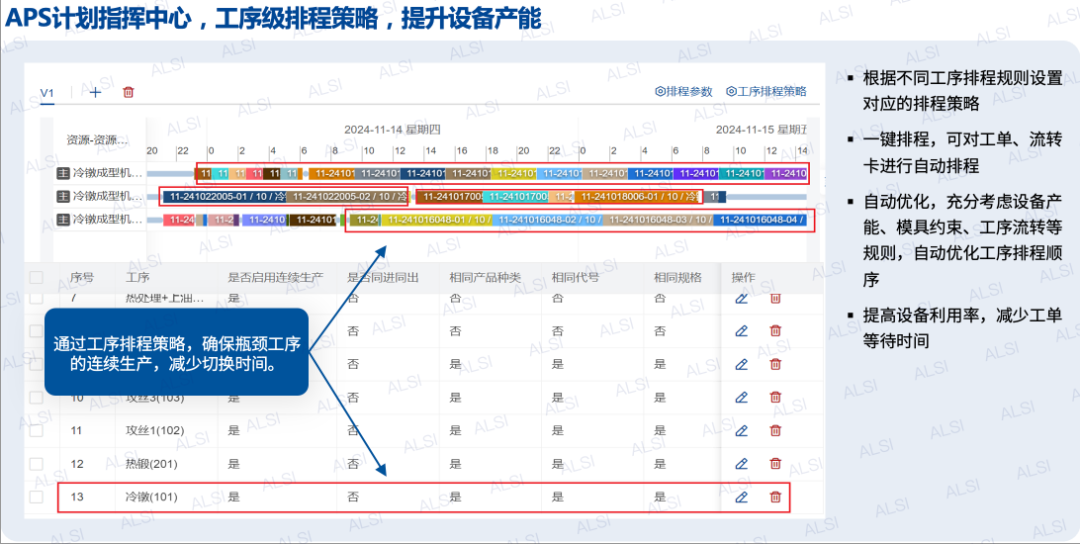
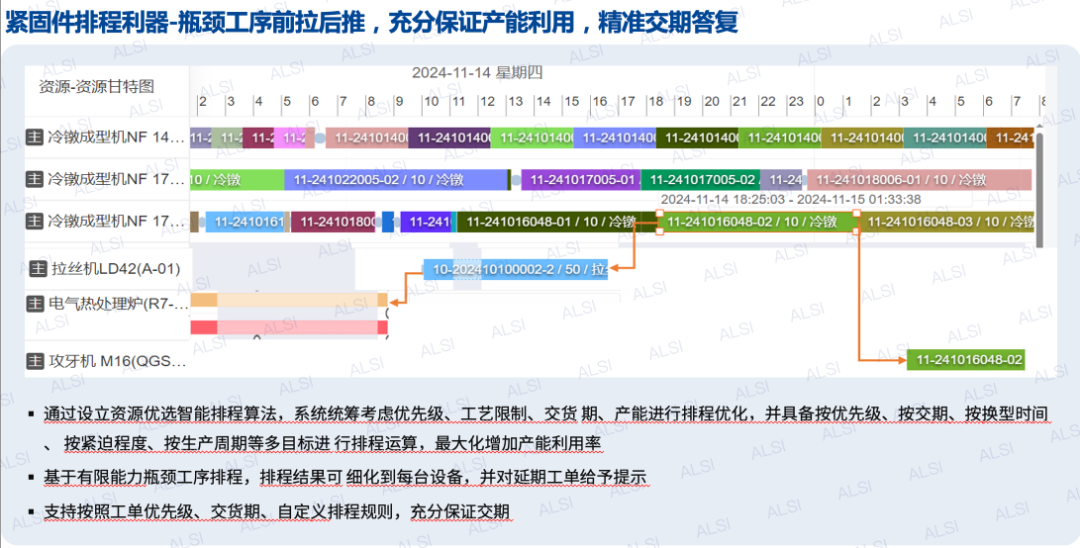
- Bottleneck Process Capacity: Cold heading and hot forging are key processes in fastener production, often bottlenecks due to high equipment investment costs, heavy loads, and long cycle times. Backlogs or equipment failures in these processes severely impact preceding and subsequent processes (pickling, annealing, shot blasting, thread rolling/tapping, heat treatment, electroplating, etc.), disrupting overall production plans.
- Low Equipment Utilization: Lack of real-time equipment condition monitoring hinders scientific scheduling, leading to resource waste. Inadequate optimization of equipment load and insufficient data on anomalies like maintenance and downtime further reduce production efficiency.
Digital Solutions for Breaking Through
Facing challenges of high-end transformation, customization, and supply chain collaboration, fastener companies urgently need digitalization to enhance competitiveness. Alps proposes a "Precision, Connectivity, Cost Reduction" strategy, leveraging smart manufacturing technologies to optimize production management, improve supply chain collaboration, reduce costs, and strengthen flexible manufacturing. This helps companies gain an edge in fierce market competition and move toward efficient, intelligent, and sustainable development.
Precision
Refined Management to Strengthen Manufacturing Core Competitiveness
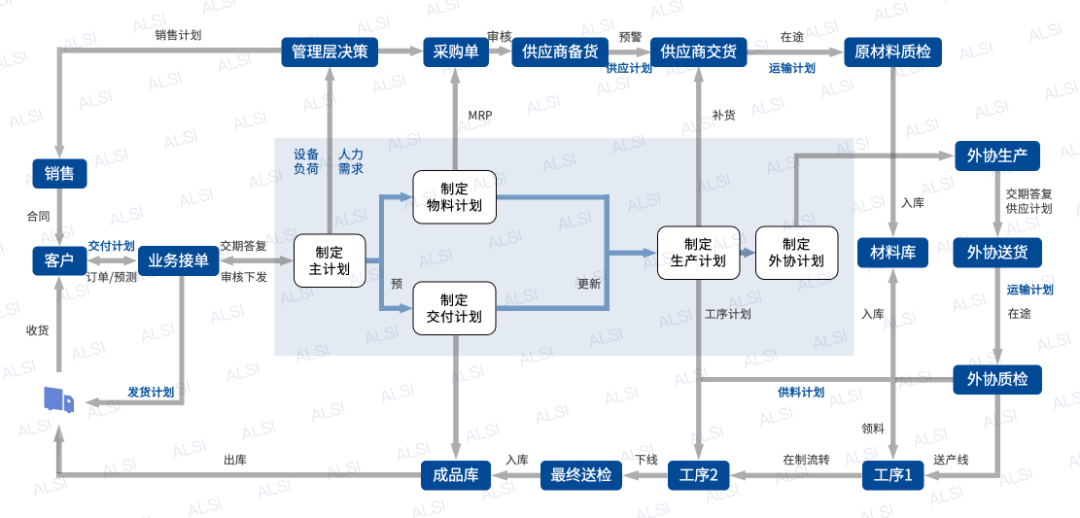
1. Accurate Forecasting
Precision management is the core of manufacturing upgrades. Through digitalization, companies can enhance forecasting, optimize scheduling, and achieve full-process transparent control:
Accurate forecasting: By integrating historical data, customer orders, and market trends, optimize inventory management and production strategies to reduce overstock and obsolescence risks and improve capital efficiency. Meanwhile, increase R&D investment to overcome core technologies for independent production of key components, break into the high-end fastener market, and increase added value.
2. Real-Time Control
Leverage systems like MES to monitor key process parameters (temperature, process, etc.) and output in real time, achieving comprehensive batch traceability to ensure stable and controllable product quality.
3. Dynamic Scheduling
Support intelligent multi-process, multi-equipment scheduling, optimize production progress, dynamically adjust resource allocation, improve equipment utilization, and ensure efficient production.
Connectivity
Building an Intelligent Supply Chain for Efficient Collaboration
Efficient supply chain collaboration is crucial for fastener companies to improve delivery capabilities. The "Connectivity" strategy helps companies break information silos and build an end-to-end intelligent supply chain system:
1. Human-Machine System Integration
Connect equipment and production lines via IoT technology for real-time production status monitoring, reducing abnormal downtime and resource waste.
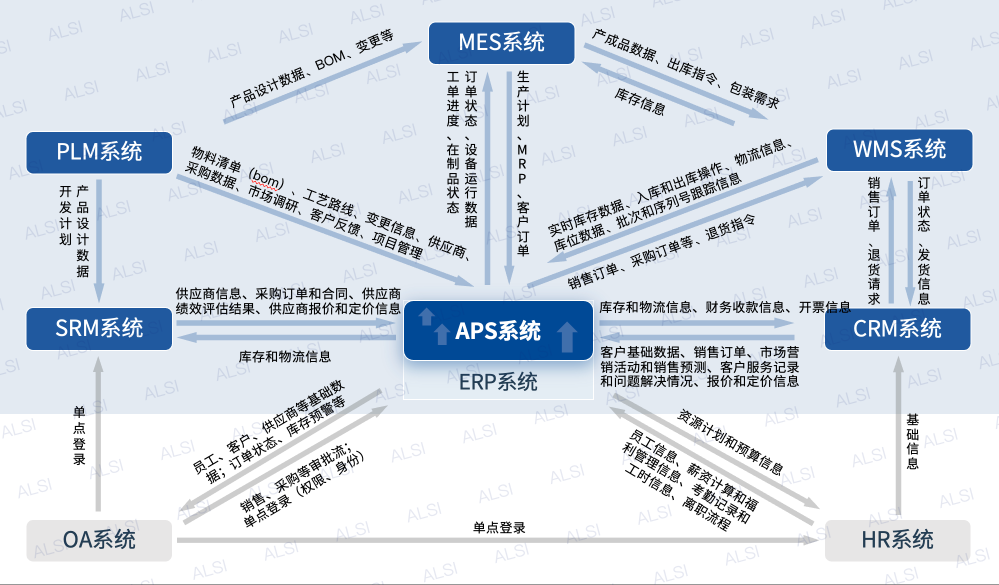
2. Internal Data Interoperability
Use APS systems to integrate core business systems such as ERP, MES, and PLM, consolidating planning, procurement, production, quality, and sales information into a unified data platform. This breaks down departmental information barriers, enabling data interconnection and allowing management to monitor plant operations in real time for improved responsiveness.
3. External Supply Chain Collaboration
Integrate raw material suppliers, processing plants, and logistics providers to create a fastener industry ecosystem. Share order demand, delivery progress, and quality data in real time, improving synchronization between the company and outsourced partners or multiple plants. Reduce schedule changes caused by information lag and enhance supply chain resilience to market fluctuations.
Cost Reduction
Lower Costs, Achieve "Small but Beautiful" Flexibility
With intense competition in low-end products and shrinking profit margins, the fastener industry can leverage APS systems for flexible manufacturing to meet personalized, small-batch, and multi-variety order demands while reducing production costs, ensuring profitability amid fierce competition.
1. Reduce Labor Dependency
Introduce intelligent scheduling and automated management to maximize equipment capacity, balance loads across processes, reduce reliance on manual experience, optimize workforce allocation, lower labor costs, and improve production stability.
2. Optimize Bottleneck Processes
For key processes (e.g., cold heading, hot forging), implement lean scheduling, simulation analysis, and kitting checks to reduce resource waste and improve capacity utilization.
3. Precise Inventory Management
Combine with WMS systems for precise material flow control, reducing inventory buildup, improving production flexibility, and lowering overall operational costs.
The future of the fastener industry is here. Whether pursuing high-end development or flexible manufacturing, building a rapid-response ecosystem economy makes digital transformation imperative. By comprehensively improving technology, flexible manufacturing, and supply chain collaboration, companies can seize opportunities, plan ahead, and maintain a competitive edge in the global market.