

 Products & Services






 400 676 5650
I. Industry Background
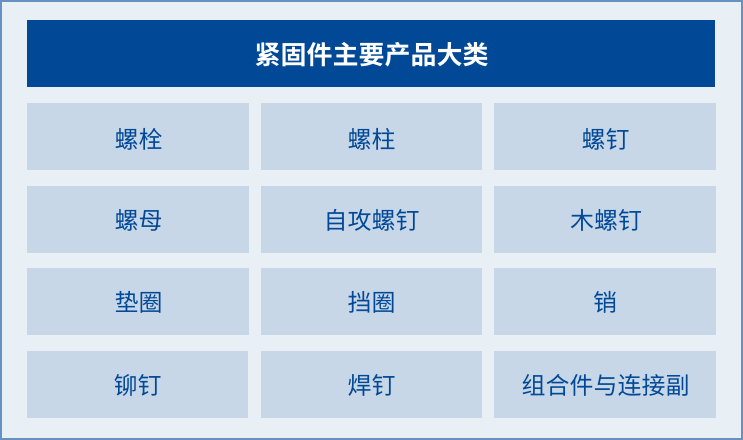
Fasteners are a collective term for mechanical parts used to secure two or more components or structures together, forming a single assembly. Based on product form, they are typically categorized into 12 types: bolts, studs, screws, nuts, self-tapping screws, wood screws, washers, retaining rings, pins, rivets, weld studs, assemblies, and connection pairs.
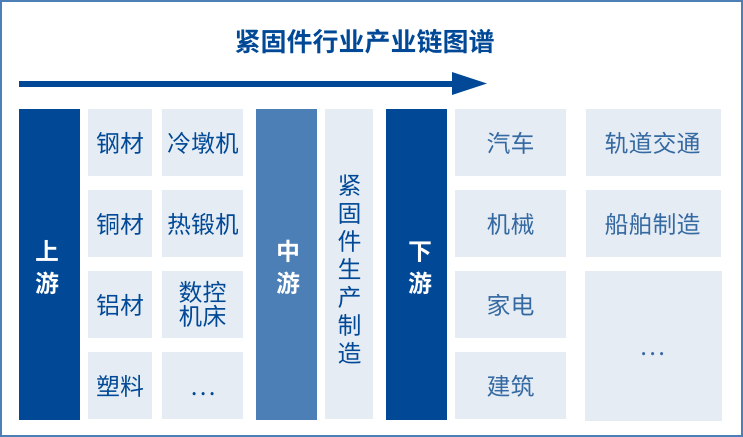
The upstream of the fastener industry chain includes raw material and production equipment manufacturers, primarily involving steel, copper, aluminum, plastics, and other raw materials, as well as cold heading machines, hot forging machines, and other equipment. Compared to upstream industries, the fastener industry has a vast number of downstream enterprises and is one of the most widely used mechanical foundational components, covering sectors such as automotive, machinery, electronics, energy, and power, earning it the reputation as the "rice of industry."
Currently, China's fastener industry has formed relatively concentrated industrial clusters, primarily located in the Yangtze River Delta (e.g., Jiaxing, Zhejiang; Jiangsu), the Pearl River Delta (e.g., Dongguan, Shenzhen), and the Bohai Rim region (e.g., Tianjin).
II. Current Industry Development Status
As the world's largest fastener producer, China has seen steady growth in market size over the past decade. In 2019, the revenue of China's fastener industry was 142.756 billion yuan. The market contracted in 2020 due to the pandemic but subsequently recovered, with an average growth rate of approximately 3.09% from 2021 to 2023. In 2024, it grew to 159.31 billion yuan, and it is expected to surpass 167.519 billion yuan in 2025. By 2030, the market size of China's fastener industry is projected to exceed 200 billion yuan. Future market growth is expected to stabilize, with a growth rate between 4.02% and 5.29%, but the overall trend is slowing. This indicates that while the industry still has room for growth, competition among enterprises is intensifying, requiring companies to enhance their competitiveness.
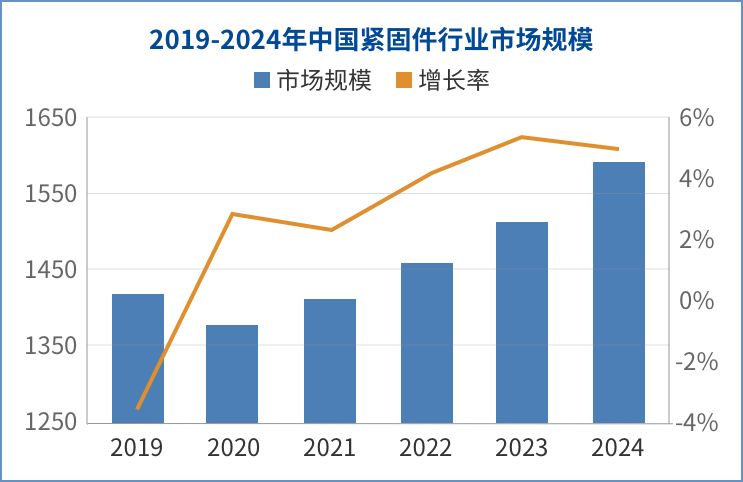
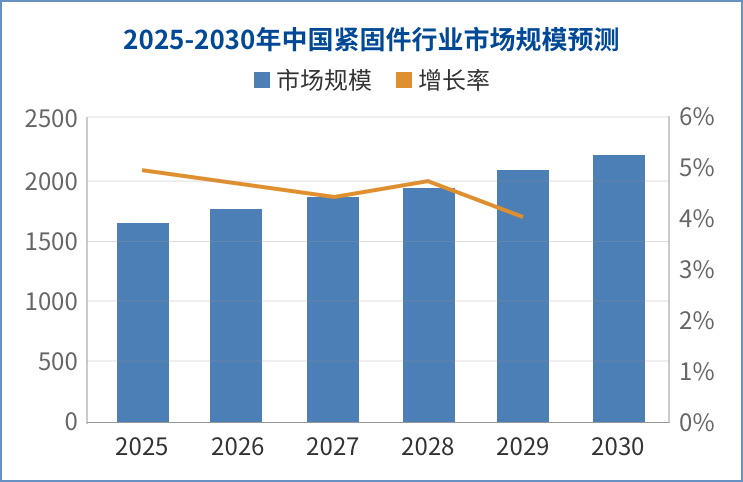
Data Source: Zhiyan Consulting, Forward Industry Research, Alps Intelligent Manufacturing Institute
In terms of export markets, Europe and North America are the primary destinations for Chinese fasteners. However, in recent years, with the implementation of China's "Belt and Road" initiative, demand from emerging markets such as Southeast Asia and the Middle East has been growing rapidly. Export sales grew rapidly from 2020 to 2022, increasing from 6.6 billion USD (2019) to 13.6 billion USD (2022), but declined to 11 billion USD in 2023. From January to October 2024, export value was 7.6 billion USD. The fluctuations in export markets may be related to changes in the international economic environment, increased competition in foreign markets, and rising costs for domestic enterprises.
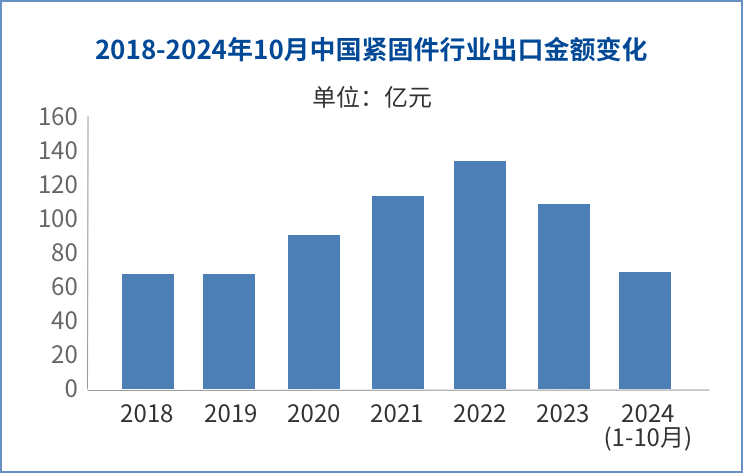
Data Source: China Customs, Zhiyan Consulting
From a downstream perspective, fasteners are primarily used in the automotive, construction, power, machinery, and other industries, with the automotive sector showing the most significant demand growth. In 2024, the automotive industry remained the top consumer of fasteners, accounting for 58.36% of total sales, a substantial increase from 35.84% in 2022. This indicates that the rise of new energy vehicles has directly boosted demand for fasteners. The power industry's share also rose from 12.10% in 2022 to 19.90%, driven by the global promotion and development of new energy sources (e.g., wind and nuclear power). In contrast, the construction industry's share dropped to 15.18%, a sharp decline from 30.36% in 2022, possibly due to fluctuating demand in the construction sector, adjustments in project scale, and intensified market competition.
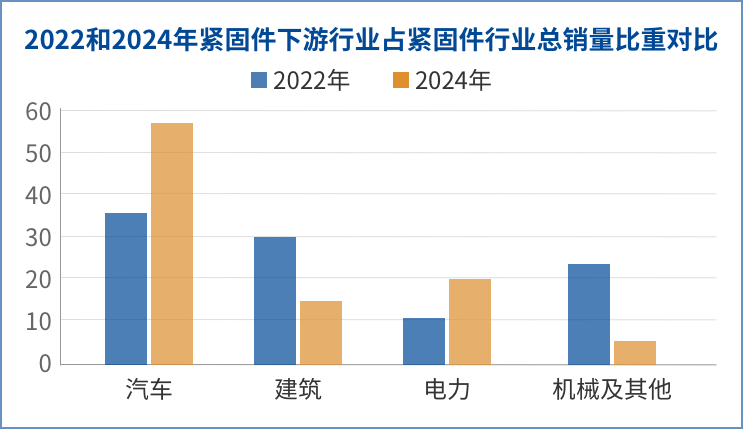
Data Source: Huajing Industry Research Institute, Alps Intelligent Manufacturing Institute
III. Future Industry Trends
1. Industry Upgrading toward High-End Products
In recent years, the fastener industry has shown a significant trend toward high-end development, particularly driven by high-growth sectors such as new energy vehicles, aerospace, rail transit, and renewable energy. According to statistics from Forward Industry Research, China's new energy vehicle production was 3.521 million units in 2021, 6.887 million in 2022, 9.495 million in 2023, and an estimated 12.888 million in 2024, with an average annual growth rate exceeding 40%. The application ratio of high-strength bolts, high-temperature resistant nuts, and anti-corrosion connectors in new energy vehicles increased from 25% in 2020 to 37% in 2024.
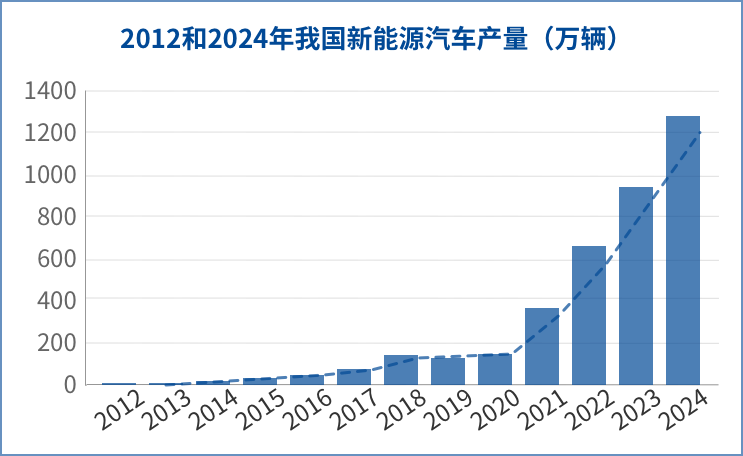
Data Source: China Association of Automobile Manufacturers, Forward Industry Research
With the steady growth of global newly installed wind power capacity, demand for embedded sleeves, whole-machine bolts, and anchor bolt assembly fasteners is expected to reach 7.93 million embedded sleeves, 60.32 million whole-machine bolts, and 28,723 anchor bolt assemblies in 2025.
The aerospace industry imposes stricter material requirements, including high-temperature resistance, corrosion resistance, and ultra-high strength. In 2024, the market size for high-end fasteners in China's aerospace sector exceeded 20 billion yuan, up 12% year-on-year. Titanium alloy fasteners, due to their high strength and lightweight properties, are widely used in aircraft engines and airframe structures. The global aerospace industry is expected to maintain an annual growth rate of 5%-6%.
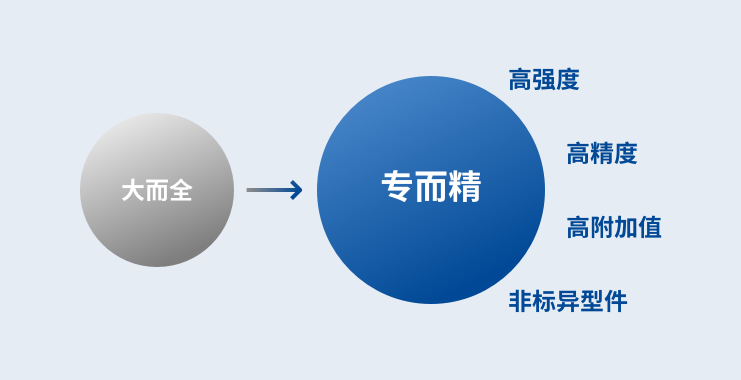
Meanwhile, the implementation of the "Made in China 2025" strategy has further promoted technological innovation in foundational components. The fastener industry is transitioning from "large and comprehensive" to "specialized and refined," with high strength, high precision, high added value, and non-standard special-shaped parts becoming the main direction for future development. In 2024, the share of high-end fasteners in China's market rose from 10% in 2020 to 17%, but compared to over 40% in Europe and the United States, there is still significant room for improvement.
2. Restructuring of Supply Chain Industrial Clusters
The fastener manufacturing industry chain includes raw material supply, production processing, product sales, logistics transportation, and after-sales service. With the diversification and personalization of market demand, traditional single-production models can no longer meet requirements. Although relatively concentrated industrial clusters exist in the Yangtze River Delta and Pearl River Delta, collaboration between enterprises remains low, limiting overall supply chain efficiency. Additionally, the lack of a comprehensive supply chain management system leads to fragmented operations in procurement, production, and delivery, creating severe information silos and hindering efficient upstream-downstream coordination.
With growing demand for customized and high-end products, enterprises urgently need to enhance supply chain flexibility through efficient collaboration across all stages to optimize resource allocation, reduce costs, improve production efficiency, and gain a competitive edge. Digital technologies enable information sharing and intelligent decision-making, allowing real-time production scheduling, reducing inventory waste, and improving overall supply chain responsiveness. Collaborative integration has become an indispensable aspect of the future development of the fastener industry.

3. Normalization of Small-Batch Orders
The manufacturing industry is shifting toward personalization, customization, and high-end production, making small-batch orders the new norm in the fastener industry. This "normalization of small-batch orders" is a surface phenomenon driven by the following factors:
- Customization Shift in Economic Models: The transition from traditional batch economy to flexible economy has increased customer demand for customization, requiring suppliers to respond quickly and provide high-quality, personalized products.
- Growing Demand for High-End Products: High-end products typically involve higher technical content and complex customization requirements, making traditional mass production methods insufficient.
To meet the demand for small-batch, multi-variety orders, enterprises need to upgrade their technology, management, and resource allocation. The digital and intelligent transformation advocated by the state becomes particularly critical. Achieving full-process optimization from order receipt to production scheduling and resource allocation will enhance refined management capabilities, laying a solid foundation for efficient future production and market competition.
Under future industry trends, the fastener industry faces multiple challenges. These issues not only affect operational efficiency but also constrain the overall upgrade of the industry.
Facing these challenges, how can breakthroughs be found? Stay tuned for the next issue for answers.