


 Products & Services







 400 676 5650
Time:2026-01-09
On the manufacturing shop floor, rush orders and order insertions are not "accidents" but the norm. Particularly in industries characterized by high product variety, small batches, and short lead times, planners face this soul-searching question every day: When a customer suddenly places an urgent order, should the existing plan be completely overturned? Which orders will be affected after the insertion? Can delivery dates be kept? How long will it take to reschedule? "A few minutes" or "half a day"? Many enterprises do not lack an understanding of APS; rather, they are trapped by the predicament of "being able to generate a schedule, but not in time." One of the key factors that truly determines the value of an APS system is precisely the speed and controllability of rescheduling in rush order and order insertion scenarios.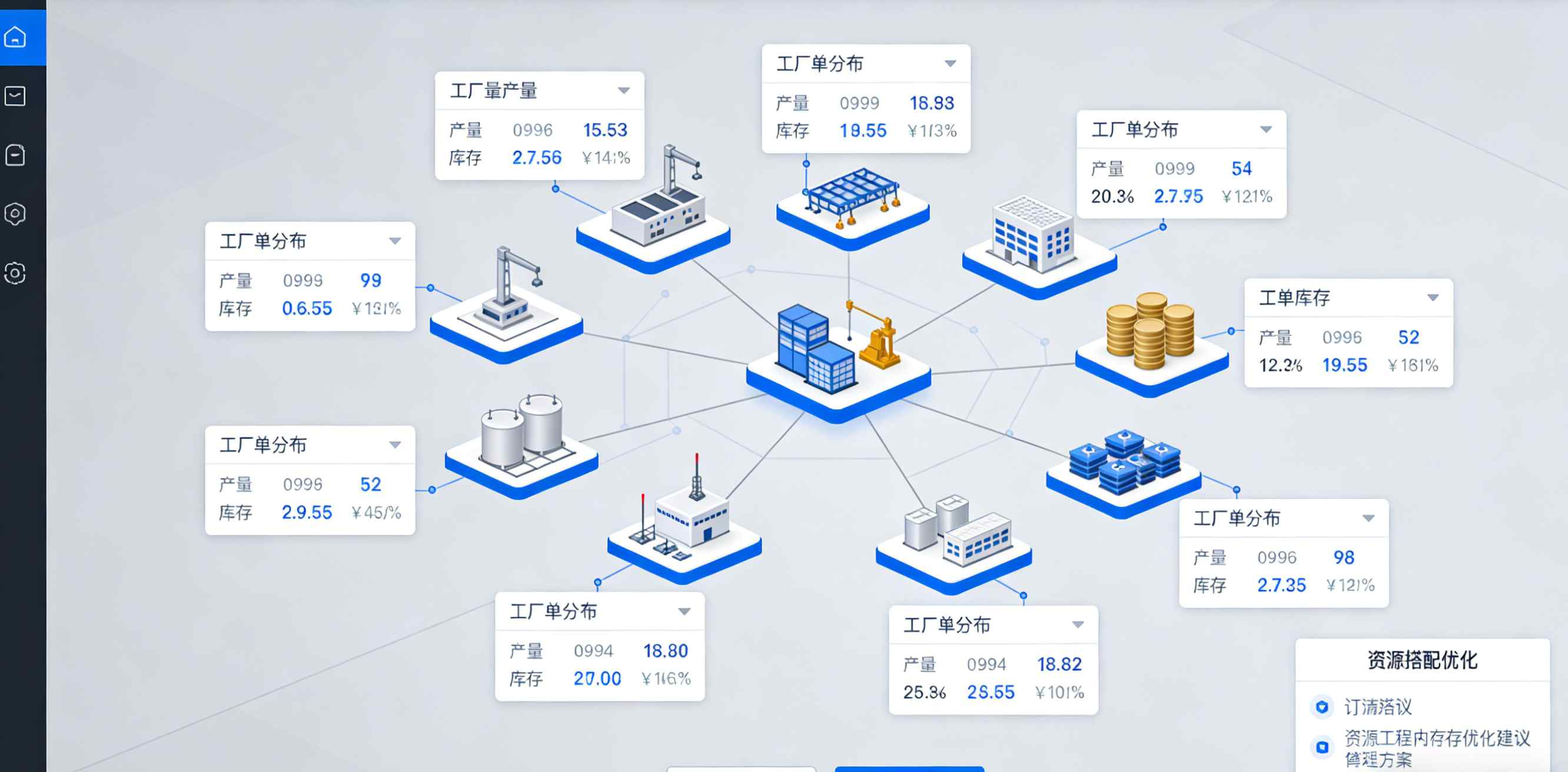
Why Does Traditional Scheduling Completely Fail in the Face of Order Insertions?
Without APS, or with insufficient APS capabilities, order insertions often mean:
Planners manually adjust Excel spreadsheets, repeatedly recalculating
Multiple departments communicate offline to verify feasibility of materials, equipment, and personnel
The scheduling result lacks a global perspective; fixing one part disrupts everything else
The root cause lies in three aspects:
Insufficient computational power: unable to simultaneously consider thousands of work orders and tens of thousands of operations in a short time
Complex constraints: material availability, equipment capacity, personnel skills, and process routes are all interdependent
Lack of a dynamic rescheduling mechanism: any change forces a "complete restart"
The result: slow response to order insertions, inaccurate delivery commitments, frequent plan rework, and reactive firefighting on the shop floor
What Level Should a Truly Mature APS System Achieve for Order Insertion Rescheduling?
Based on manufacturing practice, a mature and usable APS system must possess at least three capabilities in rush order and order insertion scenarios:
Rescheduling is fast enough: not just "able to compute," but "able to compute in time"
Impact is assessable: instantly see which orders are affected by the insertion
Plans are executable: not just theoretically optimal, but implementable on the shop floor
This is precisely one of the core capabilities that the ALSI Huipai APS has repeatedly validated through extensive factory practice.
ALSI Huipai APS System: Parallel Computing, Rescheduling Reaches Minute/Second Level
According to real application data from multiple manufacturing enterprises, the rescheduling speed of the ALSI Huipai APS system in rush order and order insertion scenarios has steadily entered the minute level, with some scenarios achieving second-level response. Behind this is not simply faster computation, but the combined effect of three layers of capability.
1. Parallel Computing Architecture Eliminates Waiting for Rescheduling
Traditional scheduling systems often use single-threaded or weakly concurrent computing. Once the number of orders and operations increases, computation time grows exponentially. The ALSI APS system adopts a parallel computing and service cluster architecture, breaking down order sequencing, operation scheduling, resource constraint verification, and delivery impact analysis into concurrently executable computing tasks, significantly reducing overall rescheduling time.
In actual cases:
Rescheduling 1,000–1,500 orders simultaneously takes only 2–3 minutes
Scheduling at the level of tens of thousands of operations can also be completed within an acceptable timeframe
This means that order insertion is no longer a half-day effort but a routine operation that planners can respond to in real time.
2. Order Insertion Is Not a Complete Overhaul, but a Strategic Rescheduling
Beyond speed, the rescheduling strategy is even more important. The ALSI Huipai APS does not recompute everything from scratch for every insertion. Instead, through a rolling planning mechanism with locked zones, adjustment zones, and optimization zones; insertion rules, priority rules, and order commitment rules; and bottleneck-first critical resource protection strategies, it achieves "local rescheduling + global optimization verification."
The result: rush orders are inserted quickly, the impact on committed order delivery dates is minimized, the production sequence becomes more stable, and the shop floor is no longer frequently disrupted.
3. Visualization of Insertion Impact: Decisions No Longer Based on Gut Feeling
In many factories, the real challenge is not "whether to insert an order," but "who will be affected once it's inserted?" Upon completing the rescheduling, the ALSI APS system synchronously provides: analysis of order delivery date changes; identification of capacity conflicts and bottleneck points; early warnings for material shortages and outsourcing pressure. Planners, sales teams, and management can make quick decisions based on the same simulation results, rather than holding endless coordination meetings.
From "Unable to Compute" to "Rescheduling Anytime": The Essential Difference of APS
In extensive practice with the ALSI Huipai APS, one conclusion is very clear: The true value of APS lies not in "how perfect the first schedule is," but in "whether it can be rescheduled immediately when changes occur."
When rush orders and order insertions become the norm:
Rescheduling speed = enterprise response speed
Rescheduling quality = delivery reliability
Rescheduling capability = the vitality of the planning system
This is precisely the core advantage that ALPS ALSI has repeatedly validated across multiple industries and factories, leveraging years of manufacturing shop floor experience and parallel computing capabilities.