

 Products & Services





 400 676 5650
Time:2026-01-09
In the digital transformation journey of manufacturing enterprises, the APS (Advanced Planning and Scheduling) system is almost an unavoidable threshold. However, the reality is that APS is not a "buy-and-use" software, nor is it a simple replacement for Excel-based scheduling tools. It directly determines whether a company can maintain stable delivery and efficient collaboration in a complex environment with multiple orders, multiple resources, and frequent changes. A truly reliable APS system is never just a single software capability; it is a comprehensive embodiment of manufacturing understanding, algorithmic prowess, and long-term service capabilities.Before choosing an APS vendor, first evaluate these "hardcore indicators"
In actual selection, the needs of enterprises vary by industry and size, but assessing whether an APS vendor is reliable always revolves around the following key dimensions.
1. Does the vendor possess a genuine "manufacturing gene"?
APS is a system that serves the manufacturing floor, not a paper-based mathematical model. A vendor without real factory operation experience, focusing solely on software development, will struggle to truly understand the complexities of production details, such as: the gap between plan and execution; the real constraints among equipment, personnel, and materials; the cascading impact of on-site anomalies on the plan. Only a team rooted in manufacturing enterprises and long-term production floor experience can build an APS system that "plans can be implemented and the shop floor is willing to use."
2. Does the vendor have deep industry-level understanding?
Scheduling logic varies greatly across industries: automotive parts, electronics manufacturing, mechanical processing, and process manufacturing all differ significantly in resource forms, process routes, and delivery models. A truly mature APS vendor must accumulate a large number of successful cases in the target industry and be able to address common industry pain points with systematic capabilities, rather than relying on project customization to "barely fit."
3. Is the algorithm proprietary and capable of handling complex multi-constraint scenarios?
The core of APS lies in the scheduling engine. Key points to focus on include: whether the scheduling algorithm is independently developed and controllable; whether it supports multi-resource, multi-constraint, and multi-objective parallel computation; and whether it supports rapid rescheduling in scenarios of order insertion or change. If the scheduling logic relies heavily on manual intervention, or if the rescheduling speed cannot match the actual rhythm, the value of APS will be greatly diminished.
4. Is the implementation team truly "knowledgeable about the shop floor"?
APS implementation is not a pure IT project; it is a reconstruction of management logic and business processes. An implementation team that only understands systems but not production can easily leave the project in a "system online, effect invisible" stage. Truly valuable implementation must deeply integrate system logic with on-site operation methods.
5. Is the service sustainable in the long term?
APS is a system designed for "long-term use and continuous evolution," not a one-time delivery. Whether the vendor has stable local service capabilities, a clear product iteration roadmap, and sustained long-term operation and technical accumulation directly determines whether the system remains viable over the next 5–10 years.
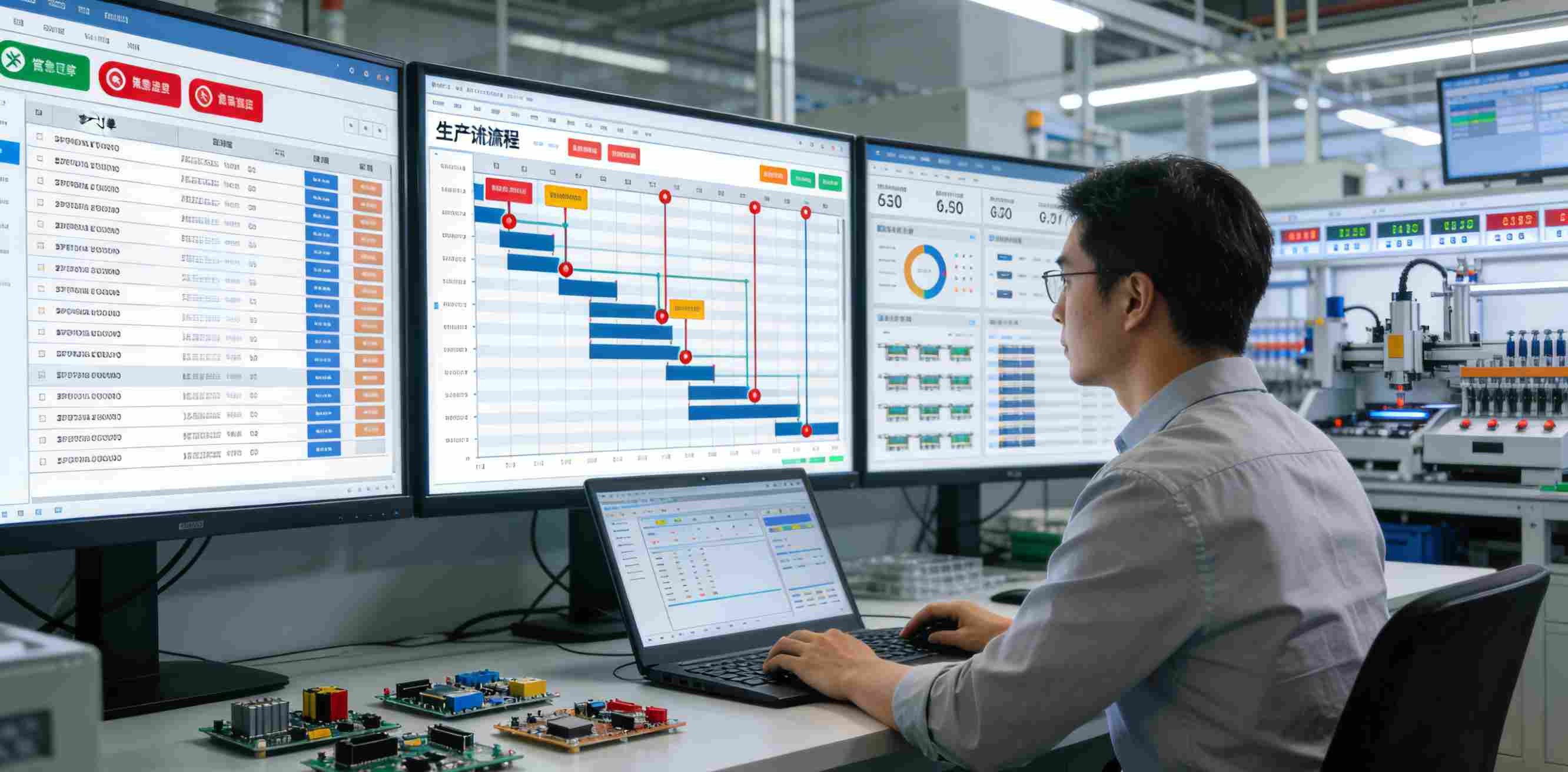
Huipai APS: An Advanced Planning and Scheduling Platform Born from the Manufacturing Floor
Who are we?
Huipai APS is independently developed by ALSI (Alps System Integration).
ALSI originates from the Alps Alpine Group in Japan. Founded in 1948, the group has 77 years of manufacturing practice experience and has long served multiple fields including automotive electronics, industrial manufacturing, and consumer electronics.
ALSI entered China in 2005 and has been deeply engaged in manufacturing informatization and intelligent manufacturing for nearly 20 years. It is not just a system provider but also a long-term participant in manufacturing practice.
Currently, the group operates 15 factories in Japan and 7 factories in China. The core capabilities of Huipai APS are built on the data, experience, and continuous optimization derived from the long-term operation of these real factories.
Three Core System Capabilities of Huipai APS
Huipai APS is not a single module but a complete planning system covering sales and operations collaboration, supply collaboration, and production scheduling.
I. S&OP Sales and Operations Planning System
The S&OP Sales and Operations Planning System aims to break down information silos between sales, production, procurement, and finance, building a unified demand forecasting and supply planning platform. Through multi-version simulation and supply-demand balance analysis, the system decomposes the company's strategic goals into executable operational plans layer by layer. This enables management decisions to no longer remain at the macro level but directly guide resource allocation and execution pace.
Core value: Establish an efficient and unified planning collaboration platform; formulate group-level consistent and profitable operational plans; balance market and supply chain capabilities amidst demand fluctuations; achieve truly executable sales and operations plans.
Applicable scenarios: Long-, medium-, and short-term demand forecasting; supply-demand gap analysis and resource allocation; strategic goal decomposition and execution monitoring.
II. SCP Supply Chain Planning System
The SCP Supply Chain Planning System focuses on end-to-end material supply chain management, from suppliers to production lines, achieving refined, visualized, and collaborative supply planning. The system integrates finite capacity MRP calculations to realize order-level material kitting management and supports advanced supply models such as JIT/VMI, effectively controlling inventory levels while ensuring production continuity.
Core value: Reduce inventory pressure and capital occupation; achieve order-level material kitting management; visualize the supply chain process with controllable risks; support dynamic MRP calculations under finite capacity; provide fast and reliable delivery commitment capabilities.
Applicable scenarios: Internal and external supply collaboration (including outsourced factories), supplier inventory collaboration (VMI/JIT), dynamic replenishment and procurement plan optimization.
III. DPS Advanced Production Scheduling System
The DPS Advanced Production Scheduling System is the execution core of Huipai APS. Under multi-resource and multi-constraint conditions, the system uses multi-objective optimization algorithms to achieve automatic scheduling and dynamic rescheduling, ensuring that the plan is not only "calculable" but also "usable."
Core value: Support multi-constraint, multi-objective simulation scheduling; improve on-time order delivery rate; dynamically track rolling production plans; optimize production routes to shorten production cycles.
Applicable scenarios: High-mix, low-volume environments with frequent line changes; rapid response to emergency order insertions and plan changes; bottleneck resource optimization and capacity enhancement.
The value of an APS system has never been limited to scheduling itself; it is about helping enterprises establish a sustainable planning system. The Huipai APS system, born from real manufacturing floors, relies on mature algorithms and long-term practical experience to help enterprises achieve more stable planning, more efficient collaboration, and more reliable delivery in complex and changing production environments. This is not a system that "looks powerful on paper," but an APS platform that can withstand on-site verification and accompany enterprise growth over the long term.