


 Products & Services









 400 676 5650
Time:2026-01-29
Supply Chain Planning and Scheduling task allocation is primarily about efficiently combining various production factors according to order requirements and resource constraints, following priority rules to ensure the overall process is orderly and controllable. The first step is to assess the orders, determining priority based on delivery time, customer importance, and profit potential. Urgent orders or those from key customers are allocated resources first, while leaving some buffer to handle unexpected changes.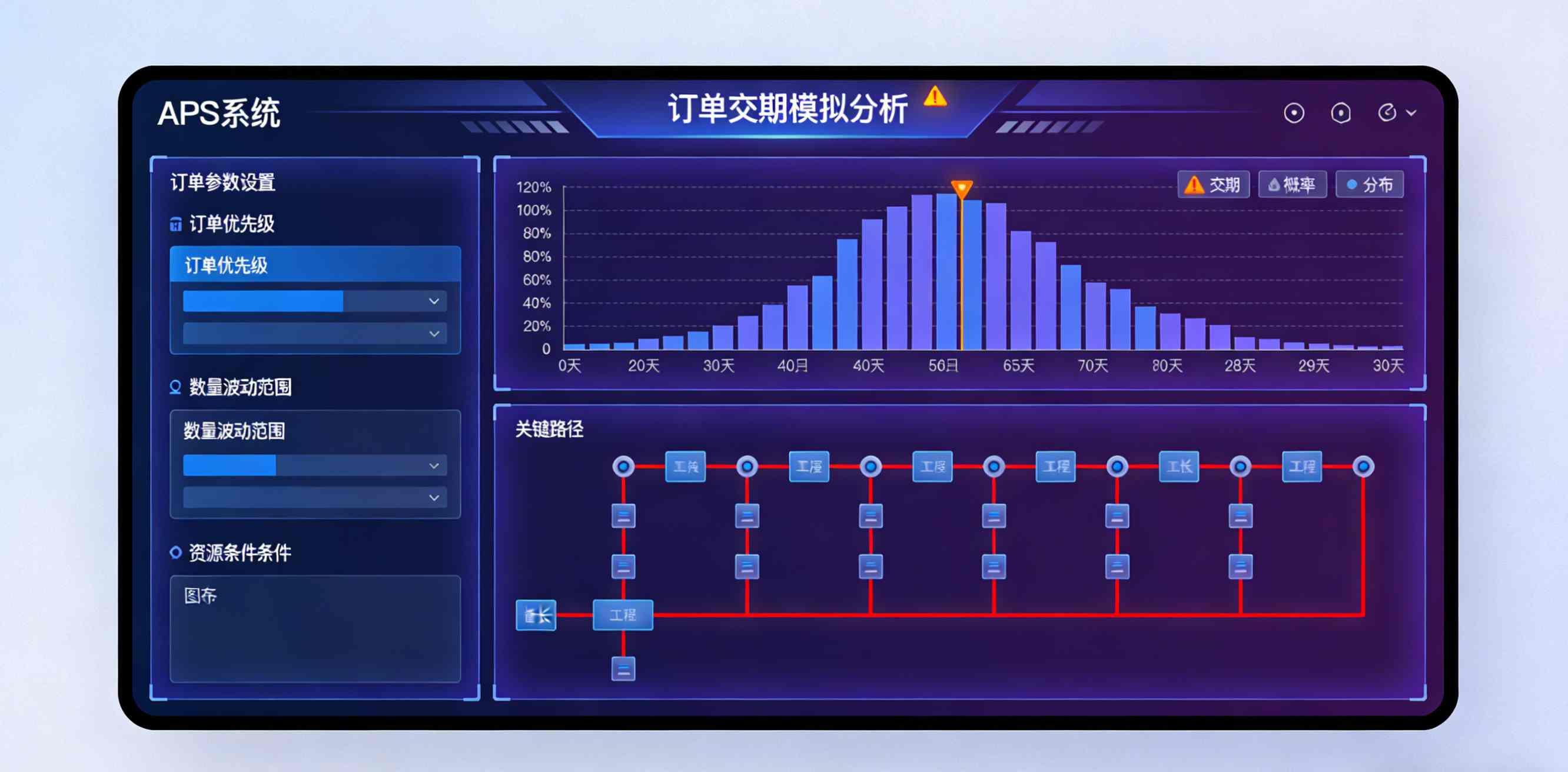
Resource matching is a key concept in Supply Chain Planning and Scheduling. It requires accurately aligning equipment capacity, workforce skills, and task requirements. Based on the complexity of processes, appropriate equipment is assigned to prevent overloading or underutilization. At the same time, employees are assigned to positions according to their skill proficiency to improve efficiency. Additionally, material supply progress must be considered to ensure that materials arrive on time after task allocation, avoiding production stoppages due to material shortages.
Throughout the allocation process, collaboration must be considered to balance workloads across workshops and processes, preventing bottlenecks or idle resources. Supply Chain Planning and Scheduling dynamically adjusts task allocation by updating production progress in real time, addressing sudden issues such as equipment failures or personnel changes. Ultimately, the goal is to achieve on-time order delivery and maximize resource utilization.