


 Products & Services








 400 676 5650
Time:2026-01-28
In the digital transformation of manufacturing, the collaborative efficiency of the supply chain directly determines a company's competitiveness. Many enterprises find themselves in operational difficulties due to the disconnect between planning and execution, as well as imbalanced resource allocation. Supply chain planning and scheduling, as a core means of coordinating all aspects of the supply chain, is not merely a task of plan formulation but a comprehensive management system spanning demand, production, logistics, and inventory.Supply chain planning and scheduling leverages data to balance market demand with resource constraints, enabling more precise coordination across supply chain links. It fundamentally addresses issues such as production disconnects, delivery delays, and high costs, serving as a key enabler for enterprises to achieve lean supply chain management.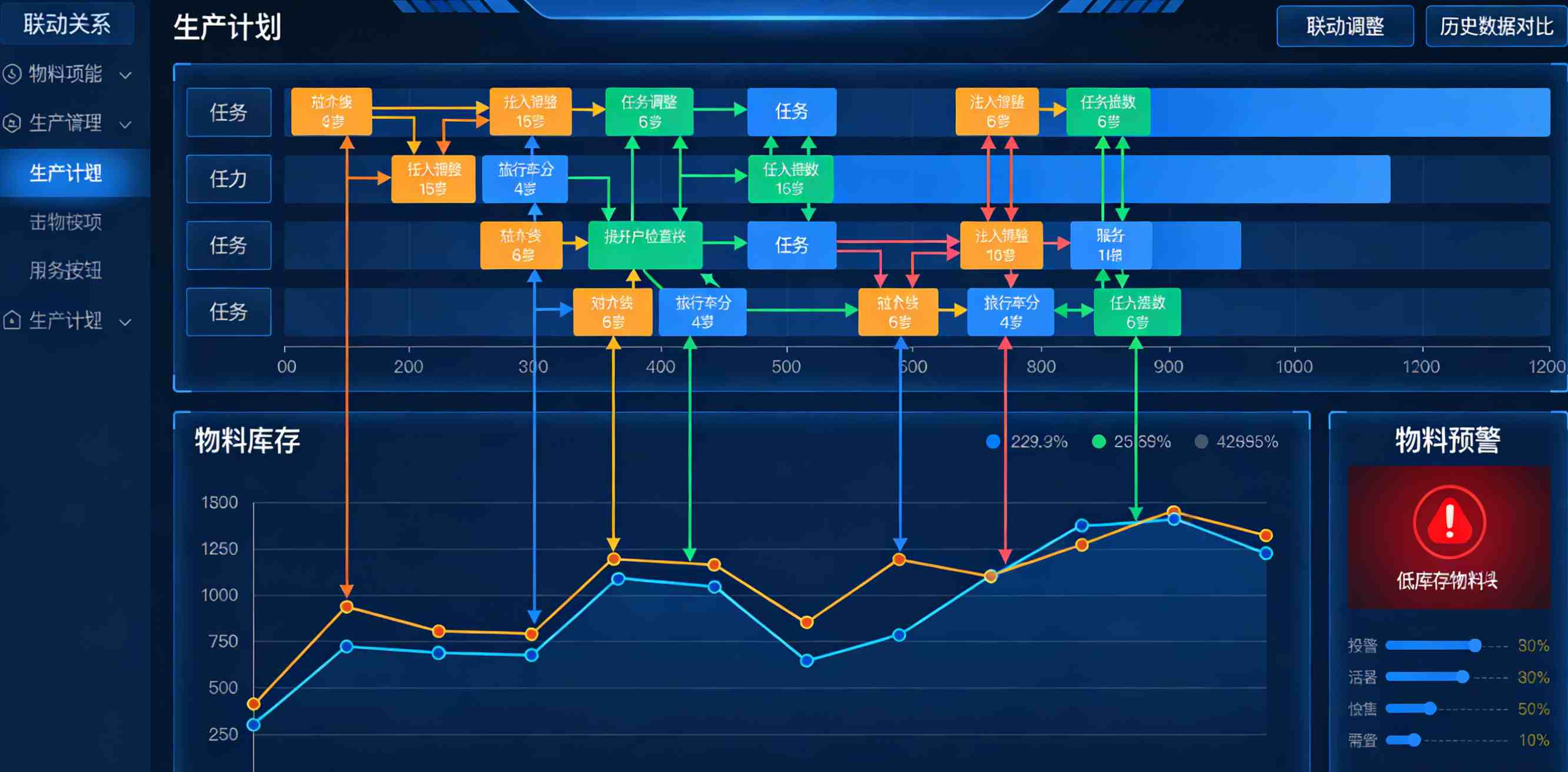
The core definition of supply chain planning and scheduling encompasses both the planning and execution dimensions. From the planning perspective, it establishes medium- and long-term production goals, material procurement plans, inventory turnover strategies, and capacity planning based on historical data, market demand forecasts, and customer orders. This ensures that all supply chain links are pre-configured and aligned. This stage must consider multiple constraints such as supplier capacity, workshop capacity limits, and logistics lead times to prevent plans from deviating from actual feasibility.
From the execution perspective, supply chain planning and scheduling focuses on short-term production scheduling and dynamic adjustments, breaking down long-term plans into specific, actionable tasks. It defines the start time for each batch, process sequencing, equipment and manpower allocation, while simultaneously tracking production progress, material arrivals, and equipment status. It enables timely responses to order changes, equipment failures, material delays, and other contingencies, ensuring the production process proceeds as planned. Unlike traditional manual planning, its core advantage lies in achieving end-to-end data integration, making plans more proactive and flexible.
The core value of supply chain planning and scheduling lies in breaking down information silos between departments and processes to achieve overall supply chain optimization. It does not optimize individual links in isolation but coordinates demand, production, logistics, and inventory to balance key metrics such as delivery lead time, production cost, and inventory levels, avoiding local optimization that could disrupt overall flow.
VastPlan APS Supply Chain Resource Planning and Scheduling Platform is a practical tool tailored to the needs of modern enterprises. It aligns closely with the core logic of supply chain planning and scheduling, rapidly integrating multi-dimensional data to achieve integrated management of plan formulation, scheduling optimization, and dynamic adjustments. It supports multi-scenario production constraint adaptation, can be implemented without complex operations, and is suitable for supply chain management needs of enterprises of various sizes.