

 Products & Services









 400 676 5650
Time:2026-03-13
The APS system, or Advanced Planning and Scheduling system, is guided by a company's actual business objectives. Leveraging advanced intelligent algorithms and constraint theory, it integrates real data from all nodes of the supply chain to scientifically optimize and dynamically adjust production plans and schedules, providing precise and actionable decision support for supply chain management. In the current environment of increasing supply chain complexity and rapidly changing market demands, the APS system has become a critical tool for enterprises to overcome management bottlenecks and enhance core competitiveness. Its role spans the entire supply chain process—planning, execution, and monitoring—serving as a vital bridge between strategic goals and production execution. This is the fundamental reason why more and more companies are prioritizing the APS system.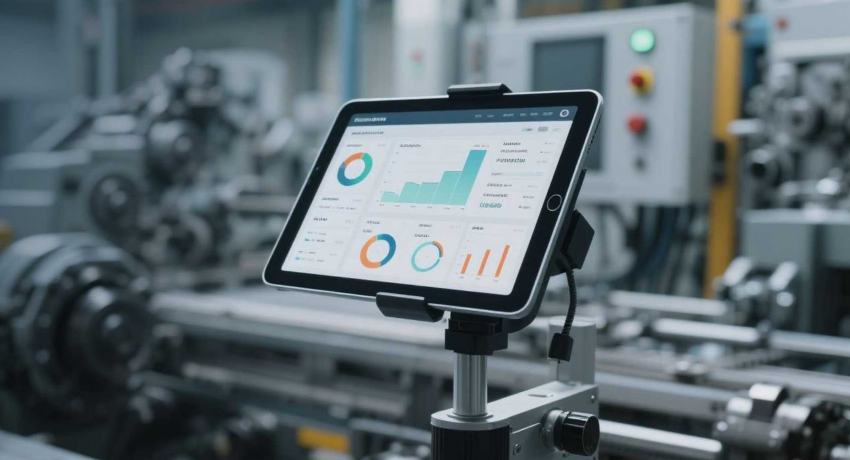
Many people simplistically view the APS system as a "planning tool," but in reality, it is an intelligent decision-making system that holistically considers multiple internal and external constraints. It encompasses core functions such as demand forecasting, capacity planning, order scheduling, material coordination, and resource optimization. One of its most practical features is its ability to integrate data from existing enterprise systems like ERP, MES, and WMS, breaking down information silos between departments such as procurement, production, warehousing, and sales, enabling seamless information flow and collaborative operation across the supply chain. In practice, the APS system can automatically generate optimal production plans and process schedules based on various real-world factors, including customer order priority, actual equipment capacity, raw material inventory levels, and specific production process requirements. It clearly defines production tasks and timelines for each production line and machine, fundamentally eliminating the subjectivity and delays inherent in manual scheduling and reducing the disconnect between plans and actual production.
This is especially true in scenarios involving multiple product varieties, small batch sizes, and mixed-line production. Manual scheduling often struggles to account for all constraints, leading to uneven equipment loads, frequent changeovers, and low production efficiency, and even causing production line stoppages due to scheduling errors. The APS system uses built-in optimization algorithms to quickly process massive production data, automatically identify bottlenecks in the production process, and scientifically optimize resource allocation. While ensuring timely order fulfillment, it maximizes equipment utilization and production efficiency, while reducing raw material waste and unnecessary production costs.
The APS system can collect real-time dynamic data from all links of the supply chain, including raw material arrival times, actual supplier capacity, warehouse inventory levels, and customer order changes. In the event of anomalies, it promptly adjusts production plans and schedules to ensure coordinated operation across the supply chain. For example, in actual production, if a raw material supplier experiences a delivery delay, the APS system can quickly identify the impact of the delay on production, automatically adjust the production schedule, either by initiating a replenishment process with an alternative supplier or by resequencing orders, thereby preventing production line downtime and ensuring continuity.
Through accurate demand forecasting and inventory optimization, the APS system can reasonably control inventory levels of raw materials and finished goods, reduce stockpiling and obsolete materials, and lower inventory holding costs. At the same time, by optimizing production schedules, it reduces equipment idle time and the number of changeovers, thereby decreasing energy consumption and labor costs during production.
The APS system offers real-time monitoring and dynamic adjustment capabilities, enabling quick responses to sudden situations such as order changes, raw material shortages, and equipment failures. It automatically generates adjustment plans and assesses their impact, helping enterprises make informed decisions rapidly. Some companies have reported that after implementing the APS system, the time needed to adjust production plans was reduced from four hours to 15 minutes, and the on-time delivery rate improved from 92% to 99.5%, significantly enhancing the company's ability to respond to market changes.
Without the APS system, planners spent most of their time on tedious manual calculations and scheduling, which was labor-intensive and error-prone. With the APS system, these repetitive, transactional tasks are efficiently automated, allowing planners to dedicate more effort to core activities such as order tracking, bottleneck optimization, and supply chain collaboration, thereby increasing their work value.