

 Products & Services







 400 676 5650
With the widespread application and deep penetration of digital tools such as AI technology, large models, big data analytics, and cloud computing, new concepts like digital factories, smart manufacturing, and the Industrial Internet have continuously emerged, ushering humanity into the era of the digital economy. In September, the Ministry of Industry and Information Technology issued the Guidelines for Equipment Renewal and Technological Transformation in Key Industrial Sectors, providing a clear "roadmap" for the digital transformation of traditional industries, specifying transformation areas and technical pathways, and setting quantifiable indicators. Amid this wave, APS (Advanced Planning and Scheduling) has become one of the key strategies driving the digital upgrade of China's manufacturing industry.
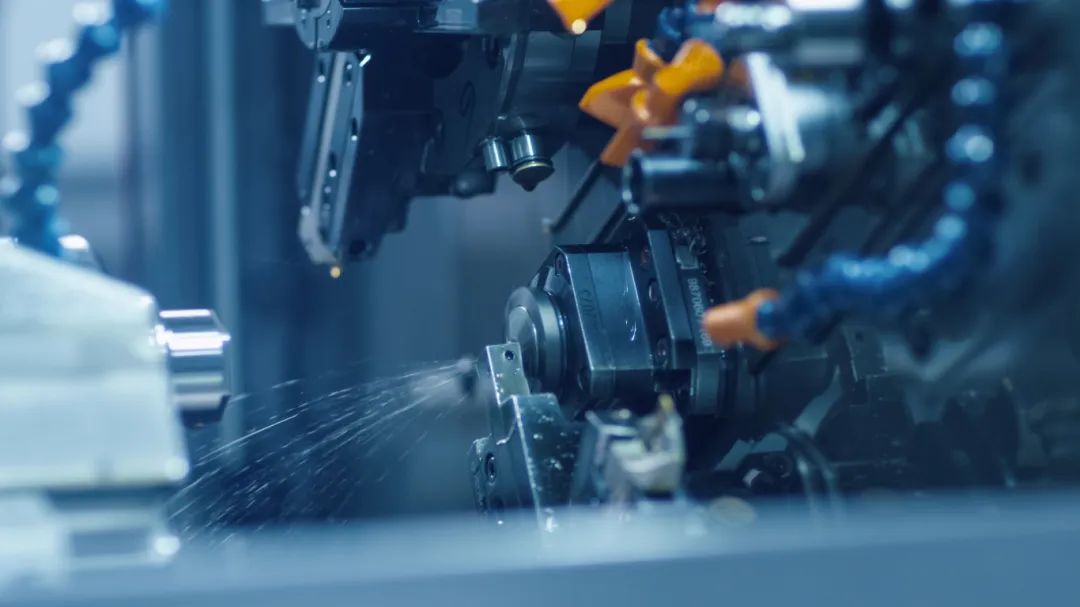
As a vital part of the manufacturing industry, the machining sector's production workshops generally feature diverse materials, complex processes, numerous machines, small batch sizes, and high customization. However, many small and medium-sized traditional machining enterprises still rely on manual methods for production task scheduling, which is labor-intensive, complex, and inefficient. Given the current challenges in the machining industry, adopting a specialized and customized APS built according to process flows and industry characteristics can actively promote the digital transformation of the machining industry and achieve high-quality development.
01
Current Development Status of the Machining Industry
Technological Innovation and Iteration: As a technology-intensive industry, the emergence of new materials, processes, and technologies enables machining to complete various tasks more efficiently, significantly improving industry concentration. Emerging technologies such as robotic machining and smart manufacturing are widely adopted, injecting innovation and transformative momentum into the machining industry.
Diversified Market Demand: Products from the machining industry are increasingly used in fields including but not limited to automotive manufacturing, aerospace, electronic equipment, and energy equipment. With the growth of personalized consumer demand, the market demand for machining products has also shown a diversified trend. Therefore, machining enterprises need to closely align with the specific needs of different industries and customers, providing tailored solutions.
Intensified Competition and Environmental Requirements: Due to relatively low technical barriers, the number of machining enterprises (especially small and medium-sized ones) has increased year by year. At the same time, the severity of global environmental issues has led to stricter environmental requirements for the machining industry. Enterprises must continuously improve their technical capabilities and service quality to achieve steady development.
Urgency of Industry Transformation: Factors such as technological innovation, market volatility, fierce competition, green environmental protection, and sustainable development are all pushing enterprises to build smarter and more efficient production management systems. Whether to undergo intelligent transformation and upgrading has become a watershed for the development of machining enterprises. Companies must continuously innovate and enhance their strength to adapt to industry trends and challenges.

02
Production Characteristics of the Machining Industry
In most machining industries, the production process involves processing raw materials through turning, milling, planing, grinding, boring, and other processes to finally produce parts. These parts are then assembled into products. The entire process is a complex, multi-step assembly-type production. Due to industry characteristics, the production management features of most machining enterprises can be summarized as follows:
Diversified Production Methods: The machining industry typically processes both standard and non-standard parts, with non-standard orders being the primary current demand. For order-based production, there are generally two methods: dedicated equipment production mainly follows make-to-order, supplemented by engineer-to-order, assemble-to-order, and make-to-stock; general equipment production combines make-to-order and make-to-stock, supplemented by engineer-to-order and assemble-to-order. Under customized production, the specifications, process requirements, and quantities of parts vary significantly per order, making it difficult to standardize production plans, and each order requires separate scheduling.
Multi-Variety, Small-Batch Production: Traditional machining industries can be divided into three types based on product structure and production batch size: single-piece/multi-variety small-batch production, medium-to-small batch production, and mass flow production. Currently, market demand is mostly for medium-to-small batches/multi-variety. Therefore, most machining workshops are equipped with various devices including CNC machines, traditional machines, and machining centers to meet market demands. High-precision parts require highly integrated electromechanical CNC machines for operation; conversely, parts with simpler processing requirements can be handled by traditional machines. In this process, switching and coordinated operation between different devices undoubtedly increase the complexity of production scheduling.
Complex Process Configuration: Machining processes are often numerous, with some workshops having up to 40–50 processes, often requiring design while producing. The types of machinery and fixtures required vary greatly, and different materials, part sizes, and precision requirements lead to changes in processing parameters. Moreover, many workshops adopt a one-person-multiple-machines production mode, where employees need to monitor and operate multiple machines simultaneously, placing high demands on individual capabilities—all of which affect the accurate estimation of process times.
Unstable Delivery Times: Complex product structures, intricate manufacturing processes, varying manufacturing cycles for different components, and uncertain process routes, coupled with frequent urgent or inserted orders from customers, make delivery times difficult to determine.
Difficult Outsourcing Management: Small and medium-sized manufacturing enterprises, constrained by their own scale, equipment, delivery times, etc., often outsource some production processes or work-in-progress to other factories. This leads to management issues in material verification, labor cost settlement, and multi-process coordination.
Low Procurement-Production Coordination: For customized non-standard parts, issues with supplier quality control and unstable delivery times cause the initial production plan to deviate from actual needs, making procurement and production difficult to coordinate.
Difficult Scheduling for Special Equipment: Equipment such as heat treatment furnaces and melting furnaces cannot have their capacity calculated based on man-hours due to their characteristics; instead, scheduling must be based on specific order temperature/volume/usage time.
Difficult Data Management: The varying manufacturing cycles and complex process routes require extensive data collection, including processing progress, equipment status, operation times, etc. Manual reporting often leads to omissions or errors. Additionally, machining enterprises typically use multiple systems to manage the production process, making it difficult to integrate and share data between systems, which affects the execution and adjustment of production plans.
Difficult Prediction of Equipment Failures and Maintenance: Since machining production involves various equipment, scheduling must consider the maintenance plan and failure probability of each machine. Abnormalities in key equipment can affect the entire production plan, adding difficulty to scheduling.
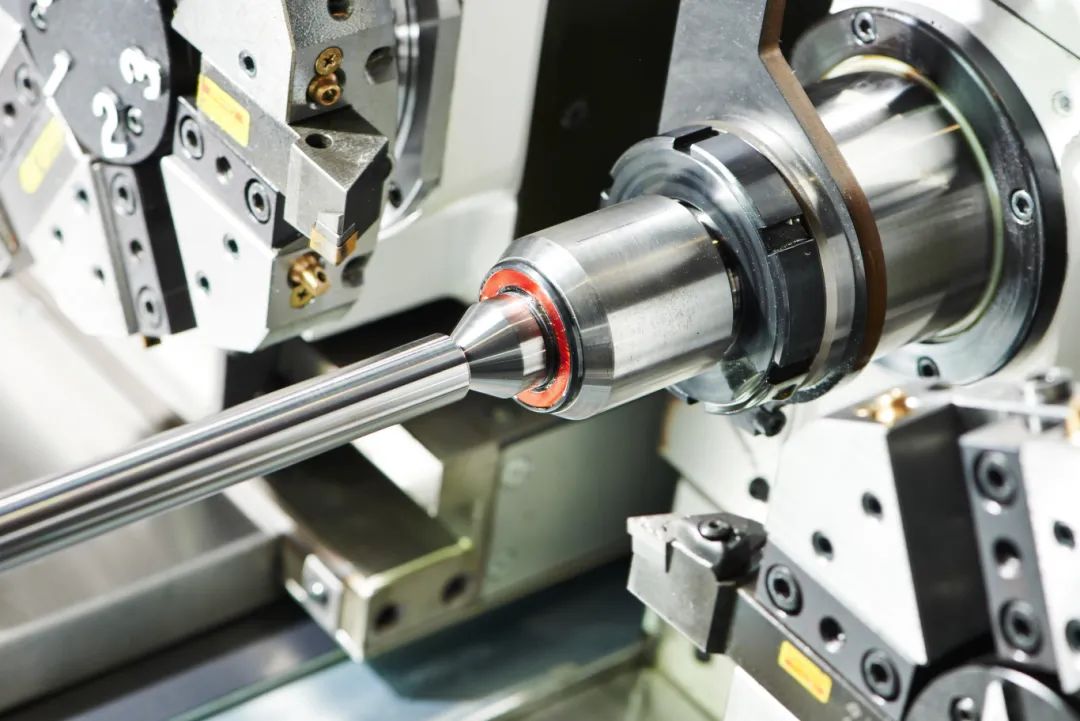
In summary, due to its industry characteristics, equipping APS during the transformation process is crucial for the machining industry. APS can optimize production plans and resource allocation based on advanced algorithms and models. By considering multiple constraints such as order demand, delivery dates, machine capacity, human resources, and material supply, it can quickly and accurately generate scheduling plans. So, what changes will the machining industry experience after adopting APS? Let's explore below.
03
Key Considerations for APS Selection in the Machining Industry
Overview of APS
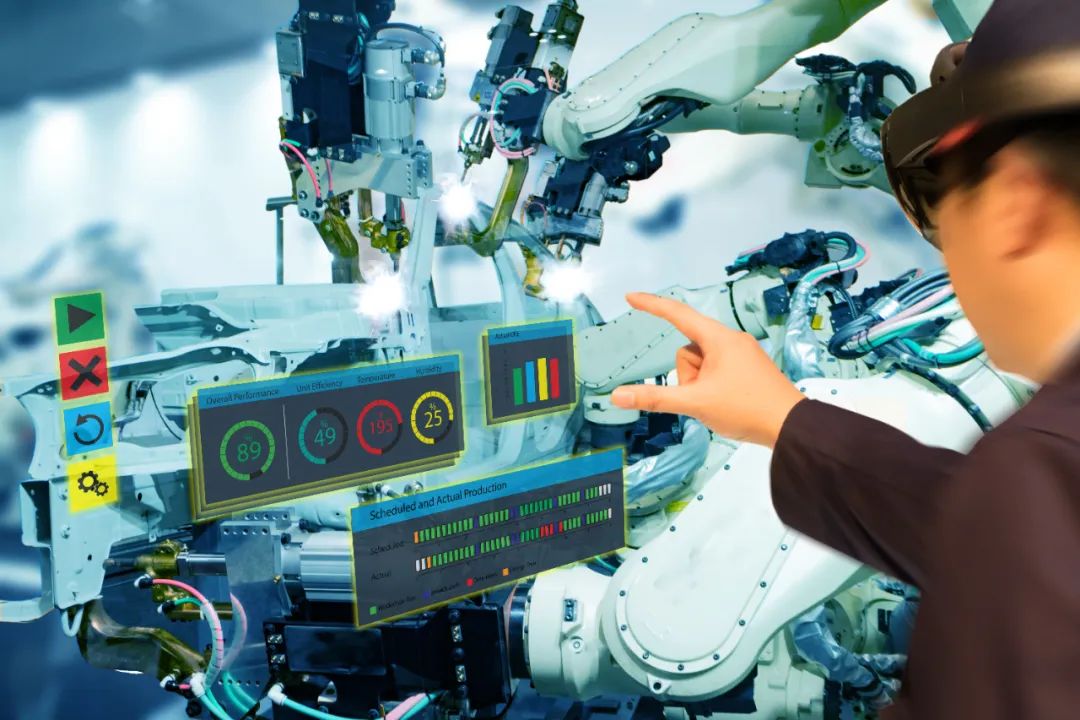
APS (Advanced Planning and Scheduling) system is an enterprise management software that first appeared around the turn of the 19th and 20th centuries. Early APS was merely a timeline—a Gantt chart—allowing people to visually view event progress and interactively update it, primarily used for visualizing planned schedules. After years of development, today's APS has become a digital system capable of detailed planning and optimized scheduling of production resources and activities through synchronous, real-time, and finite simulation capabilities. It comprehensively considers factors such as materials, machinery, human resources, supply conditions, customer demand, and transportation to formulate optimal production plans and scheduling schemes.
Enterprise Requirements
The party selecting the system is the enterprise itself. Since each enterprise's specific situation varies, multiple factors need to be considered.
- Receptiveness to the new system: The enterprise as a whole should have the willingness to implement it, requiring support from top management and acceptance from employees.
- The enterprise's current level of digitalization: Whether the manufacturing environment is suitable for introducing and implementing APS.
- Based on its own situation, determine what type of APS is needed, such as short-term or long-term planning, and which specific efficiency improvements are required.
- For group enterprises, consider whether APS supports multi/new factory plan allocation and cross-site system collaboration.
Vendor Fit
- The enterprise should consider whether its needs focus on supply chain planning, production scheduling, or both, and select a suitable vendor accordingly.
- Consider whether the system can be compatible and integrated with existing factory systems.
- Evaluate the vendor's industry experience, reputation, technical strength, after-sales service, implementation team, and successful cases.
POC Testing
- POC (Proof of Concept) testing is a method that simulates actual application environments to verify whether the functions and performance of the vendor's software system meet user requirements.
- Enterprises can choose the most commonly used or critical processes for testing. Based on the test reports, they can more comprehensively assess the applicability and risks of the selected APS system.
AI Interaction
- An advanced production management system based on artificial intelligence technology. AI can simulate the decision-making process of human experts through data analysis, processing, and optimization to achieve automated scheduling.
- In the form of big data + AI, encapsulate knowledge graphs related to production planning, using data as the engine to accurately identify management's business needs and enable Q&A interactions across different production data segments.

04
Application Value of Introducing APS in the Machining Industry
Intelligent Algorithm for Automatic Scheduling
APS can automatically generate the optimal plan for processes, machines, and production lines down to the hour, minute, and second through multi-dimensional constraints such as man, machine, material, and order sequencing and resource selection. Replacing manual scheduling with automated scheduling shortens time and reduces labor costs.
Example: After a precision products company introduced the Huipai APS Supply Chain Resource Planning Platform, scheduling efficiency improved by 60%.
Rapid Response to Anomalies
APS's real-time production monitoring and scheduling functions can obtain production data via sensors, analyze and monitor it. When anomalies occur or production plans need adjustment, the system automatically issues alerts and provides corresponding scheduling suggestions, helping enterprises handle abnormal situations efficiently.
Example: After a fastener company introduced the Huipai APS Supply Chain Resource Planning Platform, production transparency increased to 70%.
Data-Driven Production
The APS system can collect and organize various production-related data, including production resources (equipment, labor), bills of materials, production orders, process routes, maintenance plans, etc., and combine them with actual production performance for rolling scheduling, ensuring that plans guide production, thereby effectively managing production progress. Additionally, APS can be used to simulate and analyze existing data, predicting the required manpower and materials for different scenarios, providing strong support for the enterprise's annual planning and decision-making.
Ensuring Delivery
Through intelligent scheduling, monitoring production progress, and tracking resource consumption, the APS system can accurately predict order completion times, ensuring on-time delivery to customers. In case of order changes, urgent orders, or inserted orders, the APS system can promptly adjust plans without affecting the overall process flow, meeting temporary customer needs and enhancing customer satisfaction and loyalty.
Procurement-Production Coordination
APS can achieve mid-to-long-term planning based on finite capacity and calculate material kitting time points for corresponding production work orders. Using a single work order as a dimension, combined with inventory capacity and lead times, it precisely calculates the net material requirements for each work order, enabling procurement-production coordination.
Example: After a parts processing company introduced the Huipai APS Supply Chain Resource Planning Platform, material kitting rate improved by 50%.
Flexible Multi-Constraint Setup
When formulating production plans, especially for special equipment, APS can fully consider various constraints. Through flexible setup and comparison of multiple versions of scheduling results, it visually displays scheduling results using Gantt charts. Users can manually adjust the Gantt chart to quickly modify production plans.
Data Control and Alerts
APS software enables visualization of machining production data. By displaying data in forms such as Gantt charts, it enables monitoring and alerts. Through data mining and analysis, it can identify bottlenecks and waste in the production process, thereby proposing improvement measures.
Inventory Reduction
APS can simulate supply plans across different time spans and data dimensions, considering multiple business objectives and dynamic constraints such as supply quotas, complex substitutions, inventory transfers, and shared material allocations. It performs end-to-end supply modeling calculations. By formulating long-term, medium-term, short-term, and emergency replenishment plans—going from coarse to fine, from forecasts to actual needs—it maximizes the timeliness and accuracy of material supply, achieving on-demand delivery and reducing inventory pressure.
Example: After an equipment parts processing company introduced the Huipai APS Supply Chain Resource Planning Platform, inventory turnover increased by 30%.
Multi-Factory Collaborative Planning
For group enterprises with multiple factories, APS can combine end-to-end data on demand, supply, and production with optimization algorithms to classify demand, consider production and supply capacity constraints, find the optimal solution to achieve business objectives, and establish an efficient order supply chain plan that decomposes into balanced supply-demand production plans across multiple factories and workshops.
Supplier Collaborative Management
The APS system can transmit material requirements, inventory status, and delivery plans in real time, ensuring that suppliers understand needs and respond promptly. It also monitors supplier progress in real time, including delivery time, quantity, and quality, while comprehensively evaluating suppliers in terms of quality, delivery, and price, helping enterprises select suitable suppliers for long-term cooperation.
About ALSI
Alps System Integration (Dalian) Co., Ltd. ("ALSI") is a wholly-owned subsidiary established in China in 2005 by the Japanese Alps Alpine Group (founded in 1948). It serves as the Secretary-General unit of the Dalian Smart Manufacturing Industry Innovation Alliance and is recognized as a "Specialized and New" enterprise in Liaoning Province. With over 30 years of deep involvement in smart manufacturing in automotive parts, electronic appliances, and machining industries, ALSI leverages the manufacturing DNA of its Japanese group. By deeply exploring the "manufacturing site" and combining IoT technology, big data, and AI with lean principles, ALSI has developed the "Huipai Supply Chain Resource Planning Platform" and "Jinzhi Lean Factory Cloud Platform"—small, fast, light, and accurate solutions—dedicated to helping more manufacturing customers achieve efficient workshop site management and embark on a path of digital and intelligent development.