

 Products & Services



 400 676 5650
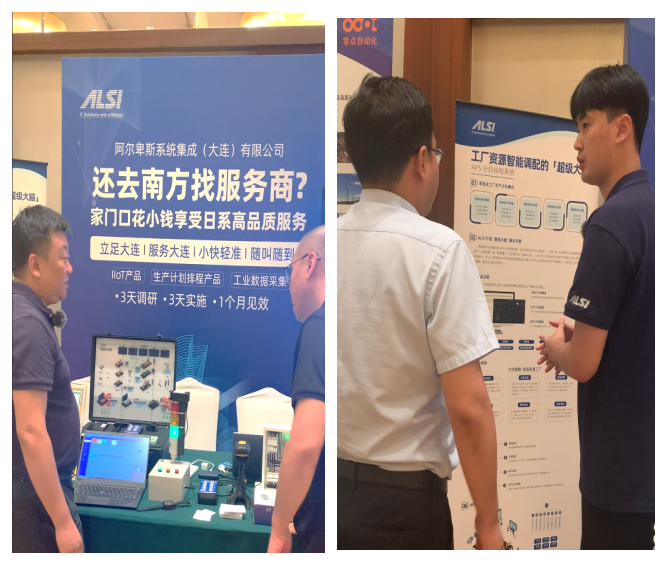
On August 11, the "7th National Factory Digital Upgrade Solution Tour Seminar," co-hosted by Gongkong.com and forward-looking industrial internet application suppliers, was successfully held at the Nikko Hotel Dalian. Alps System Integration (Dalian) Co., Ltd. (hereinafter referred to as "ALSI") condensed the "pitfalls and losses" encountered by its own group factory during the digital lean promotion into "dry goods" experience and shared it with manufacturing peers, attracting widespread attention and focus, successively drawing many industry colleagues and manufacturing enterprise customers for on-site investigation and in-depth consultation.
Academic Seminar: Eliminate All Inputs That Do Not Generate Customer Value
For a long time, the transformation and upgrade from "existing factories" — non-digitally native factories — to smart factories has been a comprehensive challenge, even a dilemma. At the meeting, Dr. Zhang Xiaoluan, Director of ALSI, comprehensively elaborated and analyzed the definition of existing factories, the difficulties of intelligent transformation and digital transformation, and the key points of implementation, pointing out that "digital lean is the key entry point to eliminate all inputs that do not generate customer value."
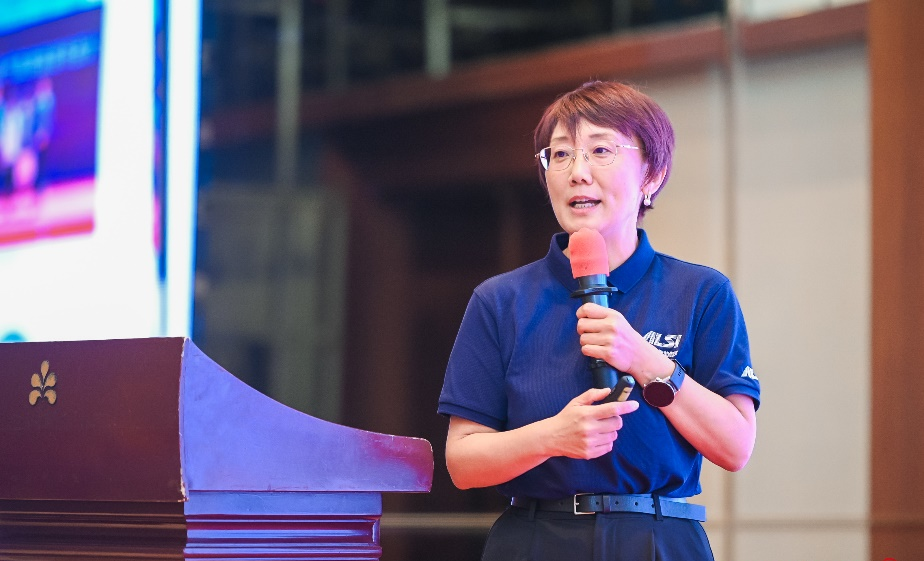
From the underlying logic of manufacturing, the essential core of a factory is to transform purchased materials into products or services required by downstream customers through certain processes, among which there are three major uncertainties.
1. Uncertainty in the upstream supply chain, such as whether raw materials can be supplied with high quality and sufficient quantity;
2. Uncertainty within the factory itself, such as rising labor costs, difficulty in hiring, and increased failure rates of old equipment;
3. Uncertainty from downstream customers, such as last-minute rush orders and requests for early delivery;
As customer demands become more personalized, enterprises' production models have also shifted from the past "large batch, large scale" to the new model of "small batch, multiple varieties." Many enterprises pin their hopes on factory digitalization to improve production efficiency, but during the process, they show problems such as unclear direction, insufficient understanding, and greedy demand for everything. In response, Dr. Zhang, based on the intelligent transformation path of the Alps Alpine Group factory, gave the following suggestions:
1. Avoid pursuing revolutionary changes; small steps and continuous improvement are the best strategy;
2. Ensure success in the first step to strengthen internal confidence and dispel various doubts;
3. The boss should not only be responsible for "making the final decision"; process closure requires "full participation of all employees";
On-site Highlights: Highly Sought After
This seminar highly focused on the extension, connotation, and practice path of intelligent transformation and digital transformation of manufacturing factories. ALSI, regarding industry forward-looking trends such as "digital lean and intelligent data collection," specifically presented the APS Intelligent Scheduling Solution (Huipai Supply Chain Resource Planning Platform) and the Industrial IoT Solution (Jinzhi Lean Factory Cloud Platform). Among them, the Jinzhi Lean Factory Cloud Platform, as a "Recommended Product for Industrial Internet Platform Selection Evaluation" awarded by the China Electronics Standardization Institute, provides comprehensive and accurate data collection of "Man/Machine/Material/Method/Environment/Measurement" based on the smart factory manufacturing site, with small, fast, light, and accurate features, and provides a full-chain closed-loop solution around timely intervention for equipment anomalies, remote monitoring of equipment status, preventive maintenance of equipment, and smart energy saving and consumption reduction.