

 Products & Services




 400 676 5650
Total Productive Maintenance (TPM) is a pivotal methodology within equipment management systems, aimed at enhancing Overall Equipment Effectiveness (OEE) and achieving goals of zero breakdowns, zero defects, and zero accidents. First introduced by Mr. Seiichi Nakajima in 1969 at Nippon Denso, a subsidiary of Toyota Motor Corporation, and later promoted by the Japan Institute of Plant Maintenance (JIPM), this article traces TPM's evolution and explores its application and significance in global manufacturing.
Origins and Evolution of TPM
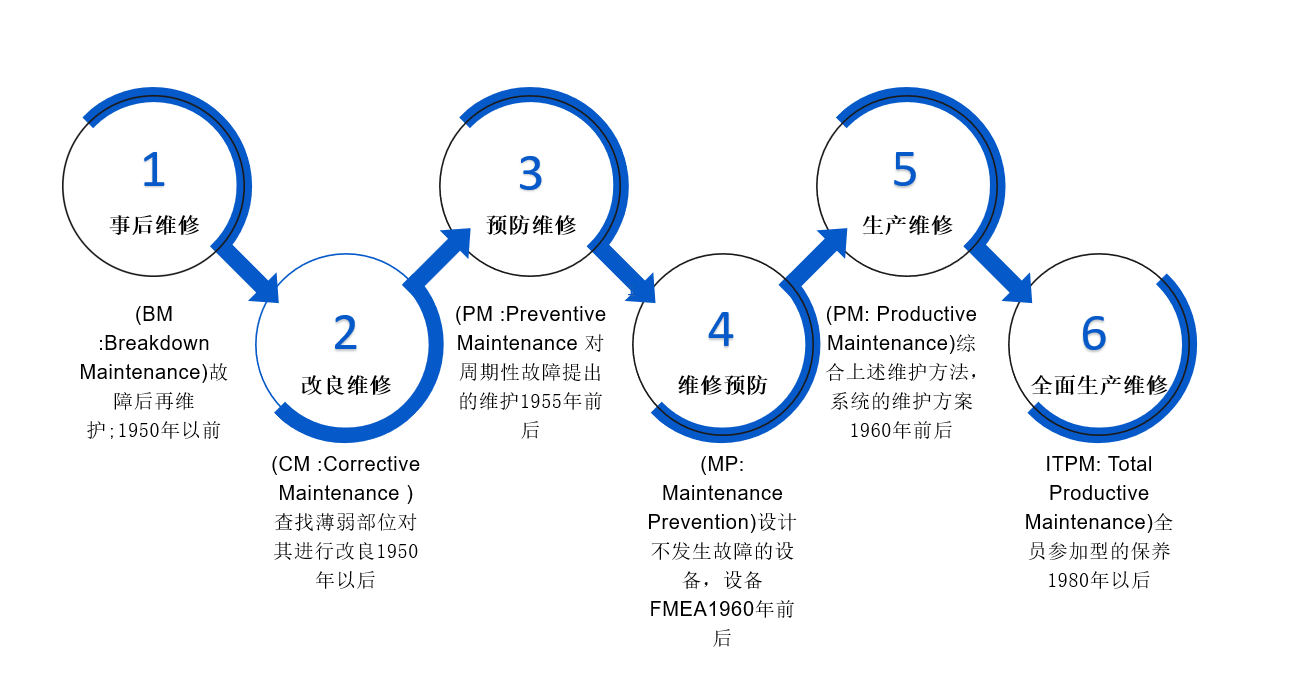
After World War II, Mr. Seiichi Nakajima traveled to the United States to study maintenance management methods and introduced "Productive Maintenance (PM)" to Japan in 1951, which served as the precursor to TPM. In 1969, under his leadership, the concept of TPM was formally established. In 1971, Nippon Denso became the first company to adopt TPM and receive the PM Award (now known as the TPM Award), marking that year as the inception of TPM.
Mr. Nakajima's contributions earned widespread industry recognition, culminating in the First Order of the Sacred Treasure awarded by the Emperor of Japan, in honor of his immense impact on manufacturing through TPM.
TPM and the Toyota Production System (TPS)
TPM played a crucial role in shaping and advancing the Toyota Production System (TPS). Both Mr. Taiichi Ohno, the architect of TPS and Kanban pull systems, and Mr. Shigeo Shingo, who contributed significantly to TPS in the 1960s and 1970s, referenced Mr. Nakajima's principle of "pursuing zero equipment failures."
In his book A Study of the Toyota Production System, Mr. Shigeo Shingo emphasized that TPM eliminates breakdowns and defects by analyzing and addressing root causes, enabling the ideal state of zero-inventory production. Mr. Taiichi Ohno, in his book Toyota Production System, highlighted that Toyota's strength lies in preventive maintenance rather than corrective maintenance. These insights underscore TPM's role in eliminating equipment-related waste and enabling continuous flow production.
Core Principles of TPM
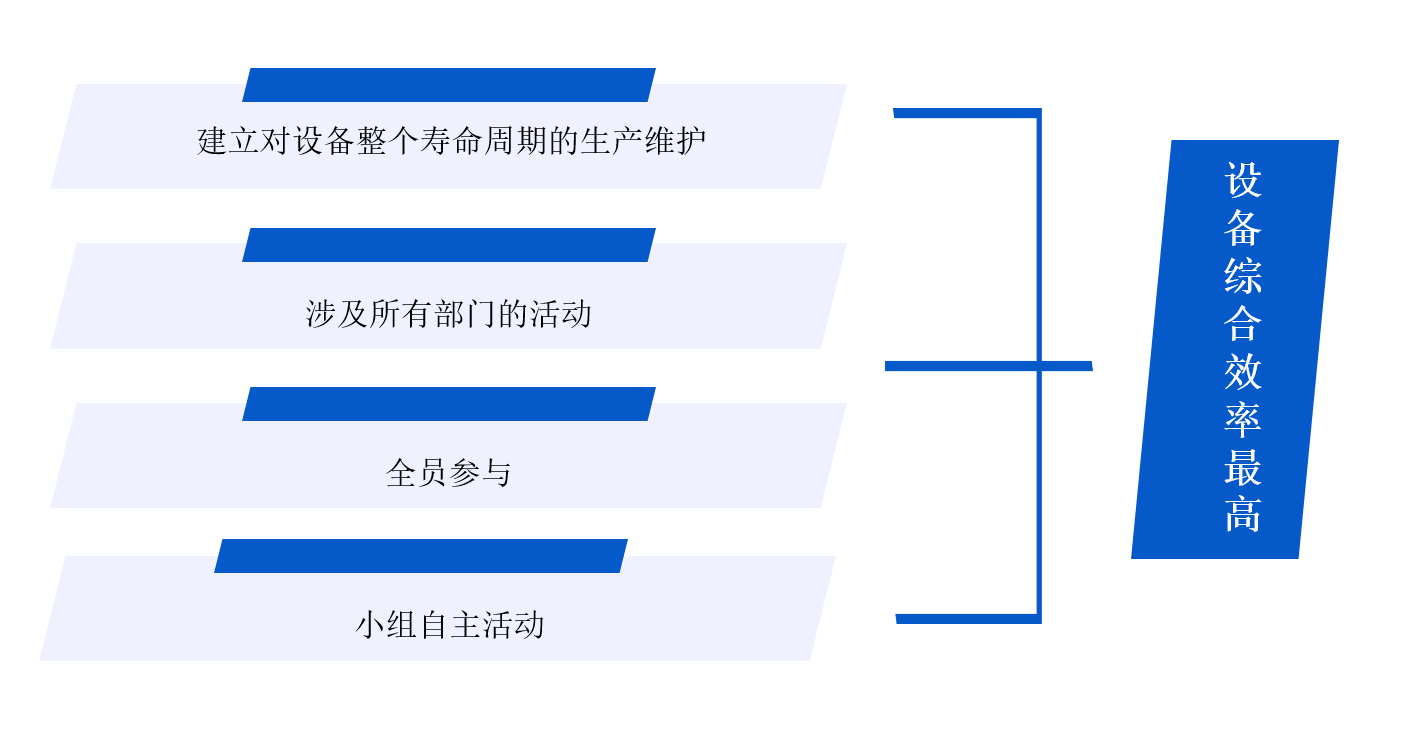
TPM is not merely a maintenance program but a company-wide system for improving equipment efficiency. Its core principles include:
- Overall Effectiveness: Focusing on economic efficiency and corporate profitability.
- Overall PM: Encompassing Maintenance Prevention, Maintainability Improvement, and Preventive Maintenance.
- Total Participation: Operator-led autonomous maintenance, along with cross-departmental and multi-level team activities.
Mr. Nakajima further noted that "Total" in TPM extends beyond overall effectiveness and overall PM to emphasize total participation, a concept well exemplified in Japan's team-oriented corporate culture.
Global Impact of TPM
TPM found its way to the United States in the mid-1980s and has since been adopted worldwide. Despite encountering cultural and managerial challenges during its dissemination, TPM gained acceptance and implementation by companies globally due to its proven effectiveness. The application of TPM not only facilitates efficient equipment operation but also drives overall progress in manufacturing.
Throughout his career, Mr. Nakajima emphasized that without TPM, Just-In-Time (JIT) and the Toyota Production System (TPS) could not function effectively. By eliminating the six major losses, TPM accelerates the achievement of zero-defect production, JIT, and automation.
Conclusion
The evolution of TPM attests to its pivotal role in equipment management systems. Mr. Seiichi Nakajima, through his remarkable contributions, has driven transformation and progress in global manufacturing. For modern manufacturing companies, implementing TPM is not only an effective means of boosting Overall Equipment Effectiveness (OEE) but also a critical step toward sustainable development.
TPM is not merely the culmination of Mr. Nakajima's career but an essential tool in the relentless pursuit of excellence across the global manufacturing landscape. As manufacturing continues to evolve, TPM will maintain its unique value, delivering increased efficiency and competitive advantage to enterprises.