

 Products & Services








 400 676 5650
In the context of sustained global economic growth and increasingly intense market competition, digital transformation has become a critical driver for enterprise development. During this process, production scheduling management methods have been continuously refined—evolving from ERP to APS. For small and medium-sized factories, the adoption of APS has become a top priority in their digital transformation journey. This article explores the future trends of APS against this backdrop, starting from the evolution from ERP to APS.
ERP (Enterprise Resource Planning) systems enable centralized management of business processes such as production, sales, and finance by integrating various internal resource information. In terms of production scheduling, ERP systems offer basic production planning and material requirements planning capabilities. However, limited by their data processing capacity and computational logic, ERP systems often fall short when dealing with the complex and volatile production environments of small and medium-sized factories. Particularly when handling multi-variety, small-batch production, urgent orders, or order insertions, ERP systems typically fail to meet the need for fast and accurate scheduling.
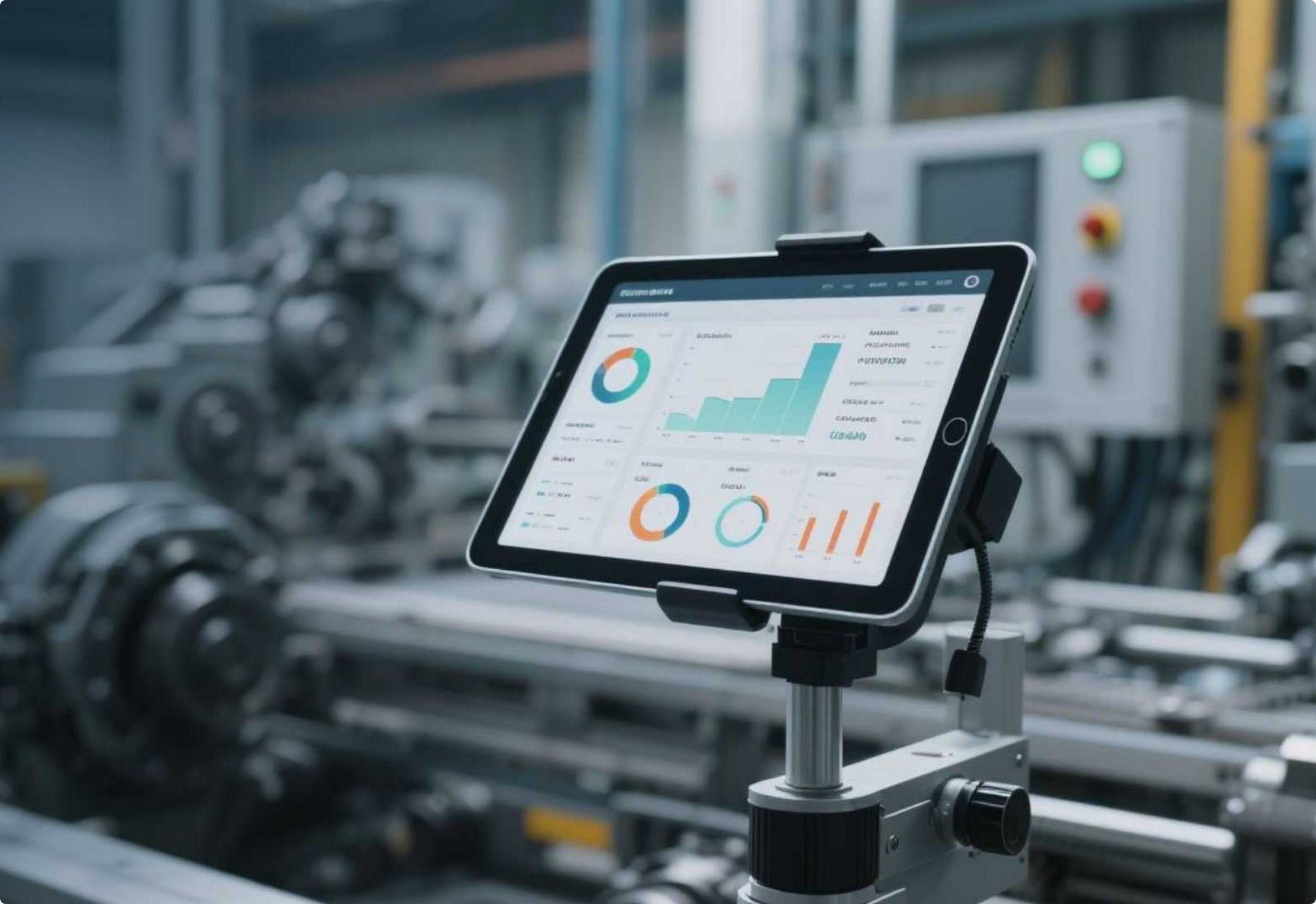
APS (Advanced Planning and Scheduling) systems, as a complement and upgrade to ERP, achieve refined and dynamic management of production plans by incorporating advanced algorithms and real-time data analysis. APS systems can comprehensively consider multiple factors such as equipment capacity, process routes, and personnel situations, providing small and medium-sized factories with visualized scheduling results that make order delivery dates clear at a glance. Moreover, APS systems support manual adjustments to scheduling plans to accommodate various changes during production.
However, APS systems also face certain challenges. First, the implementation cost of APS is relatively high, posing a significant burden for small and medium-sized factories with limited capital. Second, APS implementation requires professional technical support and continuous training, which is a major challenge for factories lacking specialized talent. Additionally, the stability and ease of use of APS systems are crucial factors for small and medium-sized factories to consider when making a choice.
Against the backdrop of digital transformation, the future development trends of production scheduling management in small and medium-sized factories will place greater emphasis on real-time data and intelligent capabilities. By introducing more advanced algorithms and technological tools, these factories will be able to achieve more precise and efficient scheduling management. Meanwhile, with the continuous development of cloud computing, big data, and other technologies, small and medium-sized factories will also gain access to more convenient and cost-effective digital transformation services.
The evolution from ERP to APS represents a major direction for the digital transformation of production scheduling management in small and medium-sized factories. By adopting advanced APS systems and technological means, these factories can achieve more accurate and efficient scheduling management, thereby enhancing their competitiveness and sustainable development capabilities.
```