

 Products & Services







 400 676 5650
Time:2026-01-09
In production plan management, many companies are not short of orders, equipment, or personnel, yet the production floor remains chaotic: frequent plan adjustments, work-in-process (WIP) buildup, and repeated delivery delays. A deeper analysis reveals that the root cause often lies not in the planning logic itself, but in the lack of production flow efficiency, which continuously undermines the execution of the plan.When production flow involves redundancies, bottlenecks, or information opacity, resource waste is magnified, making even well-designed production plans difficult to implement effectively. Therefore, addressing production flow inefficiencies is a crucial prerequisite for enhancing the execution capability of production plans.
1. Systematically Streamline Production Flow from an End-to-End Perspective
Optimizing production flow should not focus solely on a single process or workshop. Instead, it requires an end-to-end perspective that examines the entire journey from order placement to finished goods delivery. By employing methods such as value stream mapping, visualize material flow, information flow, and work processes to identify non-value-adding activities.
In many enterprises, flow inefficiencies manifest as unnecessary waiting, redundant handling, excessive intermediate inventory, and delayed information transfer. These activities do not generate value but consume significant time and resources. Targeted flow streamlining is needed—such as merging redundant processes, shortening material movement paths, and reducing intermediate wait points—to make production more continuous and smooth.
For complex processes with multiple sequential steps, process reengineering can re-optimize the order and logic of operations, resulting in a more reasonable production rhythm and avoiding the pitfall of "local efficiency, global inefficiency."
2. Enhance Execution Consistency Through Process Management and Standardization
Even the best-designed process is ineffective if execution is flawed. Strengthening process management is key to resolving production flow issues. Companies should establish clear, enforceable process management rules, defining responsibilities, operating standards, and handover requirements for each step to prevent process gaps caused by unclear accountability.
Simultaneously, process standardization reduces instability from human variability. Standardization does not mean rigid processes; rather, it unifies critical operating methods and decision criteria while preserving necessary flexibility, making production more controllable. This not only improves production efficiency but also stabilizes product quality, reducing rework and anomalies.
3. Leverage Digital Tools for Process Transparency and Continuous Improvement
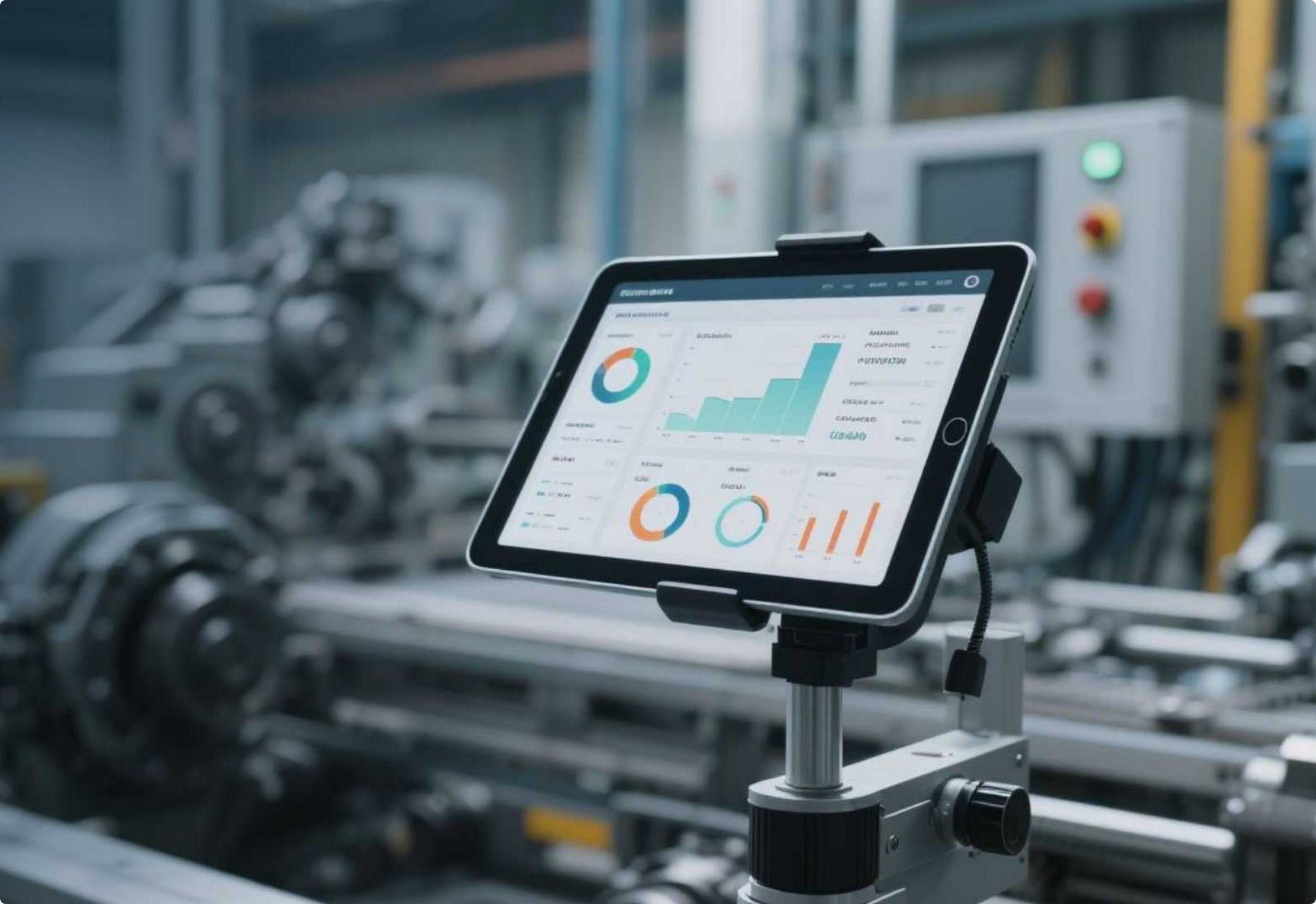
Information transparency is vital during process optimization and management. By implementing a production information management system for real-time monitoring and data collection, companies can clearly track the status of each process step, WIP distribution, and abnormalities, enabling prompt identification and response to flow issues.
Data-driven process analysis helps identify bottlenecks and improvement opportunities, shifting optimization from experience-based to objective data-based decisions. Building on this, combined with lean production and other advanced management principles, continuous process improvement reduces waste, shortens cycle times, lowers costs, and creates a virtuous cycle.
At its core, inefficient production flow is not a single-point issue but the result of process design, management mechanisms, and execution capability working together. Only by systematically reviewing the flow, strengthening process management, and achieving process transparency through digital tools can production plans truly be executed effectively.
慧湃APS Supply Chain Resource Planning and Scheduling Platform coordinates production flow, resource constraints, and planning scheduling. Through visual scheduling and real-time feedback, it creates a closed loop between flow and planning. This approach minimizes the impact of flow interruptions on plan execution, making production operations smoother and more controllable.