

 Products & Services







 400 676 5650
Time:2026-02-17
Anyone involved in production planning knows that plans always fall short of actual changes—orders are suddenly modified, materials are insufficient, or equipment breaks down. All these situations may force a complete rescheduling of the original plan. So, can an APS system handle such frequent replanning? Not only can it handle this, but it also helps companies save a lot of effort. Ultimately, one of the core strengths of an APS system is its ability to flexibly adapt to various changes in the production process.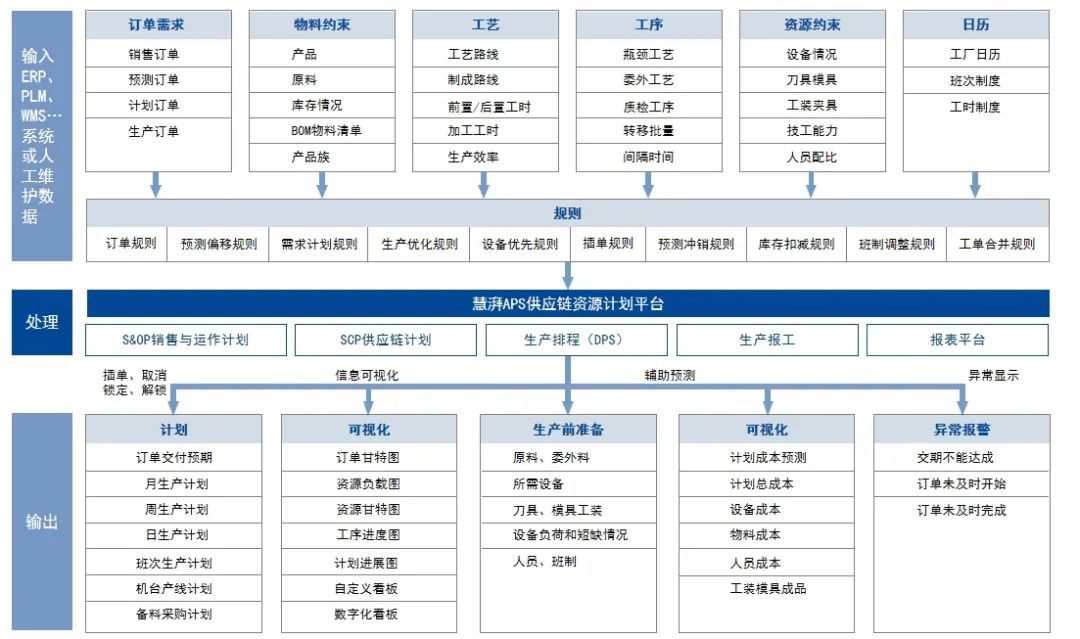
The APS system responds quickly to changes. Unlike manual production planning, which requires repeated calculations and adjustments, it can instantly reschedule production plans whether it’s a last-minute order addition, a change in delivery time, or equipment failure—delivering a new, reasonable plan within minutes. The APS system can also identify potential risks in advance. By combining historical data with current production realities, it alerts us to factors that may trigger replanning, giving companies time to prepare in advance and reduce the frequency of rescheduling. Additionally, the APS system centralizes management of all production resources, ensuring that when rescheduling occurs, there are no resource allocation conflicts or gaps in production workflows, so the new plan can be executed smoothly without back-and-forth revisions.
In the past, when frequent rescheduling was needed, everyone had to work overtime and was prone to errors. With the APS system, things become much easier. The APS system fully solves the challenge of frequent plan changes. When used effectively, it makes production planning more flexible and efficient, completely eliminating the hassle of rescheduling and enabling production to proceed in an orderly manner.