

 Products & Services






 400 676 5650
Time:2026-02-11
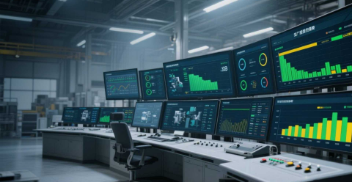
Many companies assume that once an APS system is installed, they can simply let it run. In reality, the system's true value is realized through continuous optimization. If left unadjusted after implementation, the APS system will gradually fail to keep pace with production changes, eventually becoming a mere "decoration." Thus, ongoing optimization is critical.Data must be reviewed regularly—the APS system hinges on accurate data. When production orders, equipment status, or material supply fluctuate, updates are essential to avoid discrepancies between the system's plans and actual conditions. Parameters should then be fine-tuned based on real-world production, such as order priorities and capacity limits. Adjustments should be incremental, informed by shop-floor feedback, to better align the APS with the production pace. Additionally, personnel training must be prioritized—new users need onboarding, and experienced employees require skill upgrades to ensure everyone can proficiently leverage the system's features.
Continuous optimization is not a one-time event but a sustained practice. Over time, you will notice that the APS system's scheduling efficiency improves, along with its adaptability. The value of an APS system lies in ongoing refinement—only through persistent optimization can it truly become a reliable "right-hand assistant" for production scheduling, helping us reduce costs, enhance efficiency, and avoid detours.