

 Products & Services




 400 676 5650
Time:2026-02-02
In a context where global supply chains are highly interconnected, a seemingly localized anomaly often rapidly amplifies into systemic risk. AI-powered production scheduling is evolving from a mere production planning tool into a critical component of supply chain risk management. By integrating AI scheduling with risk prediction mechanisms, enterprises are now capable of proactively addressing uncertainty.In practice, many supply chain disruptions are not entirely without warning. Fluctuations in supplier capacity, inventory anomalies, logistics delays, and regional incidents often emit signals before they occur—but these signals are scattered across disparate systems and data sources, making them difficult to identify and correlate in a timely manner.
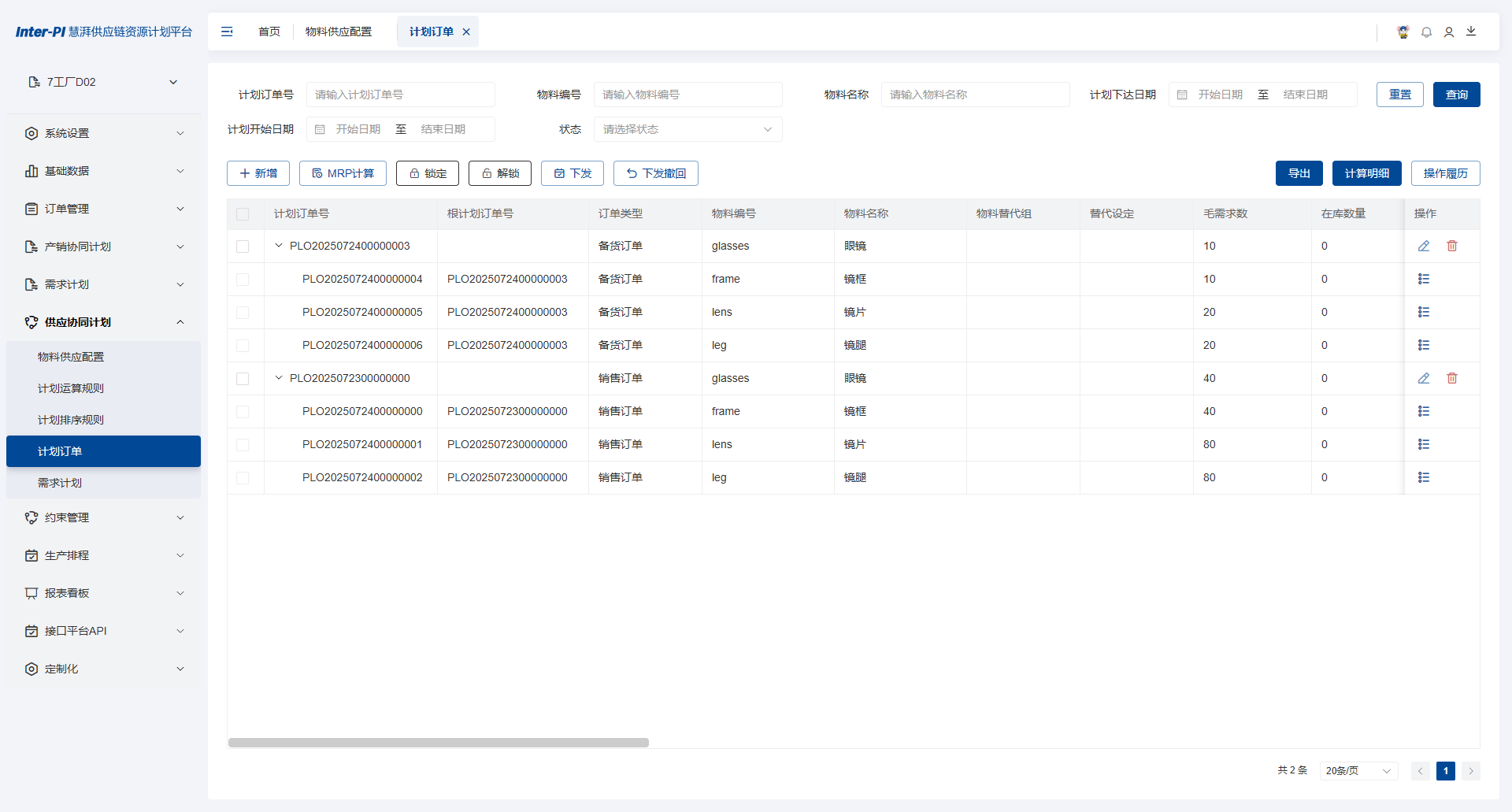
To address this, enterprises are building risk identification systems based on anomaly detection and correlation analysis. By integrating supplier performance data, logistics tracking, macroeconomic indicators, industry trends, and external public opinion information, APS systems can continuously scan for potential risk patterns. When certain indicator combinations deviate from normal ranges, a risk early-warning mechanism is triggered.
In this process, AI-powered scheduling does not operate in isolation but serves as the "execution layer" that translates risk assessment results into action. When the system identifies a potential disruption risk for a critical material, the scheduling model simultaneously evaluates the impact of different response strategies on production and delivery—including preemptive stockpiling, supplier switching, or adjusting production cadence.
Through learning from historical events, the system continuously strengthens its ability to recognize risk characteristics. For instance, when an extreme weather warning is issued for a supplier's region and simultaneous abnormal business signals emerge from its upstream partners, the model synthetically assesses the probability of delivery delays and drives proactive planning adjustments.
The value of this mechanism lies not in eliminating risk entirely but in significantly compressing the enterprise's reaction time window. By anticipating disruptions in advance, companies can reallocate resources without halting production, thereby avoiding the massive losses incurred by unplanned shutdowns.
From an operational perspective, the combination of AI scheduling and risk prediction shifts supply chain management from "post-event remediation" to "pre-event defense." From a financial perspective, companies can reduce excessive safety stock driven by uncertainty, free up cash flow, and improve overall asset efficiency.
When the supply chain is no longer "adjusted only after problems arise" but "adjusted by foreseeing problems," the strategic value of AI-powered scheduling becomes evident. AI scheduling elevates risk management from experience-based judgment to systematic capability, and it is emerging as a critical fulcrum for enterprises to build resilient supply chains.