

 Products & Services








 400 676 5650
Time:2026-01-16
In the automotive parts industry, production processes are complex and must be tightly aligned with the pace of vehicle manufacturers. The application of APS systems can precisely address industry pain points, becoming a powerful ally in production operations.Automotive parts companies often face orders for multiple varieties in small batches. From engine components to electronic sensors, the product range is diverse and complex, with each product requiring distinct production steps. An APS system integrates all critical information—order demands, warehouse inventory, equipment capacity, and more—to create detailed production schedules. It specifies the start time for each step, the equipment to be used, and the delivery timeline, bringing order and predictability to the production process. In scenarios requiring coordination across multiple processes such as stamping, welding, and assembly, the APS system optimizes task sequences, balances workloads across machines, and minimizes time wasted on frequent line changeovers, steadily boosting production efficiency.
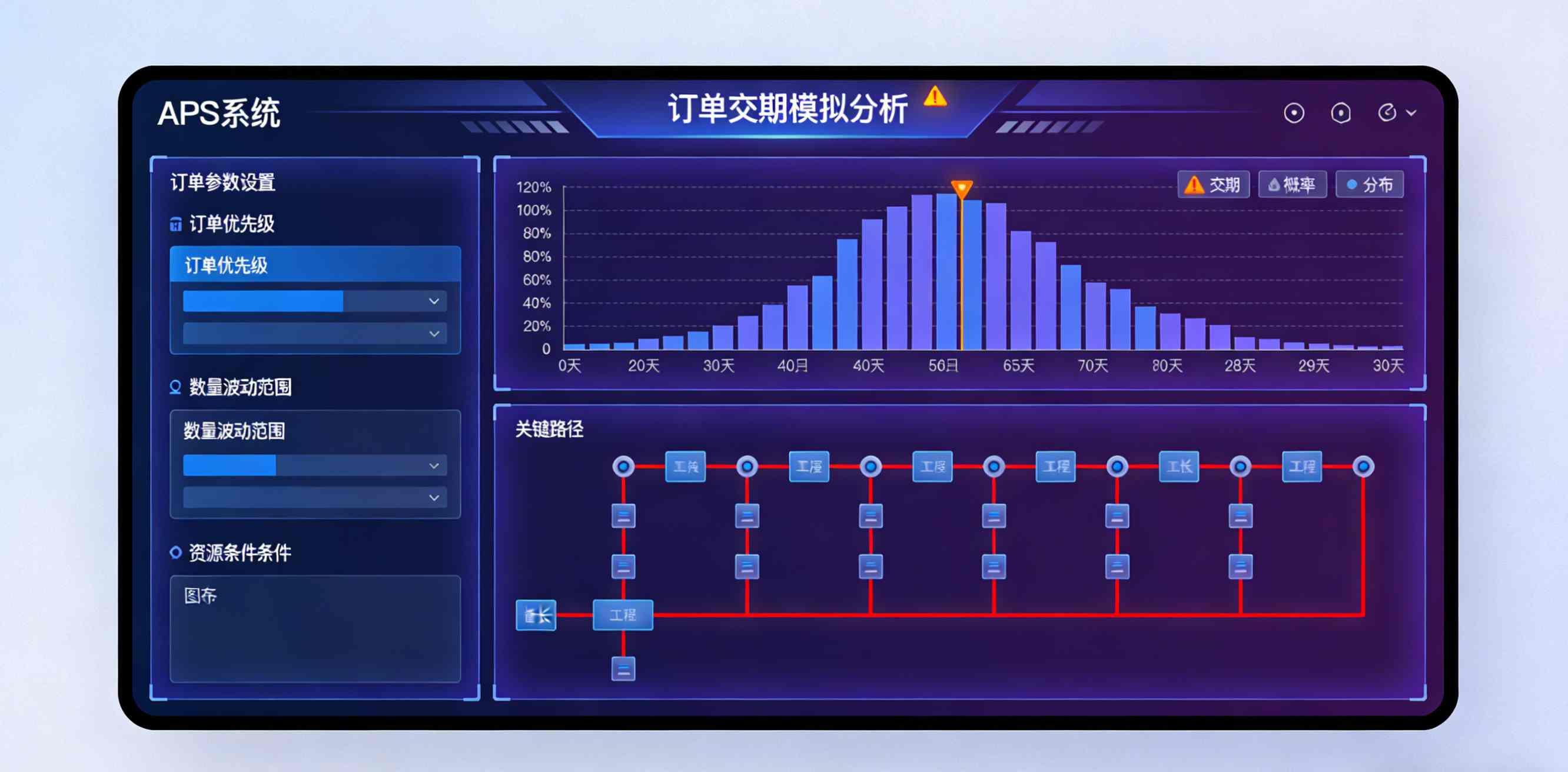
Vehicle manufacturers may suddenly add or modify orders, which puts the responsiveness of parts suppliers to the test. The APS system can quickly simulate adjustment plans, calculate the impact of new orders on existing schedules, and immediately reschedule production to avoid delivery delays. Meanwhile, the APS system connects information channels with suppliers, accurately determining the quantity and arrival time of each material. It synchronizes supplier replenishment and logistics to prevent both production line halts due to material shortages and excessive inventory accumulation. During production, the APS system monitors progress in real time. When anomalies such as equipment malfunctions or quality issues occur, it issues timely alerts, helping staff respond quickly to ensure smooth production and meet the stringent delivery requirements of the automotive industry.