


 Products & Services








 400 676 5650
Time:2026-01-07
The manufacturing process in the equipment industry is complex, requiring a wide variety of materials. The quality of scheduling directly impacts factory productivity and profitability. Many companies invest significant effort in production planning, yet without scientific evaluation methods, they have no way to determine whether their production schedules are truly appropriate. This often leads to piles of work orders waiting for materials with no one handling them, while unused materials accumulate in the workshop. The key role of supply chain planning and scheduling is to precisely allocate resources where they are needed, and scientific key indicators are precisely the means to verify this role.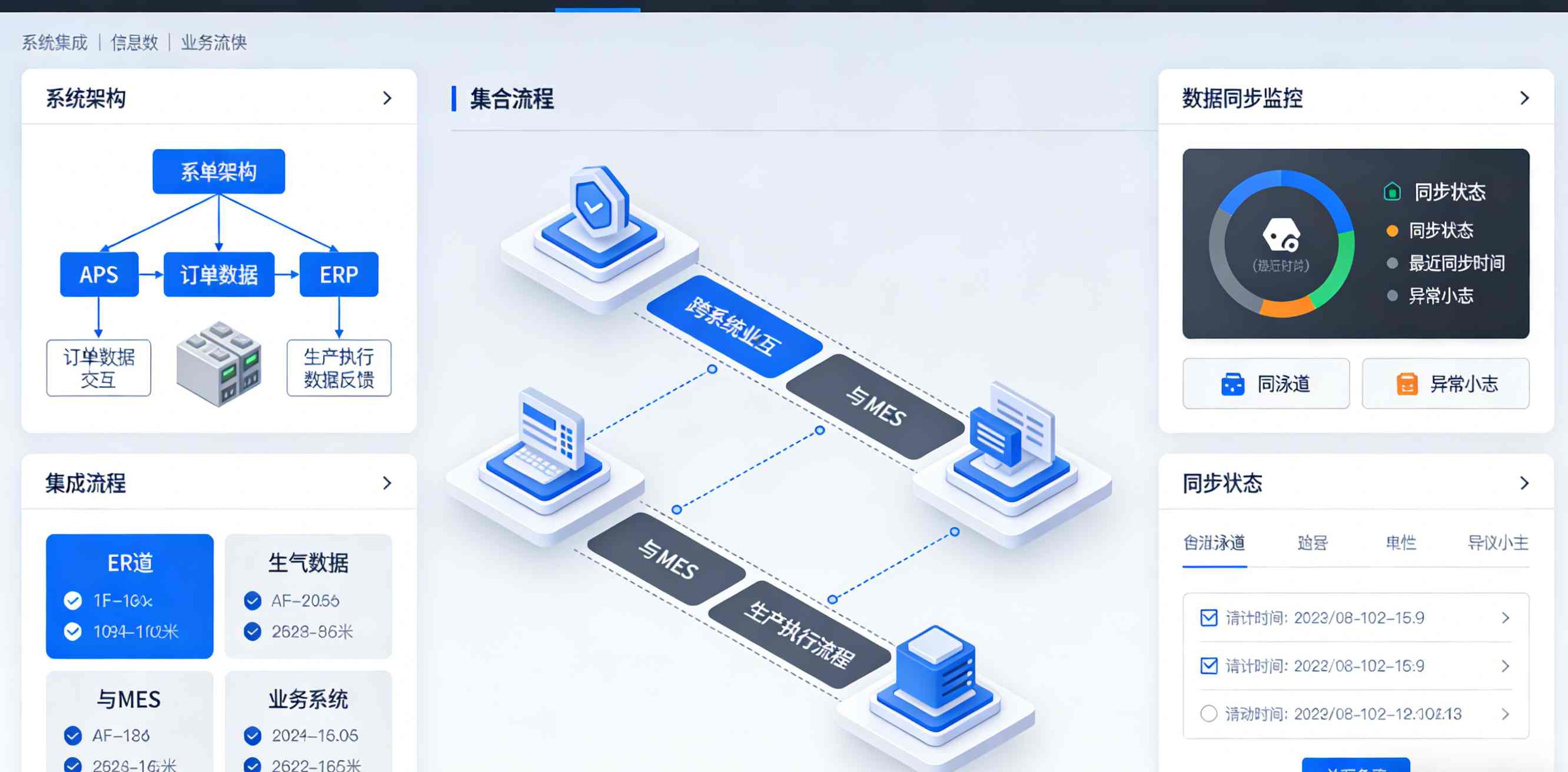
The core indicators of supply chain planning and scheduling mainly revolve around four aspects: delivery, efficiency, resources, and cost. Each indicator directly reflects the actual effectiveness of scheduling. In terms of delivery, the most important metric is the on-time delivery rate—the proportion of orders completed on time out of all orders. This indicator directly shows whether the production schedule can meet customer requirements and serves as the foundation for judging the reasonableness of the plan. In terms of production speed, the focus is on manufacturing lead time—the total duration from order placement to product completion. The shorter the production time, the more fully production capacity is utilized, and the faster the enterprise can respond to market changes.
Two key indicators for resources in supply chain planning and scheduling are equipment utilization rate and material kitting rate. Equipment utilization rate reflects whether production equipment is being wasted, avoiding scenarios where some machines sit idle while others are overloaded. The material kitting rate addresses a pain point in the equipment manufacturing industry, directly linking to the number of work orders waiting for materials. The higher the kitting rate, the lower the probability of production interruptions due to material shortages. In terms of cost, the main focus is on the proportion of unused materials—the value of materials that have not been used for an extended period relative to the total value of all materials. This indicator directly reflects how well production scheduling and material management work together and is key to cost control.
Measuring the effectiveness of supply chain planning and scheduling cannot rely on a single indicator; these key metrics must be evaluated in combination. For example, one should not pursue a high on-time delivery rate at the expense of equipment capacity or by allowing a massive increase in unused materials, as this would defeat the fundamental purpose of production scheduling. Only when all indicators are coordinated and optimized as a whole can it be said that the production schedule truly meets the enterprise's production needs.
The Huipai APS Supply Chain Resource Planning and Scheduling Platform uses intelligent algorithms to optimize production sequencing, balancing the workload of each piece of equipment, improving equipment utilization, while shortening production time and steadily increasing the on-time delivery rate. Addressing the problem of unused materials, the supply chain planning and scheduling platform accurately calculates the demand for each material based on the production schedule, avoiding over-purchasing or premature stocking, thereby reducing the proportion of unused materials. Through this platform, enterprises can monitor changes in key indicators in real time, gain a clear understanding of production scheduling effectiveness, and have data-backed insights for future optimization and adjustments.