400 676 5650
Time:2024-12-18
The automotive parts industry has always been highly competitive. To maintain their market position, companies must continuously seek breakthroughs, reduce costs, and enhance their market competitiveness. As an efficient concept for production and inventory control, lean management provides strong ideological support for the automotive parts industry. Today, let us explore how lean management can help the automotive parts industry precisely balance demand and inventory.
The core of lean management lies in eliminating waste and maximizing resource utilization. How can lean management principles be applied in the automotive parts industry? In this industry, customer demand is often highly variable. Lean management requires companies to use data analysis tools for accurate demand forecasting. They can leverage systems to build scientific forecasting models, providing a reliable basis for inventory management. Based on forecast results, production plans and inventory strategies should be dynamically adjusted to ensure that inventory levels meet customer demand while avoiding excessive accumulation.
In the automotive parts industry, setting safety stock is crucial. However, excessively high safety stock increases costs, while too low inventory may lead to supply disruptions. Lean management emphasizes balancing safety stock and flexible response by optimizing inventory structure and increasing inventory turnover. Reasonable safety stock levels should be set based on customer demand, supply chain stability, and product characteristics. At the same time, an inventory warning mechanism should be established to ensure timely replenishment when inventory approaches the safety line. For products with high demand volatility, adopt JIT (Just-In-Time) production to reduce inventory accumulation. Meanwhile, establish close partnerships with suppliers to achieve rapid response to market changes.
Lean management emphasizes the synergy and efficiency of production planning and all aspects of the supply chain. In the automotive parts industry, production plans must fully consider factors such as customer demand, inventory status, and production capacity to ensure orderly production activities. Maintain close communication with upstream suppliers and downstream customers to jointly plan production schedules. Through information sharing and collaborative operations, improve supply chain transparency and responsiveness. Utilize advanced production management software and automation equipment to enhance production efficiency and quality levels. At the same time, strengthen production process monitoring and management to ensure smooth execution of production plans.
Lean thinking is not only a management tool and methodology but also a corporate culture and value system that encourages employees to propose improvement suggestions and innovative solutions, jointly driving continuous improvement. Take lean management as a long-term strategic goal of the enterprise, constantly pursuing excellence in production efficiency and customer satisfaction. Through continuous improvement and innovation, maintain the company's competitive advantage and market position.
Alps System Integration Co., Ltd. has always adhered to the core philosophy of "meticulous craftsmanship," stemming from its deep roots in manufacturing sites, and is committed to providing digital management solutions and services for the manufacturing industry. Its self-developed lean digital production management system not only provides solid support for the efficient operation of the group's factories but also, with its unique advantage of originating from and serving factories, has won widespread recognition in the domestic market.
- Manufacturing DX
 Manufacturing DXBuilt on real manufacturing experience, our smart factory solutions help improve operations and deliver lasting value.
 Products & ServicesCustomer Stories
 HUIPAI APSDriven by on-site needs and business-centric, we precisely address the production-sales coordination and delivery challenges faced by manufacturing enterprises!
 S&OPIntegrate the entire process of demand, supply, production, and delivery to achieve supply-demand balance, capacity optimization, and agile decision-making.
 SCPConnect the demand, inventory, supply, and production collaboration links to achieve complete kit assurance, inventory optimization, and supply resilience.
 DPSDynamically coordinate human, machine, and material resources to quickly respond to order changes, improving capacity utilization and on-time delivery rates.
 - Automotive ElectronicsAutomotive ElectronicsFrom software development to testing services and custom solutions, we help customers accelerate innovation with proven automotive engineering expertise.Products & ServicesFeatured Solutions
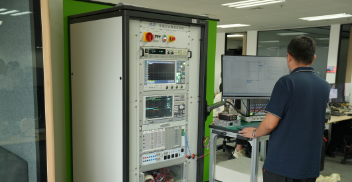 Automotive Testing ServicesCovering 4 levels and 8 dimensions, it comprehensively perfects the testing system and process to ensure testing quality.
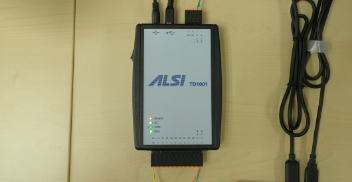 Vehicle Network Test KitRegarding acceptance criteria, reduce rework, allowing OEMs to accept with greater confidence and suppliers to submit with greater peace of mind.
 ECU HIL Test PadUniversal Vehicle Body Electronic Environment Simulation System, versatile for multiple uses, rapid screening, ensuring "zero" defects in products.
 CAN Fuzz Testing AppEfficient, precise, and comprehensive. Your on-the-go vehicle communication security testing expert.
 - Use Cases
- Customer Stories
- CareersCareersWe invest in our people through structured development, mentoring, and a collaborative culture, creating clear career paths and growth opportunities for every employee.Job Opportunities
- About ALSIAbout ALSILeveraging the experience and expertise of the Alps Alpine Group, we partner with customers to drive continuous improvement and long-term growth.