

 Products & Services







 400 676 5650
In today's evolving development environment, small and medium-sized factories must continuously optimize their production plans, where the role of the workshop supervisor is often crucial. The workshop supervisor is closely tied to the optimization of production plans and equipment management. This not only affects the factory's operational efficiency but also its production costs. This article will explore how the workshop supervisor can enhance equipment performance by optimizing production plans, helping small and medium-sized factories achieve efficient production.
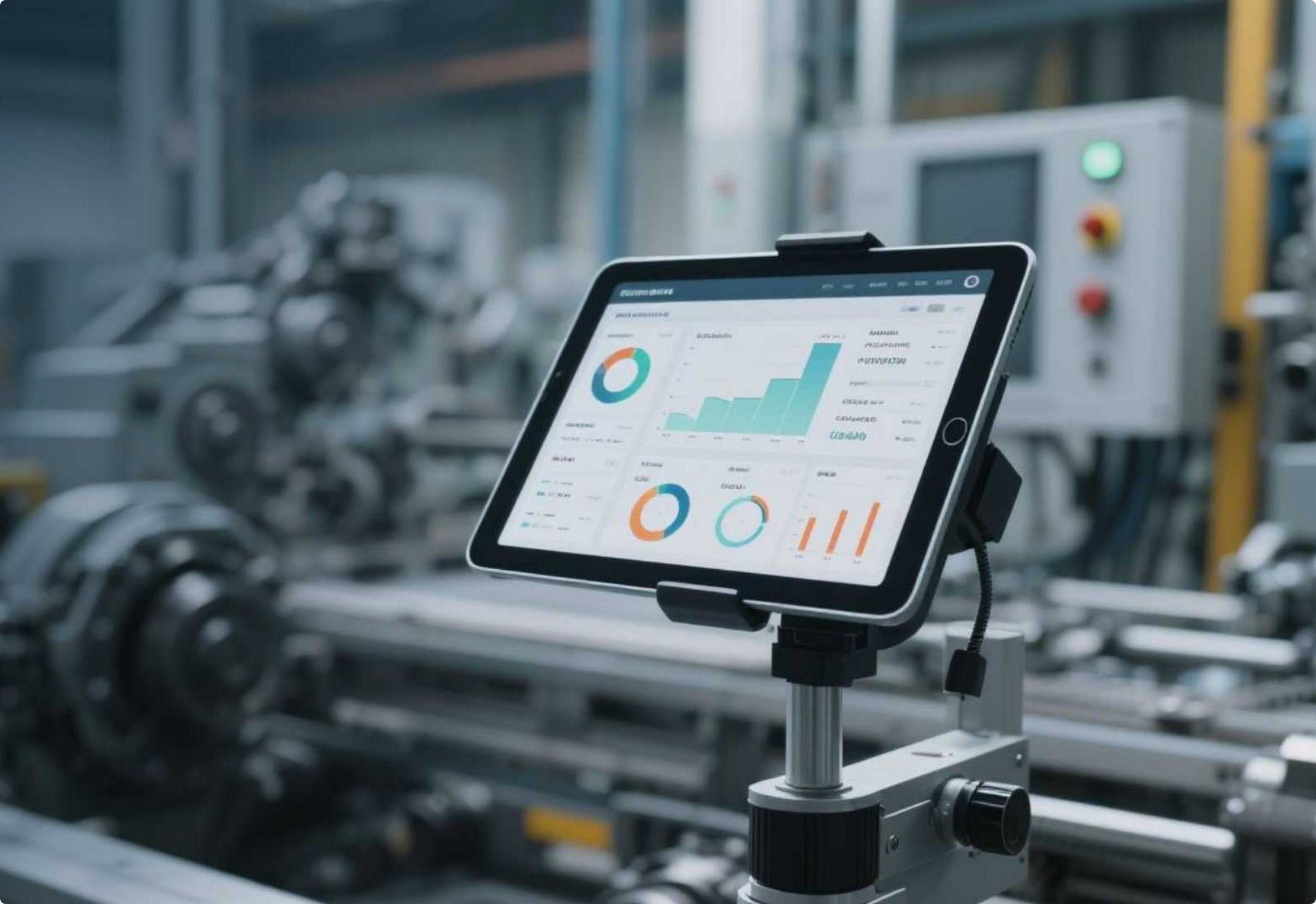
In the context of machines replacing human labor, equipment has become the primary driver of factory productivity. However, many workshop supervisors still focus only on labor efficiency, neglecting equipment performance management. They often lack effective analysis and management of equipment idle time, capacity saturation, and OEE (Overall Equipment Effectiveness). This management approach not only leads to inefficient equipment operation but may also cause production anomalies, affecting timely order fulfillment.
How can equipment efficiency be improved? Optimizing the production plan is key. By formulating reasonable and effective production plans, companies can ensure equipment utilization and reduce idle time. Moreover, an excellent production plan can help the factory predict potential threats in the production process, lowering the probability of production anomalies.
What exactly does a good production plan require? First, advanced monitoring technology should be used to track equipment operation status, collect equipment usage data, and perform analysis. This enables timely detection of equipment anomalies, reducing unexpected downtime and improving equipment utilization. Second, the collected data can be analyzed through OEE tools to identify the root causes of low efficiency. Additionally, a production plan is not set in stone; it needs continuous optimization and improvement based on the company's specific circumstances. By persistently refining the production plan, companies can enhance their agility in facing risks and strengthen their market competitiveness.
Take one of our factory's CNC machines as an example. By optimizing the production plan and monitoring the equipment status in real time, we achieved full utilization and efficient production. Under the same order volume, the equipment running time was effectively shortened, while production capacity was significantly increased. This not only reduced production costs but also improved the on-time delivery rate of orders.
For small and medium-sized factories to secure a foothold in today's fiercely competitive market, they must prioritize the continuous optimization of production plans. By implementing the various measures outlined in this article, equipment utilization can be effectively improved. Let us work together to contribute to the journey of production plan optimization for small and medium-sized factories!