

 Products & Services





 400 676 5650
In China, Alps Group operates seven factories, the earliest of which was established in 1993 and the latest in 2008. All seven are existing plants. Today, we continue to share the challenges faced by Alps Group's factories in building smart manufacturing, and discuss how existing plants can embark on a transformative journey toward smart factories.
This article distills and organizes insights from a speech by Dr. Zhang Xiaojian, Director of ALSI, titled "Key Factors and Technologies for Implementing Smart Manufacturing in Existing Plants." It also reflects ALSI's value proposition in lean improvement and smart manufacturing.
In the industrial sector, there is an academic term—non-digitally native plants—referring to factories that lacked comprehensive digital systems at their inception. For such plants, figuring out how to initiate smart manufacturing and digital transformation has always been a challenge. The ALSI team proposes a key viewpoint: the digitalization of existing plants should be driven by lean principles, with continuous improvement as the core of lean. This improvement does not require revolutionary changes but should be a process of steady, incremental progress.
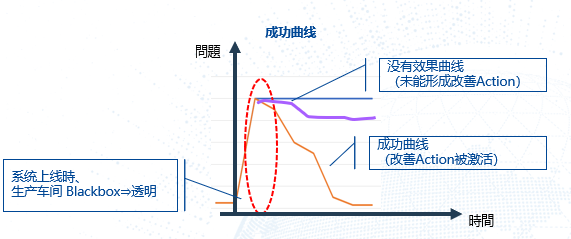
Realizing smart manufacturing also requires addressing issues of confidence and trust. To this end, we need to carry out small-scale projects to enhance the awareness and trust of shop-floor workers and managers in smart manufacturing, allowing them to quickly see the benefits and results. To ensure project success, we have established a success curve to measure whether the system is successful. When the system goes live and the shop floor transitions from a black box to a transparent environment, if the curve shows no change, we consider the system unsuccessful. Through this approach, we can gradually build confidence and trust on the shop floor, laying a solid foundation for the promotion of smart manufacturing.
In the process of smart manufacturing, we must pay attention to the value of data and the problem of data waste. Lean thinking identifies seven forms of waste; in addition, data waste deserves attention. Data needs to be visualized, analyzed, and statistically processed to enable decision-makers to make data-driven decisions while avoiding information overload that can interfere with decision-making. Additionally, we need to focus on the cooperation of on-site operators to prevent the emergence of "zombie systems" caused by inconvenient operations or cumbersome procedures, which could make operators feel that smart manufacturing does not solve problems but instead adds extra work and wastes the value of data. Therefore, we need to promote smart manufacturing with a lean approach, insist on continuous improvement, and steadily enhance the efficiency and value of smart manufacturing.
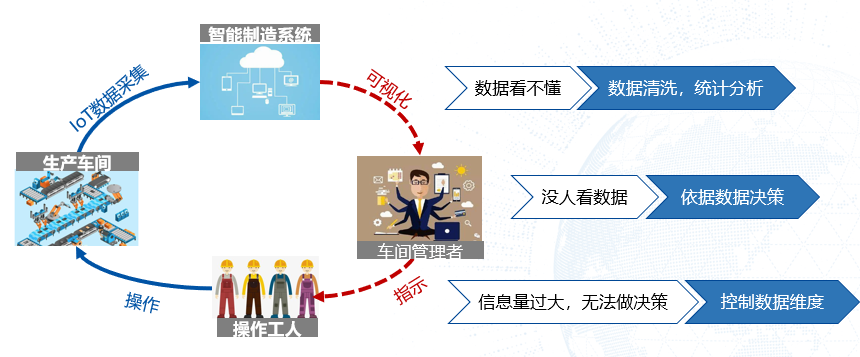
To address the cumbersome work of on-site operators and the challenges of information coordination, an effective solution is to adopt the IoT system for seamless data collection from the shop floor, enabling operators to easily complete data capture and information sharing without increasing their workload or stress.
Information coordination is also a critical aspect. It requires ensuring smooth and unobstructed information sharing and transmission across all links to better support production processes and decision-making. Information coordination encompasses various types of collaboration, including equipment, molds, processes, production plans, personnel allocation, and quality inspection.
Case Study
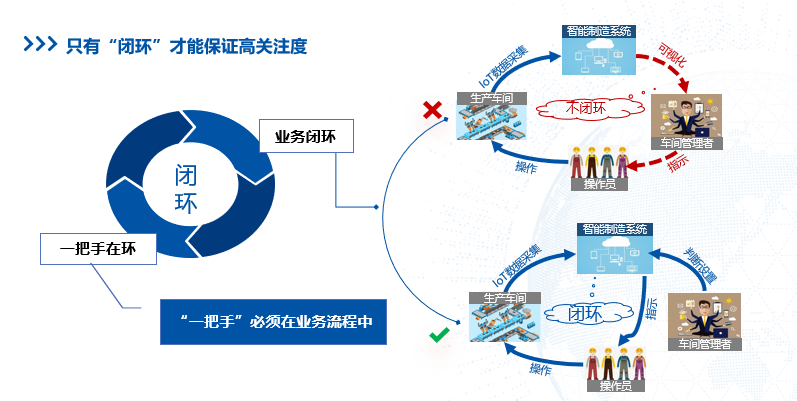
ALSI once helped Shenyang Zhongguang Electronics Co., Ltd. (referred to as "Shenyang Zhongguang") establish a closed-loop system for real-time monitoring of equipment operation status and digital maintenance. As a company founded in 1992, Shenyang Zhongguang faced the following challenges:
- With the continuous advancement of workshop automation and the introduction of equipment such as robotic arms, the number of base station operators decreased, making it difficult to quickly communicate equipment anomaly information to the relevant responsible parties.
- As orders increased year by year, existing production capacity could not meet demand, necessitating an urgent improvement in OEE (Overall Equipment Effectiveness).
To solve these problems, ALSI helped Shenyang Zhongguang deploy the AIMMRAI Jinzhi Lean Factory Cloud Platform's Equipment Status Monitoring System and TPM Maintenance System. The systems have been running stably for nearly two months, effectively supporting the formation of a closed-loop maintenance response.
If you wish to receive the materials shared by Dr. Zhang Xiaojian, Director of ALSI, titled "Key Factors and Technologies for Implementing Smart Manufacturing in Existing Plants" for free, please follow the [ALSI Smart Manufacturing] official account and enter "Digital Factory Materials" in the backend. We will share the materials with you.