

 Products & Services



 400 676 5650
Recap: On November 17-18, 2022, Alpine System Integration (Dalian) Co., Ltd. (ALSI) was invited to attend the 8th International Intelligent Manufacturing (Wuhan) Forum. The forum featured a dedicated summit on "Intelligent Manufacturing Promotion Strategies," where ALSI Director Dr. Zhang Xiaoli delivered a keynote speech titled "Automation ≠ Cost Reduction & Efficiency Gains — IoT + Lean + Digitalization Empowering Smart Manufacturing Upgrade and Beyond."
ALSI has compiled the speech content to share insights with industry peers on the transformation and upgrading strategies for manufacturing enterprises.

The following is an excerpt from Dr. Zhang Xiaoli's speech
⬇⬇⬇⬇⬇⬇
Key Point 2:
Scientific Equipment Maintenance — Containing Maintenance Costs
The second key point proposed by ALSI for automation construction is scientific equipment maintenance, which involves two aspects: maintaining equipment health and containing maintenance costs. Let us now explore how to reduce costs.
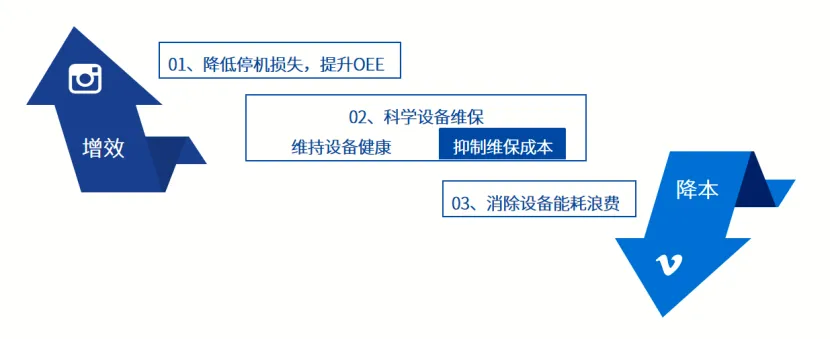
For enterprises, equipment incurs two types of costs: the cost of downtime due to failures and the cost of maintenance itself. To prevent failures, should we maintain equipment at any cost? The answer, of course, is no.
In the figure below, the orange curve represents downtime costs, the blue curve represents maintenance costs, and the gray curve represents total costs. As maintenance costs increase, downtime costs decrease, but this relationship is not linear. From a cost perspective, the goal is not to minimize downtime costs alone, but to minimize total costs — that is, the point where the gray curve reaches its lowest point. This point represents the optimal balance between downtime costs and maintenance costs.
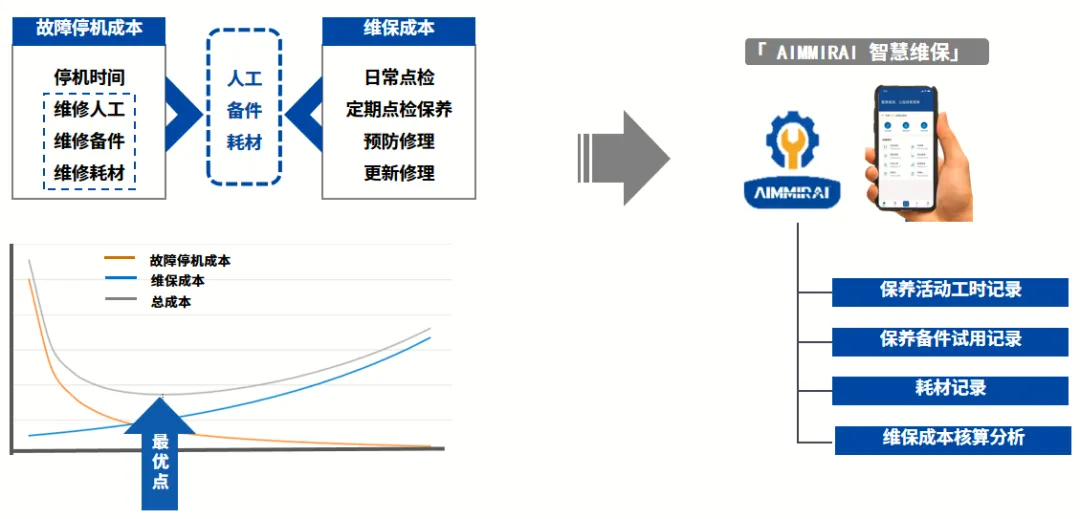
However, without recording and archiving data such as downtime duration, maintenance labor, and spare parts and consumables usage, clear cost accounting is impossible, and the optimal balance point cannot be found. Moreover, this optimal point changes over time and with equipment utilization. ALSI's AIMMIRAI Smart Factory Cloud Platform TPM Module digitizes all maintenance processes, making costs transparent at a glance.
Predictive Maintenance: An Effective Approach to Containing Maintenance Costs
In fact, a more effective way to contain maintenance costs is through predictive maintenance. Predictive maintenance is a method that prescribes future actions based on past cases and current diagnostics. It must be built on statistical analysis of historical big data and real-time diagnosis of equipment health. Therefore, without established enterprise equipment maintenance informatization, predictive maintenance is not feasible.
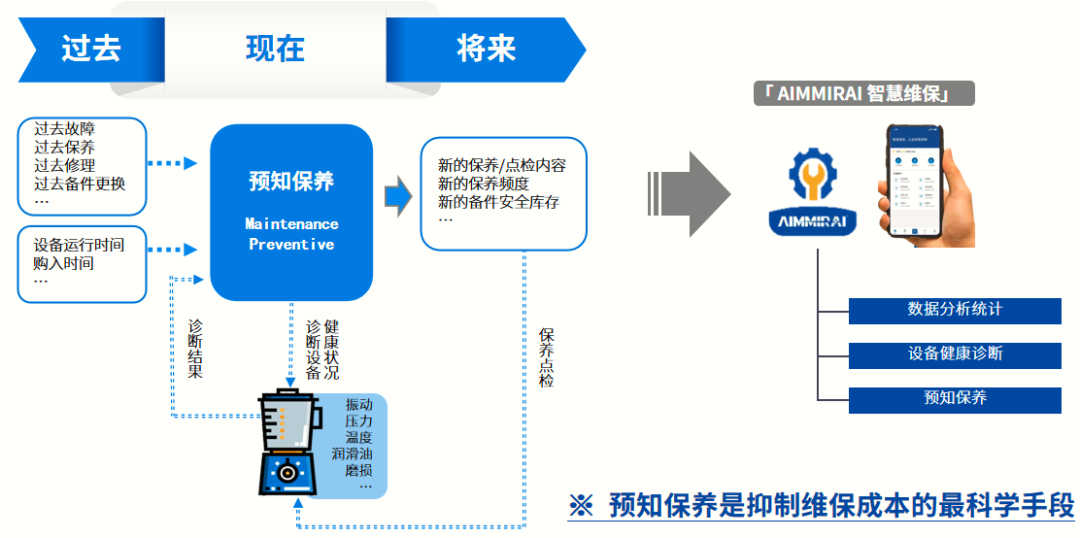
Leveraging IoT technology and the Total Productive Maintenance (TPM) philosophy rooted in lean production, ALSI has developed the AIMMIRAI Smart Factory Cloud Platform TPM Module. This module enables paperless, full-lifecycle equipment management. Combined with intelligent algorithms, it innovatively introduces predictive maintenance capabilities, shifting from a reactive maintenance model, reducing factory maintenance costs, and effectively achieving cost reduction and efficiency gains — driving enterprise automation construction.
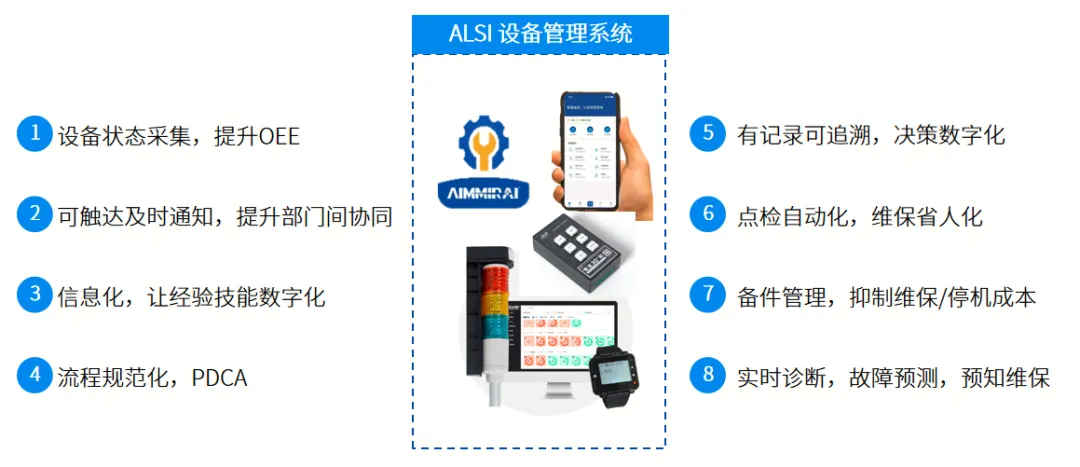
➡ Click to view the ALSI solution
Key Point 3:
Monitoring Equipment Energy Consumption and Power Usage to Curb Energy Waste
Manufacturing has always been a major energy consumer. Against the backdrop of national "Carbon Peak and Carbon Neutrality" goals, energy conservation and emission reduction is not only an inevitable trend but also a critical task for the survival and development of enterprises. How can we promote energy conservation and emission reduction? Identifying the root causes of high energy consumption in manufacturing enterprises may lead to effective measures. These causes can be summarized into three points: 1) outdated processes and aging equipment, 2) low power supply efficiency, and 3) rough management practices.
ALSI believes that, as a long-term endeavor, energy conservation and emission reduction for manufacturing enterprises should start with a comprehensive understanding of their power supply and usage. Only by having a clear picture of power supply and demand can enterprises gradually improve power supply efficiency and enhance power usage management. By tracking energy consumption, factories can adjust production schedules based on production characteristics and progress, shifting more production to off-peak hours to reduce energy costs. In addition to energy tracking, factories need real-time visibility into their internal power supply systems — this helps reduce line losses and improve power quality, ensuring production safety.
As machines replace labor, the proportion of equipment increases, leading to a steady rise in production equipment electricity consumption. Beyond high-energy-consumption equipment like air compressors, the energy management of production equipment becomes increasingly important. Moreover, equipment failures and untimely maintenance are often key factors causing abnormal electricity usage. Therefore, integrated analysis of equipment operating status, maintenance status, and energy consumption data is critical for both equipment maintenance and energy management.
ALSI's AIMMIRAI Smart Factory Cloud Platform Energy Management Module is one of the industrial energy intelligent management solutions tailored for manufacturing plants. It provides real-time energy data collection, storage, analysis, visualization, and pre-alert/alarm functions, making energy consumption visible and information-driven. The power monitoring system helps factories enhance the granularity of energy management, improve energy utilization, and assist users in reducing costs and risks. It effectively promotes energy savings and efficiency gains, boosting overall competitiveness.
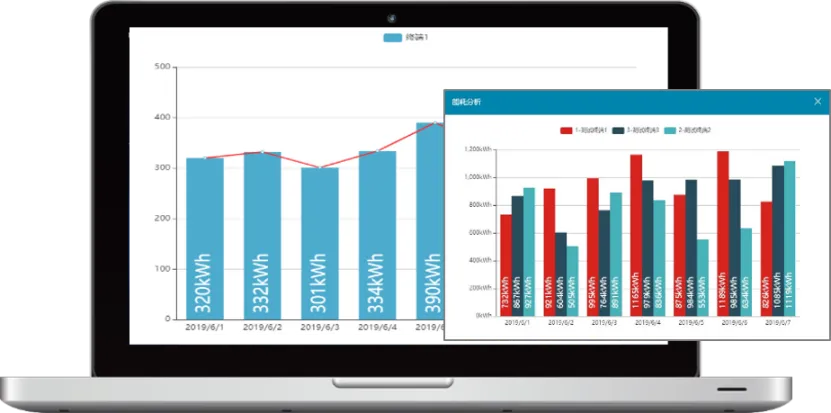
By fully implementing equipment energy management and effectively curbing energy waste, energy costs can be kept within anticipated control ranges during the process of machine substitution for labor.
This edition of 'Lean Insights' shared the third key point on automation construction. Follow the official WeChat account [ALSI Smart Manufacturing] to view the complete content of Automation ≠ Cost Reduction & Efficiency Gains — IoT + Lean + Digitalization Empowering Smart Manufacturing Upgrade and Beyond.