

 Products & Services






 400 676 5650
Time:2026-03-09
As manufacturing transitions toward flexibility and intelligence, enterprises are placing higher demands on the responsiveness and execution precision of production plans. APS systems are increasingly becoming a critical component in the digital transformation of manufacturing companies. This article systematically elaborates on the APS system from three dimensions: definition, core concepts, and application value.The APS system, whose full Chinese name is Advanced Planning and Scheduling System, encompasses two core modules: Advanced Planning (AP) and Advanced Scheduling (AS). The former focuses on mid-to-long-term capacity planning and material requirement analysis, while the latter targets short-term, operation-level scheduling and resource allocation. Currently, mainstream APS software on the market primarily centers on AS functionality.
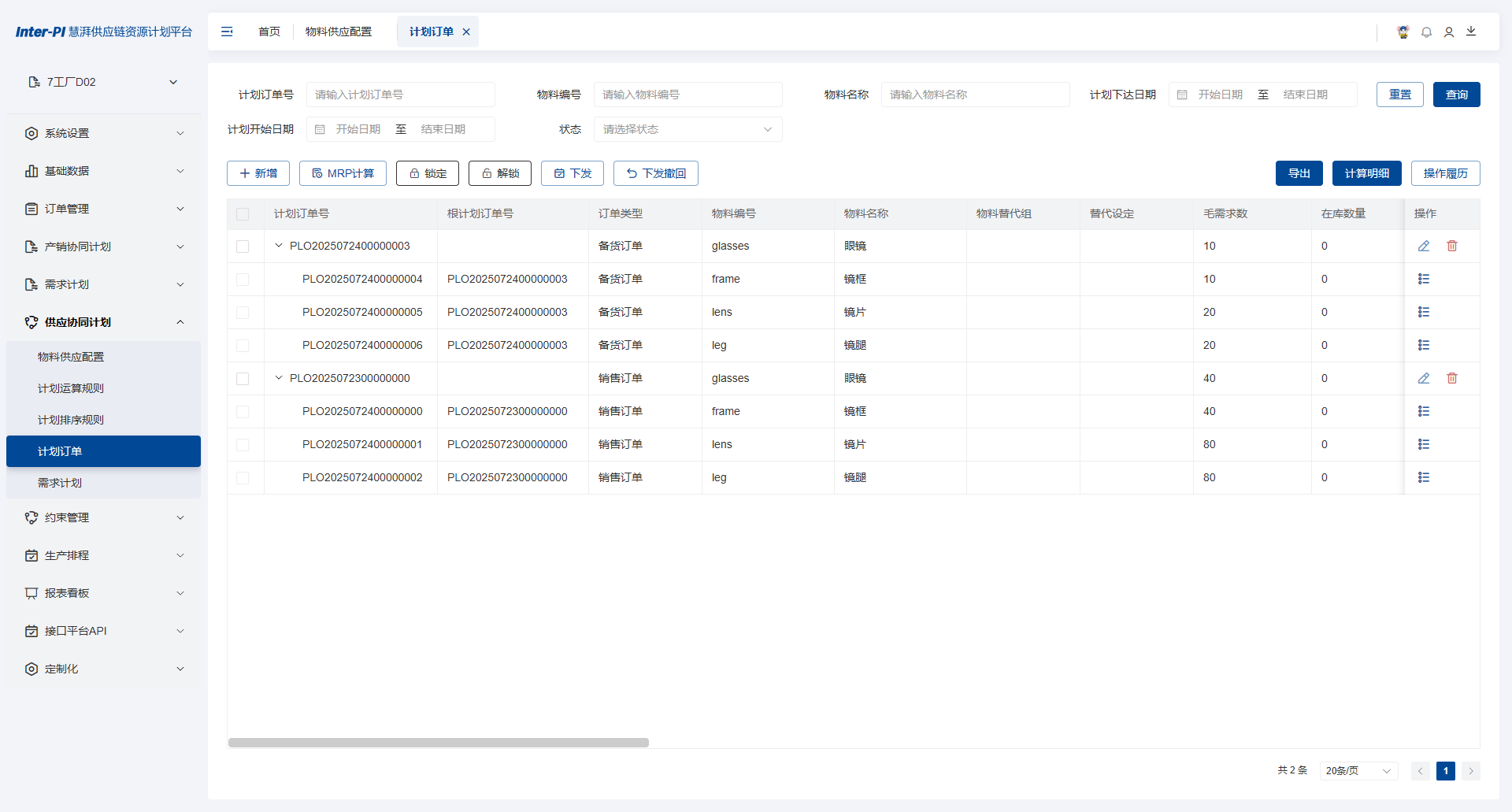
In summary, the fundamental task of an APS system is to rationally plan and dynamically schedule production resources such as materials, equipment, and personnel under established rules and multiple constraints. It is an intelligent software system that enables sales-production coordination, supply chain coordination, and advanced scheduling. To facilitate understanding of the APS operational logic, the following elaborates on its core concepts:
I. Scheduling Rules
Rules are behavioral guidelines that must be followed during scheduling, determining the priority of orders in the production queue. Common rule dimensions include order priority, customer delivery deadlines, and equipment preference settings. The establishment of rules directly impacts the rationality of the plan and its feasibility on the shop floor.
II. Constraints
Constraints are a core element that distinguishes APS from traditional planning tools. They can be categorized into hard constraints and soft constraints:
Hard constraints: These are non-negotiable requirements in the production process, such as dedicated equipment required for specific products or fixed curing times in the process route. Such conditions must be strictly adhered to during scheduling.
Soft constraints: These are flexible conditions that can be optimized within a certain range, such as the supply lead time of raw and auxiliary materials, the adjustability of process routes, the proficiency of man-machine coordination, and the coordination of outsourced processing. These factors can be adjusted flexibly based on actual circumstances.
III. Materials and Resources
Materials: Generally refer to all supplies involved in the production process, including raw materials, auxiliary materials, semi-finished products, and finished goods.
Resources: Broadly include equipment and personnel. Equipment resources cover core production equipment such as CNC machining centers and cold heading machines, as well as auxiliary tooling like molds and cutting tools. Personnel resources must account for skill levels—the performance differences between single-skilled and multi-skilled workers, apprentices and skilled workers—directly affecting the accuracy and efficiency of operation sequencing. Different orders require varying personnel skills, so human resources must also be integrated into the planning system for comprehensive scheduling.
APS systems are not merely scheduling tools; they are the core support for enterprises to achieve precise planning and resource optimization. For manufacturing companies pursuing flexible responsiveness and lean production, understanding their operational logic is a foundational step toward efficient operations.