


 Products & Services







 400 676 5650
Time:2025-12-22
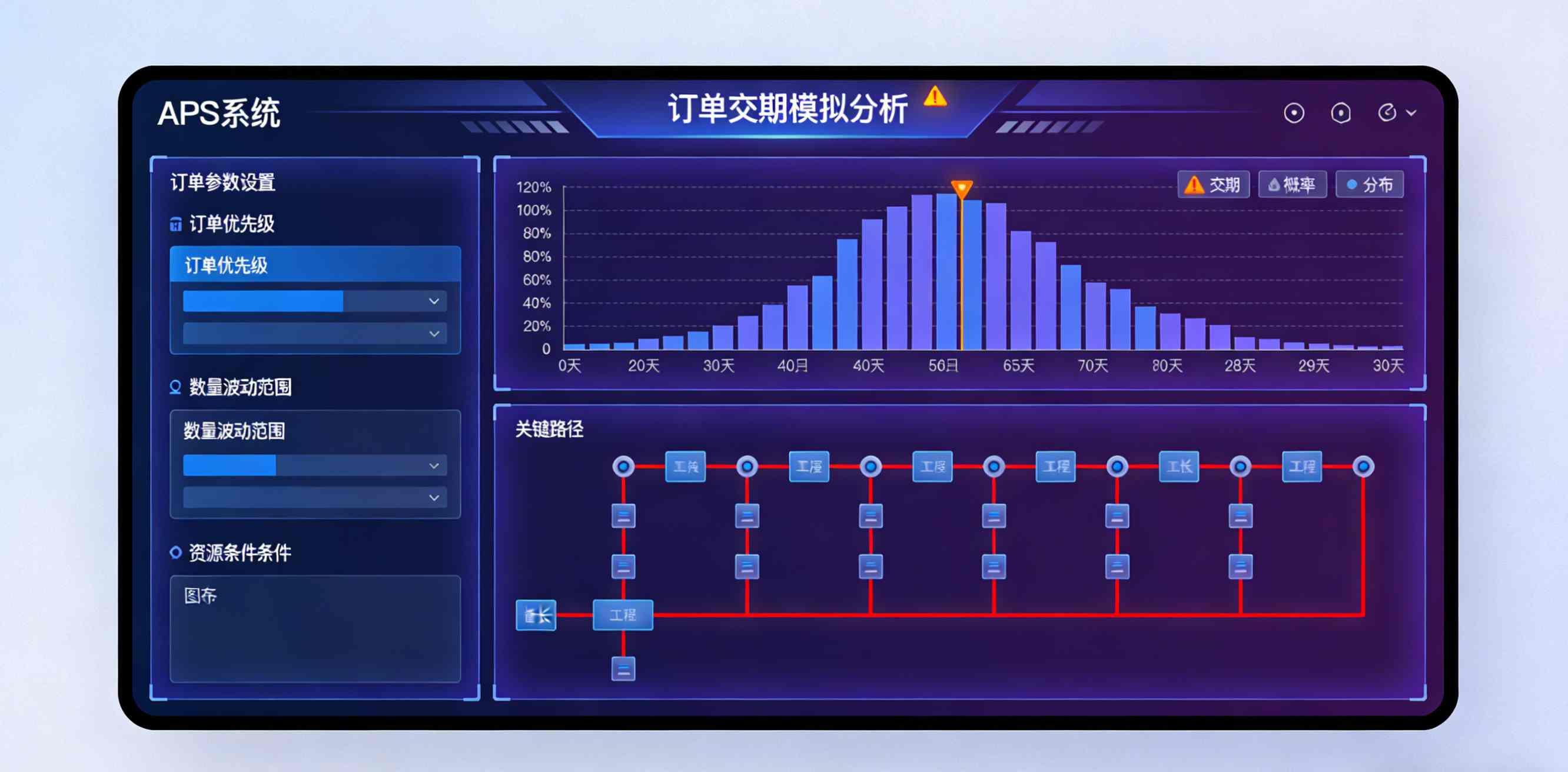
For a company to successfully implement an Advanced Planning and Scheduling (APS) system, it is not simply a matter of installing it and expecting it to work. The groundwork must be thoroughly laid beforehand so the system can truly deliver value.First, core data must be prepared meticulously. The Bill of Materials (BOM) for each product must be complete, with no missing component information; the production routing for each product and the time required for each process must be accurately recorded. Details such as the production capacity of workshop equipment, personnel skill sets, and production constraints—including equipment maintenance downtime and material supply lead times—must be individually clarified and verified for authenticity. Otherwise, the schedules generated by the system will fail to align with actual conditions.
Second, data channels between systems must be established. The APS does not operate in isolation; it must be seamlessly integrated with the existing ERP (Enterprise Resource Planning), MES (Manufacturing Execution System), and WMS (Warehouse Management System). This ensures that order information, inventory data, and production progress are synchronized in real time, eliminating "information silos" and enabling the APS to access comprehensive production data for scheduling.
Production processes must also follow standardized rules. For instance, the criteria for determining order priority, the procedures and time standards for mold/die changes or line changeovers, and the basis for verifying material availability must all be predefined. These rules give the APS a consistent execution framework and help ensure that subsequent production adheres to the plan.
Furthermore, the enterprise must have a basic digital environment—stable network connectivity and secure data storage are indispensable to prevent data transmission interruptions or loss during system operation. Finally, the operations and maintenance teams must be prepared in advance. Relevant personnel should understand the fundamental business logic and system operation methods so they can support system implementation, configure parameters, and perform routine maintenance, enabling the Advanced Planning and Scheduling (APS) system to function reliably over the long term.