

 Products & Services




 400 676 5650
In December 2021, the Ministry of Industry and Information Technology released the “14th Five-Year” Smart Manufacturing Development Plan, proposing that by 2025 the technical level of industrial software for smart manufacturing equipment will be significantly improved, with a market satisfaction rate exceeding 70%. With the innovation and change of lean production, the trend of platform-based industrial software is becoming more prominent, and the pace of smart manufacturing in factories is accelerating. Lean production is indispensable, and industrial software guided by the lean production concept of “eliminating all unnecessary waste in the process chain” will benefit more factories.
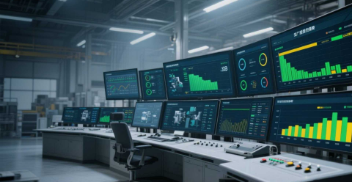
Just like people, in a market environment of survival of the fittest, new equipment with high technological content floods into factories, and the maintenance force gradually falls behind. The passivity and lag of maintenance make lean production ineffective. To reduce equipment failure rates and solve the problem fundamentally, the only correct solution is to change the traditional equipment maintenance mode, shifting from passive post-repair to proactive preventive inspection, and nipping faults in the bud. Alps System Integration (Dalian) Co., Ltd. (abbreviated as “ALSI”), committed to providing lean production solutions for manufacturing factories, addresses the shortcomings in equipment operation status, control, decision-making, and maintenance. It promotes the deep integration of advanced technology, ALSI intelligent algorithms, and lean production. By realizing automation, paperless, and efficient management of the maintenance process, it effectively reduces equipment failure rates and significantly lowers equipment maintenance costs. Before using the ALSI Smart Maintenance System, many factories had problems such as untimely reporting of major equipment hazards, incomplete elimination records, incomplete accident/fault records, no equipment activation records, no online maintenance records, and no spare parts replacement records, making it impossible to achieve fine-grained equipment management and full life-cycle management. After the ALSI Smart Maintenance System was launched, by submitting spare parts plans and purchase requests in production management systems such as ERP, SAP, MES, etc., after the spare parts arrive in the warehouse, the procurement personnel execute the spare parts material outbound process in the production management system according to actual maintenance needs. The material outbound slip is automatically converted into a secondary entry application form of the maintenance system through the interface between the production management system and the ALSI Smart Maintenance System. All management processes for accidents or faults that may occur during equipment use are streamlined, and scrapping applications are made for equipment with no use value. Thus, the history and full life-cycle management of a single device are completed, marching towards zero inventory, zero waste, and zero defects.

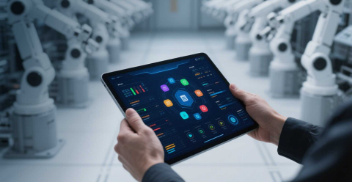
Today, when lean production is fully promoted in manufacturing factories, the ALSI Smart Maintenance System, by tracking equipment asset changes, maintenance records, and other equipment file information, easily creates, organizes, and efficiently collaborates to track maintenance work orders. Mobile applications empower maintenance engineers, and intelligent driving enables the right person to do the right thing in a short time. With the spirit of lean production, it fully plays the role of equipment “owner”, continuously improving and striving for perfection. This is the sustainable development path for manufacturing factories to adapt to lean production.