

 Products & Services





 400 676 5650
New Manufacturing Operations Models in the VUCA Era: Say Goodbye to "Rigid" Plans, How Can Manufacturing Embrace "Flexible" Change?

In our previous discussion, we delved into the core value of planning as the central strategic blueprint guiding a company's future direction and confirmed its indispensable role in driving daily operations. Planning is not only the baton coordinating various business activities but also a powerful engine leading the company's comprehensive growth. First and foremost, through meticulous planning, companies can more accurately capture market trends, expand product sales channels and market territory. Next, planning helps companies strengthen financial control, rigorously manage cost expenditures, and lay a solid foundation for stable progress.
Furthermore, the formulation and implementation of planning play a crucial role in enhancing management efficiency and establishing a positive corporate image. It not only stimulates employee potential, boosting work enthusiasm and innovation awareness, but also refines production processes and elevates overall management standards. Most importantly, effective implementation of planning accelerates the product cycle, reduces circulation time, thereby optimizing capital utilization, and providing powerful energy for the company's long-term prosperity and stable growth.
Based on the above analysis, this issue will continue to delve into the formulation and execution strategies of plan management, aiming to provide more comprehensive and in-depth guidance for the future development of enterprises, and jointly explore the mysteries and practices of plan management.
I. Is Now the Right Time for Digital Upgrade of Plan Management?
In the current dynamic business environment, companies are facing an urgent need for digital transformation of plan management. So, is now the opportune moment to advance the digital cost of plan management? In an environment where change has become the norm, policies promote digital transformation, regions push for "industry clusters" and "strengthening chains to expand markets", and the prophecy that "products will be replaced by scenarios, and industries will be covered by ecosystems" is gradually becoming reality. The digital transformation of plan management is a product of the times.
Digital upgrade of plan management, as a concept keeping pace with the times, has attracted the attention of many enterprises in recent years. Enterprises are gradually recognizing the strategic value of digital transformation of plan management and have begun to put it into practice. With technological and industry development, computing power has now met the standards, data foundations are increasingly complete, and manufacturing has basically completed the popularization of understanding of digital upgrade of plan management. Enterprises' needs and value expectations for digital upgrade of plan management are also becoming increasingly clear. Leading manufacturers' digital plan management products are basically complete, capable of meeting the rapidly growing market demand.
Currently, the market for digital upgrade of plan management is on the verge of an explosion in demand.
Some enterprises may still be waiting for a perfect starting point, expecting to launch the digital transformation of plan management only when all conditions are ripe. However, plan management acts on operational goals and has a unique characteristic: by focusing on operational goals and统筹全局 (coordinating the overall situation) to identify and overcome constraints that hinder achieving operational goals, it enables targeted continuous improvement. This leads to a profound thought: Should we wait to grow before acting, or act in order to grow?
Therefore, we have reason to believe that:
Now is the best time to advance the digital upgrade of plan management.
II. How to Carry Out Digital Upgrade of Plan Management?
In an environment where "uncertainty" is the norm, enterprises need to digitally upgrade plan management, and with technological development and the impetus of the times, now is the best time.
How to upgrade requires enterprises to have the determination to build a plan-centered collaborative production model, clarify the goals of transformation and upgrade, and carry out transformation through overall planning and phased implementation.
Building and optimizing a production plan management system is a dynamically evolving journey. It starts with initial launch and gradually deepens its functions and impact through continuous refinement and accumulation. This process aims to gradually precisionize basic data, strengthen system effectiveness, and then gradually transform the company's planning thinking mode and workflow, reshape the interaction between employees and production plans, until a new production management philosophy permeates the company's bloodline.
Enterprises should adhere to the strategic principle of "from simple to complex, return to simple, continuous improvement". The specific steps are as follows:
Establish Vision: Treat production plan management as the core of the company's strategy. Starting from top management, clearly define the enterprise's development blueprint, set long-term vision goals, and focus on solving current urgent operational problems, ensuring every decision and action serves this overall situation.
Select the Best: Among numerous technology platforms, select mature solutions deeply rooted in the manufacturing field. At the same time, the choice of partners is crucial; they must be local teams who understand factory operations well and can provide long-term, close services, ensuring a stable and reliable digital transformation path.
Step by Step: Accept that digital transformation is a phased, gradually deepening process. The initial stage should start with simple tasks, gradually introduce new technologies, and solve increasingly complex operational challenges iteratively. This is not only an expansion of technology application but also an innovation in thinking modes and work habits.
Simplify Complexity: As the system is deeply applied, originally cumbersome business processes become standardized and normalized. Production planning and execution processes become clearer and more efficient, and internal management becomes more orderly and effective.
Continuous Optimization: Digital transformation is an endless journey. Enterprises need to cultivate a culture of continuous improvement, encourage the mindset of "accumulating day by day, continuous progress", gather every small improvement into powerful change momentum, continuously enhance corporate competitiveness, and maintain the vitality and dynamism of the enterprise.
III. Entering ALSI Intelligent Manufacturing, HuiPai APS Supply Chain Resource Planning Platform
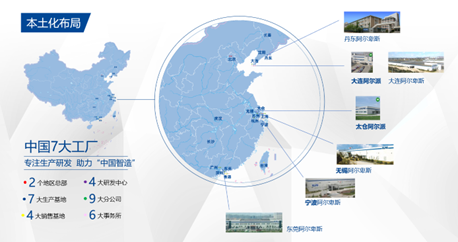
Alps System Integration (Dalian) Co., Ltd. (hereinafter referred to as ALSI) was established in 2006 and belongs to the international Alps Alpine Group (founded in 1948). Adhering to the value concept that technology can only exert its "field power" when utilized on the spot, we combine IT technology, lean management, advanced digital technology, and best practices. Supported by the group's 22 factories worldwide and 7 factories in China, we have developed a low-cost, low-threshold "small, fast, light, and accurate" lean digital solution, committed to providing excellent services to small and medium-sized manufacturing enterprises.
HuiPai APS Supply Chain Resource Planning Platform
A "super brain" that better understands the actual situation of the factory.
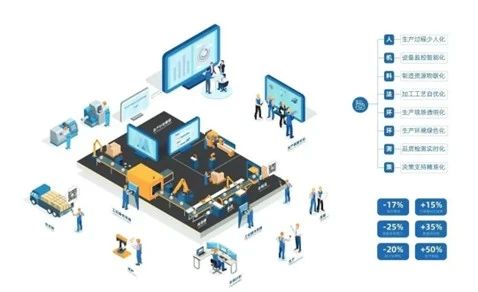
Combining advanced Japanese technology and quality with the actual needs of local Chinese enterprises, it performs fine management of factory sales, supply chain, planning, scheduling, capacity, personnel, materials, etc., efficiently solves resource allocation optimization on the production site, endows enterprises with global optimization decision-making capabilities for production, moving from inefficient operation to efficient collaboration!
1. DPS Advanced Production Scheduling System
Based on the actual production environment and combined with the enterprise's production strategy, supplemented by intuitive displays such as Gantt charts, it designs the optimal production plan that best fits the workshop's capabilities, easily solving problems such as difficult order insertion, difficult execution, and low equipment utilization.
2. SCP Supply Collaboration Planning System
Considering constraints within a single factory, combined with dynamic MRP algorithm, it formulates medium and long-term production plans with granularity down to week/day, efficiently allocates resources, shortens order delivery time, delivers goods and services to customers, reduces inventory costs, and improves customer satisfaction.
3. SOP Sales and Operations Planning System
Supports multi-factory model, formulates integrated plans balancing demand, supply chain, and financial plans to balance factors such as "uncertainty of customer demand and constraints of supply", provides optimal suggestions and intelligent assessments, and seeks a balance between maximum profit and supply capability.
IV. Conclusion
In summary, in the current business environment, enterprises are facing an urgent need to enhance the digital level of plan management. The industry widely agrees that the digital innovation of the plan management system is a key step driving manufacturing forward and has high expectations for its positive effects. Currently, industry pioneers have successfully developed efficient digital tools for plan management, effectively responding to the rapidly growing demand for such solutions. As the digital wave accelerates, the digital transformation of plan management will become the axis force for manufacturing innovation and upgrade. Looking ahead, many manufacturing enterprises will start with the digital transformation of plan management, gradually build a collaborative production ecosystem centered on production plans, further extend to every link of the supply chain, achieve seamless digital connection, ultimately promote the popularization of intelligent manufacturing and a leap in social production efficiency, and jointly enter a new era of industrial manufacturing.