400 676 5650
Time:2026-03-04
In discrete manufacturing, what exactly is the Advanced Planning and Scheduling (APS) system calculating?
In reality, all APS algorithms are attempting to solve the same core challenge:
**How to achieve the lowest total production cost and highest efficiency within the constraints of countless real-world limitations.**
This is far more difficult than it seems. On one hand, discrete manufacturing is a classic "combinatorial explosion" scenario. With numerous processes, diverse process routes, and variables such as equipment capability, speed, and precision, the computational complexity grows exponentially. For a simple example: processing 10 orders on 5 machines yields 10³² possible scheduling schemes. When orders increase to 100 and machines to 20, the number of possible schemes can even exceed the total number of atoms in the universe.
On the other hand, the feasible solution space is extremely sparse. Hard constraints such as material availability, mold lifespan, worker skills, and process routes (skip sequences, parallel operations) mean that, from an algorithmic perspective, the number of feasible solutions satisfying all constraints is extremely limited. Pursuing the lowest changeover cost may cause delivery dates to fail across the board; pursuing the lowest inventory may silently introduce the risk of material shortages.
**Therefore, the primary task of APS algorithms is not "optimization," but "elimination"—**
**By rapidly eliminating infeasible solutions through constraint propagation, then using intelligent search to quickly find near-optimal solutions among the remaining feasible ones, and recalculating swiftly when changes occur to maintain optimal plans. This is the true value of APS: not only possessing planning capability, but also being able to respond to changes in real time and reschedule quickly.**
**Underlying Algorithm Mechanisms and Mathematical Models**
Generally, APS employs a three-tier architecture to address enterprise planning across different time horizons and decision granularities. Each tier targets specific core problems with distinct algorithm combinations, supporting full-chain optimization from strategic planning to execution scheduling.
**1. Strategic Layer — "Deciding What to Do" (S&OP: Sales and Operations Planning)**
Core Objective: Essentially, S&OP is a multi-objective complex trade-off problem: maximizing both sales revenue and profit; avoiding capacity idleness while preventing over-selling; preventing material shortages while avoiding inventory pile-up. It answers the question: Under capacity and material constraints, what products should be produced, and in what quantities, to maximize profit?
**Core Algorithms: Linear Programming (LP) and Mixed-Integer Programming (MIP)**
Underlying Logic: S&OP handles mid-to-long-term plans with coarse data granularity and high uncertainty. The algorithm parameterizes all order demand, capacity, inventory, etc., constructs large-scale linear equations, and solves for the product mix and quantities that maximize profit while satisfying all constraints. MIP can also handle binary investment decisions, such as whether to activate a production line or expand a factory.
**Supporting Technology: Strategic Simulation**
Strategic simulation can run various "what-if" scenarios (e.g., demand increase by 10%, a supplier outage) and evaluate outputs from multiple dimensions, providing comprehensive support for decision-makers.
Core Value: Transform enterprises from blind "sales orientation" to rational "profit orientation," locking in a risk-controlled "battle plan" before formal production begins.
**2. Tactical Layer — "Deciding What is Needed" (SCP: Supply Collaboration Planning)**
Core Problem: Discrete manufacturing's biggest fear is "material shortages." SCP addresses: How to break down the master plan into detailed requirements for materials, components, and outsourced parts, and how, within a multi-factory, multi-supplier collaborative network, to achieve precise supply-demand matching at the lowest total cost and shortest response time.
**Core Algorithms: Constraint Programming (CP) and Advanced MRP Logic**
Algorithm Implementation: SCP focuses on mid-term planning and serves as the hub connecting strategy to execution. Its core is multi-level supply-demand balancing and network optimization. Dynamic MRP simultaneously considers multiple constraints such as material availability, supplier capacity, and internal factory capacity, precisely calculating what materials are needed, in what quantities, and when.
Additionally, network flow models dynamically calculate "how much inventory to place in which warehouse and how to transport it," minimizing the sum of inventory holding costs, transportation costs, and delay costs while meeting service levels.
**Core Advantage:** Reduce stagnant inventory. Ensure materials arrive at the workshop only "when needed," enabling true JIT supply coordination and significantly reducing the bullwhip effect in the supply chain.
**3. Execution Layer — "Deciding How to Do It" (DPS: Detailed Production Scheduling)**
Core Problem: Scheduling in discrete manufacturing is an NP-hard problem. DPS mainly addresses: How to compute, within minutes, which operation, on which machine, with which mold, operated by which worker, with exact start and end times, to maximize resource utilization.
**Core Architecture: Intelligent Search Framework Based on Constraint Propagation + Dynamic Rescheduling Mechanism**
Constraint Modeling: Formalize all real-world constraints (equipment calendars, process sequences, material availability, tooling exclusivity, worker skills) into a constraint network that algorithms can process.
**Propagation and Pruning:** When an operation is assigned a resource or time, the system immediately "propagates" the impact of this decision through the constraint network, preemptively eliminating potential conflicts for other operations and drastically reducing the search space.
**Heuristic Search:**
Priority rules: e.g., "Shortest Processing Time First," "Critical Operation First," used to quickly generate an initial feasible solution.
Metaheuristic algorithms: e.g., Genetic Algorithms (GA), Tabu Search (TS), Simulated Annealing (SA), used to search for a globally near-optimal solution within the feasible solution space.
**Dynamic Rescheduling Mechanism:**
Event-driven: Events such as order insertions, machine breakdowns, or material delays automatically trigger rescheduling.
Local repair strategies: Instead of regenerating the plan from scratch, identify the affected "region" and perform local re-optimization, ensuring plan stability while minimizing global changes.
**Core Value:** Generate daily/shift production schedules that directly guide shop-floor operations, visually presented through Gantt charts, achieving maximum reduction in manufacturing cycle time, minimal work-in-process inventory, and significantly improved on-time delivery rates.
**Integration of APS Algorithms with AI**
From the 1960s to the present, APS algorithms have undergone four generations of evolution.
From first-generation simple heuristic rules, to second-generation introduction of operations research, to third-generation integration of metaheuristic algorithms—this is essentially the process of industrial experience digitization. Today, with the maturity of AI Agents and Large Language Models (LLMs), algorithms are no longer rigid logic. Through millions of simulation-based trial-and-error iterations, AI will drive APS toward intelligence and autonomy in multiple aspects.
**1. Intelligent Scheduling and Dynamic Optimization**
Predictive Maintenance: No longer wait for breakdowns to repair. By analyzing equipment sensor data, AI can predict failure probabilities and proactively schedule maintenance windows, avoiding unplanned downtime.
Real-Time Dynamic Optimization: Based on deep learning, AI models can instantly recommend the optimal rescheduling solution based on real-time data changes (material delays, urgent orders) and support scientific decision-making through simulation of different scenarios.
**2. More Accurate Demand Sensing and Forecasting**
Leverage machine learning to analyze historical sales data, market trends, and even macroeconomic indicators to generate more accurate dynamic demand forecasts, making the APS input source more reliable.
**3. More Precise Delivery Date Calculation**
AI builds end-to-end algorithm models covering "materials – capacity – work-in-progress." When receiving an order inquiry, it simulates the entire process from material procurement to production scheduling to completion and shipment in real time, providing a highly confident committed delivery date.
In the past, "Made in China" relied on scale and hard work. But as discrete manufacturing moves upmarket, efficiency no longer comes from scale—it comes from computing power. Whoever can calculate the optimal path faster will win the final ticket in the brutal game of "global supply chain restructuring."
On this battlefield, experience is already twilight, while the dawn of algorithms is just rising.
- Manufacturing DX
 Manufacturing DXBuilt on real manufacturing experience, our smart factory solutions help improve operations and deliver lasting value.
 Products & ServicesCustomer Stories
 HUIPAI APSDriven by on-site needs and business-centric, we precisely address the production-sales coordination and delivery challenges faced by manufacturing enterprises!
 S&OPIntegrate the entire process of demand, supply, production, and delivery to achieve supply-demand balance, capacity optimization, and agile decision-making.
 SCPConnect the demand, inventory, supply, and production collaboration links to achieve complete kit assurance, inventory optimization, and supply resilience.
 DPSDynamically coordinate human, machine, and material resources to quickly respond to order changes, improving capacity utilization and on-time delivery rates.
 - Automotive ElectronicsAutomotive ElectronicsFrom software development to testing services and custom solutions, we help customers accelerate innovation with proven automotive engineering expertise.Products & ServicesFeatured Solutions
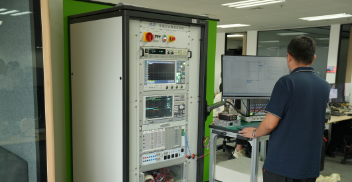 Automotive Testing ServicesCovering 4 levels and 8 dimensions, it comprehensively perfects the testing system and process to ensure testing quality.
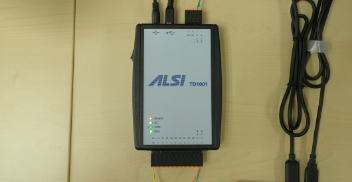 Vehicle Network Test KitRegarding acceptance criteria, reduce rework, allowing OEMs to accept with greater confidence and suppliers to submit with greater peace of mind.
 ECU HIL Test PadUniversal Vehicle Body Electronic Environment Simulation System, versatile for multiple uses, rapid screening, ensuring "zero" defects in products.
 CAN Fuzz Testing AppEfficient, precise, and comprehensive. Your on-the-go vehicle communication security testing expert.
 - Use Cases
- Customer Stories
- CareersCareersWe invest in our people through structured development, mentoring, and a collaborative culture, creating clear career paths and growth opportunities for every employee.Job Opportunities
- About ALSIAbout ALSILeveraging the experience and expertise of the Alps Alpine Group, we partner with customers to drive continuous improvement and long-term growth.