

 Products & Services








 400 676 5650
For the industrial manufacturing sector, a continuously optimized production plan is key to sustained growth and success. A well-crafted production plan relies on precise coordination of personnel, equipment, and processes, as well as a strong emphasis on production planning and efficiency management.
Personnel are the core resource of manufacturing enterprises; their skills and capabilities directly impact production efficiency and product quality. Therefore, before peak seasons arrive, companies should develop detailed recruitment plans to ensure a talent pool for key positions. Meanwhile, an efficient scheduling system is crucial for maximizing personnel utilization. By leveraging intelligent scheduling software that accounts for employees' skill sets and work efficiency, companies can achieve precise task-personnel matching, reduce labor waste, and boost overall productivity.
With technological advancements, automated and intelligent equipment is increasingly prevalent in manufacturing. Companies should actively adopt advanced machinery, optimize production processes, minimize manual intervention, and enhance both production efficiency and product consistency. Furthermore, fine-tuning is necessary for specific products and processes to ensure equipment performance is fully realized and process parameters reach optimal levels.
During the initial rollout of new products or production lines, efficiency is often low due to factors such as employee unfamiliarity and unstable equipment performance. This phase is known as the "ramp-up period." Companies need to scientifically predict and manage this period to ensure a smooth transition to an efficient and stable state. By collecting and analyzing production data, they can build ramp-up prediction models to support production planning. Additionally, strengthening employee training and equipment commissioning helps shorten the ramp-up time and improve productivity.
In terms of efficiency management, companies should focus on improving employee productivity. By establishing employee efficiency profiles that document each worker's efficiency and learning curves, they can provide a scientific basis for scheduling and task assignment. Moreover, through training and technical guidance, they can enhance employees' skill levels and operational proficiency, further boosting production efficiency.
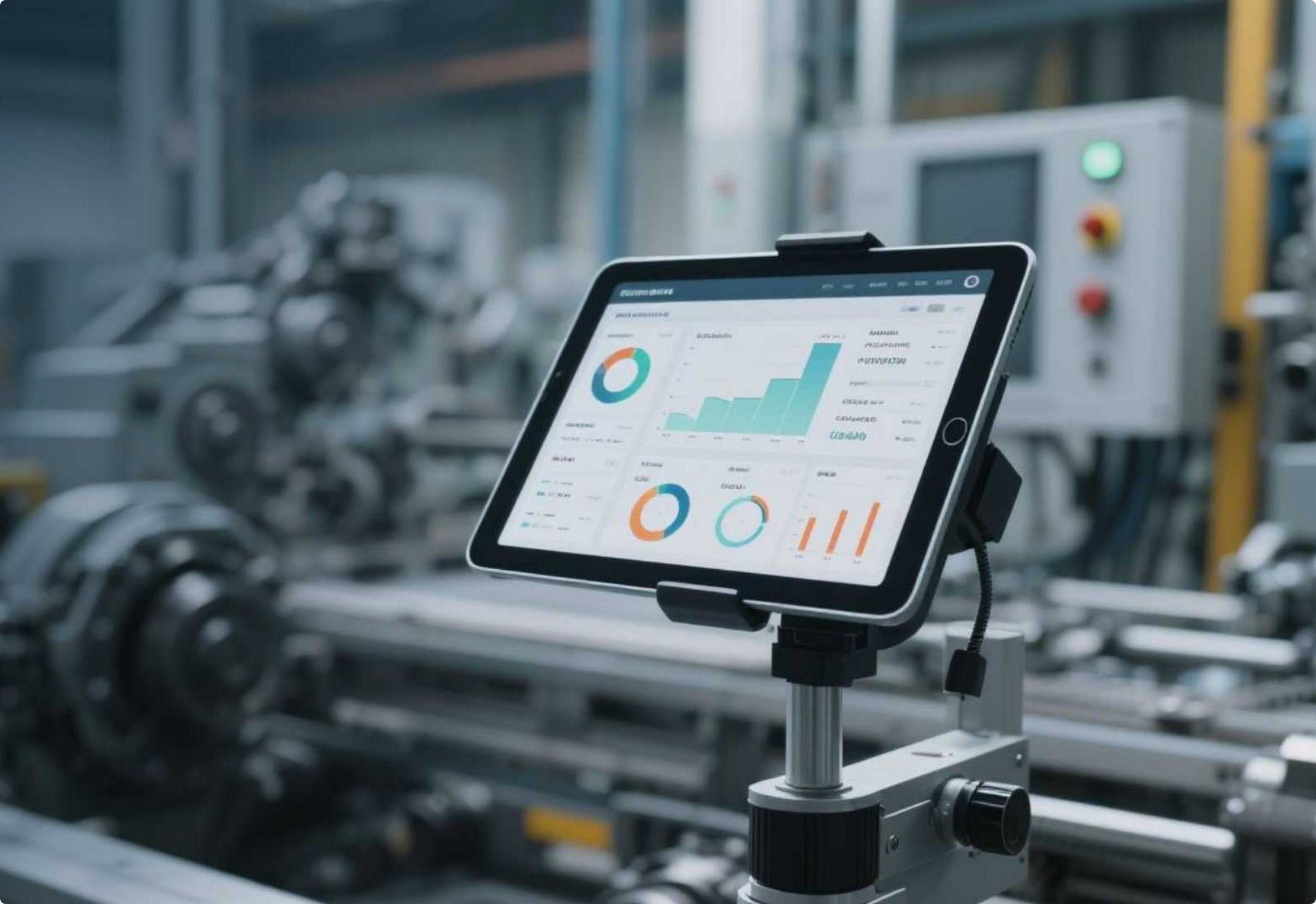
The production plan is the "brain" of manufacturing; its accuracy and flexibility directly affect production efficiency and customer satisfaction. An excellent APS (Advanced Planning and Scheduling) system based on big data and artificial intelligence can analyze historical data, predict future production trends, and formulate reasonable plans. At the same time, by incorporating real-time production data, it can dynamically adjust the plan to ensure efficient operations.
Improving manufacturing efficiency is a systematic endeavor that requires companies to invest efforts in personnel management, equipment and process optimization, and production planning and efficiency management. The Dtuy APS Supply Chain Resource Planning Platform, built on the real-world needs of a global manufacturing group with 70 years of experience, is a native self-developed system. By combining Japanese lean thinking with IT technology and precisely coordinating the relationships among people, machines, and processes, it strengthens production planning and efficiency management. This enables companies to stand out in fierce market competition and achieve sustainable development.