

 Products & Services




 400 676 5650
2. What is Lean Digitalization
With the rapid development of digital technology and the continuous transformation of the manufacturing industry, lean digitalization has become a key force in driving the upgrade of manufacturing toward smart factories. So, what is lean digitalization? And how does it combine the core principles of lean production with digital technology? First, let’s explore the meaning and value of "lean" and "digitalization" separately.
(I) What is Lean
Lean production, originating from the Toyota Production System, is a production philosophy and management method that seeks to maximize the value of production activities while minimizing waste. It emphasizes transforming system structures, personnel organization, operational methods, and market supply-demand dynamics to enable production systems to swiftly adapt to changing customer needs. It eliminates all non-value-adding elements in the production process, ultimately achieving optimal results across all aspects of production, including market supply and sales.
(II) What is Digitalization
Digitalization is the process of converting information into digital form (i.e., computer-readable binary format). In manufacturing, digital technologies encompass smart manufacturing, the Industrial Internet of Things (IIoT), big data, cloud computing, and more. By collecting, analyzing, and utilizing data from production processes, digitalization makes production processes visible, predictable, and controllable.
(III) Why Combine to Form a Lean Digitalization System
Combining lean production with digital technology to create a lean digitalization system is an inevitable trend in the transformation and upgrading of manufacturing. Although digital transformation brings numerous opportunities, it also faces multiple challenges. First, it requires companies to have strong technical capabilities and talent reserves, which is a significant hurdle for many small and medium-sized enterprises. Second, digital transformation demands breaking traditional management and thinking patterns, often incurring substantial costs and sacrifices. Finally, it calls for high flexibility and adaptability to keep pace with rapidly changing market demands.
Lean production is precisely an effective means to address these challenges. It focuses on reducing costs and improving quality by eliminating waste and increasing efficiency, which aligns closely with the goals of digital transformation. Moreover, lean production emphasizes continuous improvement and teamwork, helping enterprises build more flexible and efficient production systems that better adapt to the challenges of digital transformation.
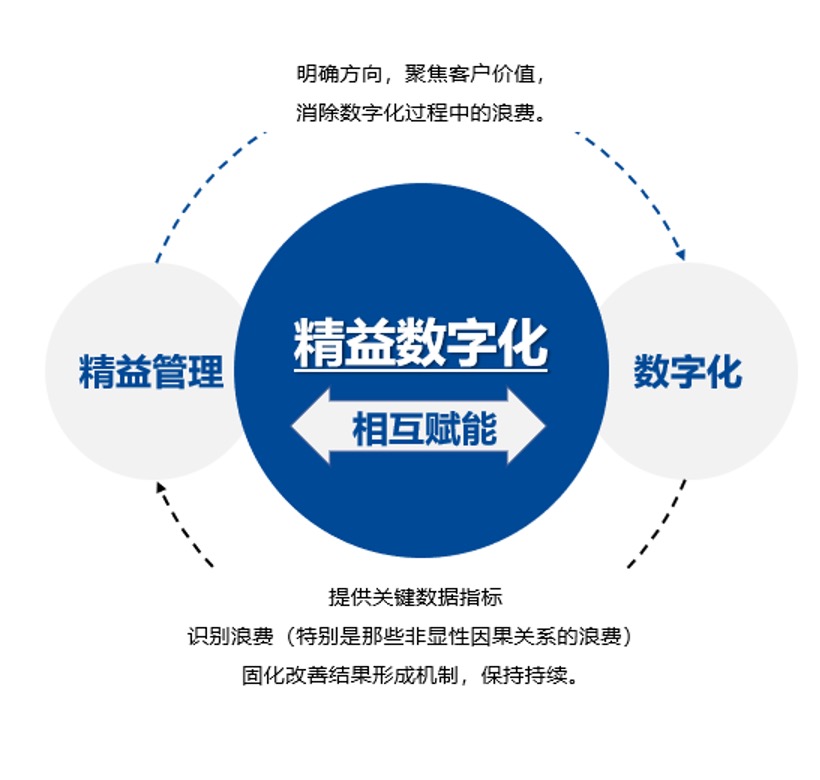
Therefore, combining lean production with digital technology to form a lean digitalization system not only solves the difficulties and challenges in digital transformation but also brings greater innovation and change to manufacturing. Specifically, a lean digitalization system can optimize the following aspects:
1. Improve production efficiency: Digital technology enables visualization and predictability of production processes, allowing timely detection and resolution of issues, thereby boosting efficiency.
2. Reduce production costs: By eliminating waste, increasing equipment utilization, and lowering inventory costs, production costs can be reduced.
3. Enhance product quality: Through total quality management and continuous improvement, product quality and customer satisfaction can be elevated.
4. Strengthen enterprise competitiveness: With a lean digitalization system, companies can respond more flexibly to market changes, improving responsiveness and competitiveness.
(IV) How to Realize the Original Intention of Manufacturing Digitalization
To realize the original intention of manufacturing digitalization, we must first ask ourselves: what is our original intention? The original intention of manufacturing digitalization is to achieve more efficient and intelligent production methods to cope with increasingly complex market demands and fierce competition. This means leveraging digital technology and information tools to enhance the visualization, automation, and intelligence of production processes, thereby improving production efficiency, reducing costs, and ultimately delivering higher-quality products and services. Digital transformation is not just a technological upgrade but a comprehensive overhaul of corporate management models and business philosophies, shaping a flexible, efficient, and innovative future for manufacturing.
The key lies in integrating digital transformation with core business and strategy while adhering to and promoting lean production principles. Specifically, companies can start from the following aspects:
1. Lean thinking guiding digital transformation: Integrate lean thinking throughout the entire digital transformation process, from production process optimization to management innovation, making lean principles the guiding force.
2. Establish a digital platform: Build a digital platform to integrate data and information from production processes, enabling information-based and visualized management, providing digital support for lean management.
3. Data-driven decision-making: Use big data analytics and artificial intelligence to conduct in-depth analysis of production data, providing scientific basis for decision-making, achieving refinement and intelligence in lean management.
4. Intelligent production equipment: Introduce smart manufacturing equipment and tools to automate and intelligentize production processes, improving efficiency and quality.
5. Continuous improvement and innovation: Foster a culture of continuous improvement, encouraging employee participation in problem-solving and innovative enhancements, enabling ongoing optimization and innovation in lean management.
6. Digital talent cultivation: Strengthen the training and recruitment of digital talent, enhance employees' digital skills and awareness, providing talent support for digital transformation.
7. Supply chain collaboration: Establish close partnerships with suppliers and partners to achieve digital collaboration across the supply chain, jointly driving the digital transformation of the entire industry chain.
(V) Return to Lean Management and Develop a Lean Digitalization System
The development of a lean digitalization system relies heavily on lean management. Enterprises need to return to lean management, adopting lean production principles to reduce waste and improve efficiency through automation and other means. In this process, the refined and efficient thinking advocated by lean management will become a key guide for digital transformation. We believe that developing a lean digitalization system is the future trend. This means integrating lean principles into digital systems, using lean thinking to guide the design and application of digital systems, while empowering lean management with digital systems to achieve the "three realities" (on-site, on-object, on-time) in lean management more efficiently and punctually, thereby reinforcing lean thinking in actual production environments. For enterprise digital transformation, it can be divided into the following three stages:
Phase 1: Point Deployment — Digitization of Single Business Lines, Solving Basic Production Bottlenecks
In this stage, enterprises focus on the digitalization of a single business line, concentrating resources to address bottlenecks in basic production processes. By selecting small, fast, and lightweight digital systems for pilot projects, they can quickly initiate digital transformation, identifying and solving production bottlenecks and issues during practical implementation. Such pilot projects avoid the risks and cost pressures of large-scale system investments, laying a solid foundation for subsequent digital transformation.
Phase 2: Line Connection — Digitization of Business Chains, Further Improving Production Efficiency
After successful pilot projects in the first phase, enterprises can gradually expand digitalization to the entire business chain. This involves extending digitalization to all related business links, enabling information sharing and collaboration among them, thereby enhancing production efficiency and overall operational effectiveness. In this phase, enterprises need to adopt advanced data analytics tools to deeply analyze the large volumes of data generated, identifying optimization opportunities and improvement points within the business chain, providing scientific guidance for digital transformation.
Phase 3: Area Building — Enterprise-Wide Lean Digitalization, Dynamic Cost Reduction and Efficiency Enhancement
After completing business chain digitalization, enterprises can further achieve comprehensive lean digitalization within the workshop, enabling dynamic cost reduction and efficiency improvement. This means integrating lean management concepts into digital systems, optimizing production processes and management models holistically to improve production efficiency and product quality. In this phase, enterprises need to build a team with both lean and digital skills to plan, design, implement, and maintain the workshop's lean digitalization system, achieving refined management and continuous improvement in production processes.
Through the orderly advancement of these three stages, enterprises can gradually complete digital transformation, comprehensively improve production efficiency and management levels, and achieve sustainable development and competitive advantage.