

 Products & Services





 400 676 5650
Previous Recap
At the 2022 China-Japan Summit on Intelligent Manufacturing and Industrial Internet Integration and Innovation Development, Tsuneharu Sone, Managing Director of ALSI (Dalian) Co., Ltd., delivered a keynote speech titled "ALPSALPINE Group's Smart Manufacturing Initiatives – What Are the New Manufacturing Forms Based on On-Site Perspectives," sharing the Group's smart manufacturing initiatives and success stories.
ALSI has compiled the speech content to discuss transformation and upgrading strategies for manufacturing enterprises with industry peers.
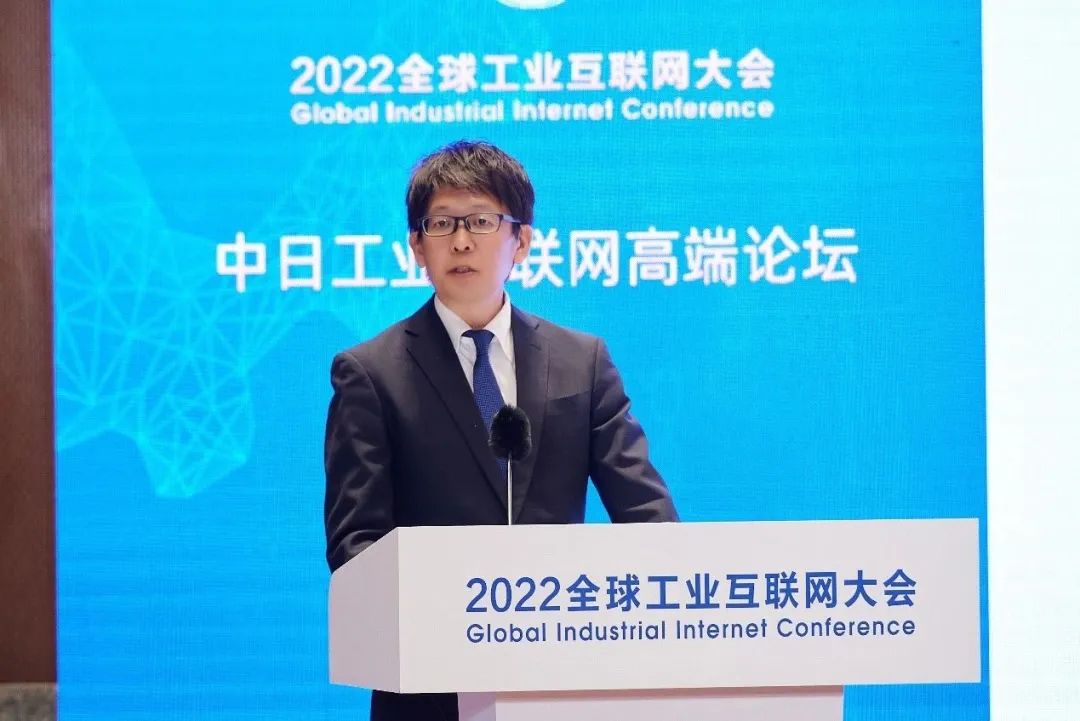
The following is an excerpt from Managing Director Tsuneharu Sone's speech.
Three Key Objectives First, Refining Smart Manufacturing Domains
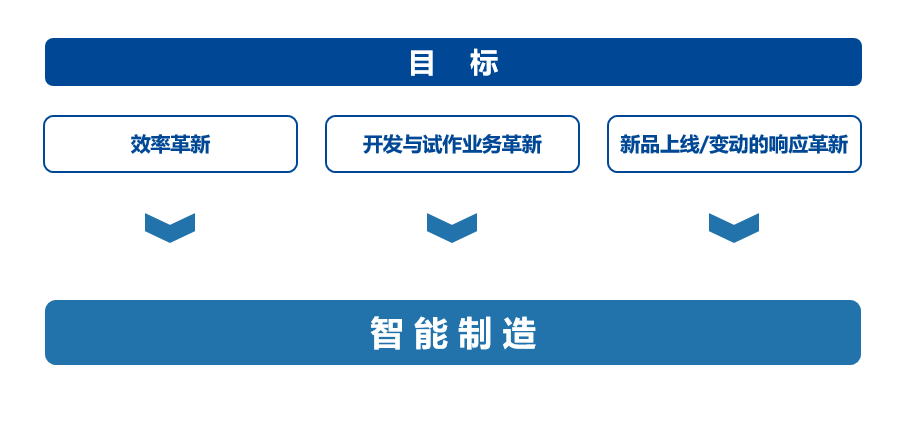
The concept of smart manufacturing is vast, and its definitions and objectives vary across companies based on their specific on-site conditions. The ALPSALPINE Group (hereinafter "the Group") focuses its smart manufacturing efforts on three key objectives: "Efficiency Innovation," "Development and Prototyping Innovation," and "Innovation to Meet New Product Launches and Production Changes."
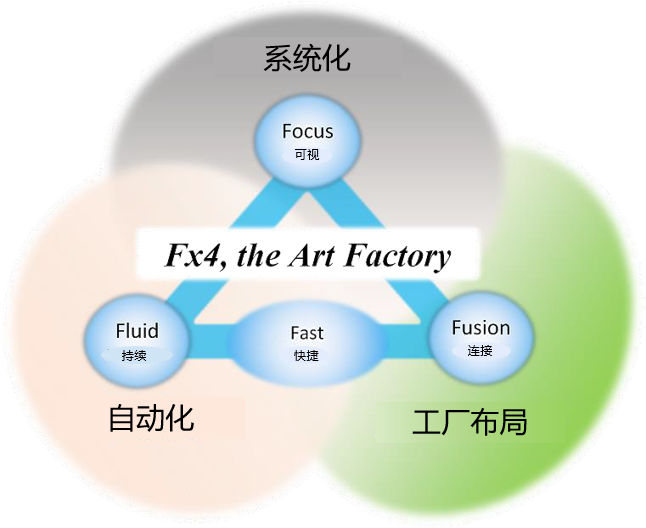
The Group selected the initials of four words—"Focus," "Fluid," "Fast," and "Fusion"—to establish the "Fx4, the Art Factory" concept. Three domains were defined:
· "Automation Domain": covering automation, robotics, and sensory inspection automation.
· "Factory Layout Domain": enabling flexible and efficient production line layouts and improving production workflows.
· "Information Systems Domain": focusing on visualization, digitalization, and AI-based analysis and prediction.
Based on the smart manufacturing objectives, the Group set activity themes within these three domains and implemented improvement initiatives.
Adhering to the "Focus on Customer Sites, Co-create Value with Customers" Philosophy
Deeply Engaging in Manufacturing Sites
First, let's discuss the background of why manufacturing companies need to develop "systems" today:
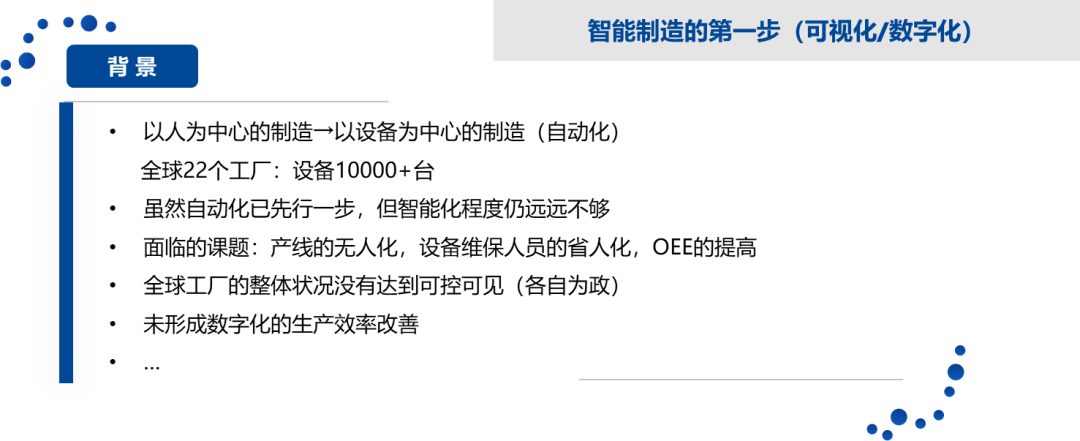
In recent years, to improve production efficiency and automate manufacturing sites that previously relied on manual labor, the Group has been purchasing and deploying robots and automated production lines. To date, the Group operates over 10,000 pieces of equipment globally. However, as unmanned production lines advance, the number of devices requiring maintenance and the number of maintenance personnel have increased. Thus, enhancing maintenance personnel efficiency, curbing the growth of maintenance staff, and improving Overall Equipment Effectiveness (OEE) have become the next urgent challenges for manufacturing companies, including the Group.
Regarding production efficiency improvement, globally, data does not serve as the bedrock for improvement initiatives. Instead, reliance on expert experience and intuition remains prevalent, far from a state of digital visibility and controllability. Hence, another existing challenge for manufacturing is elevating the overall global production level.
To address these challenges, the Group developed the ALFA system, comprising three functions: a data collection system, a maintenance management system, and a BI system.
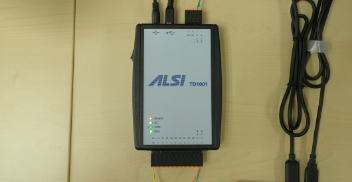
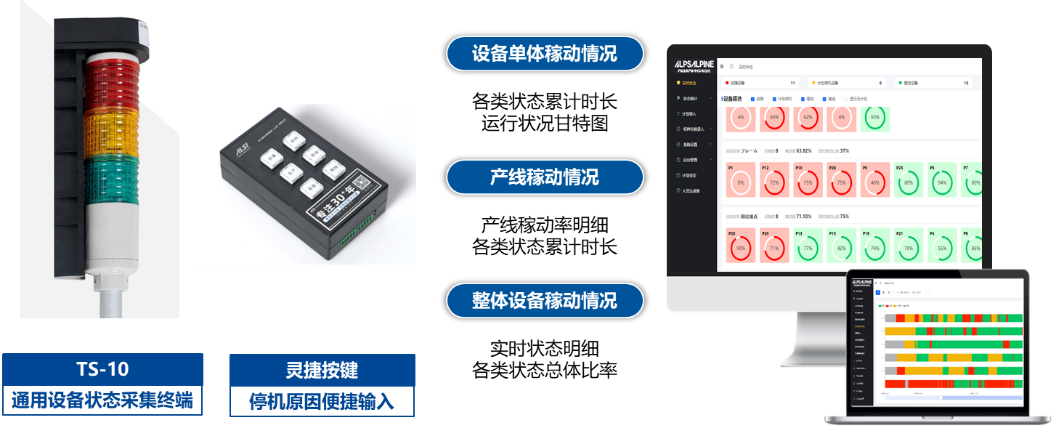
- Data Collection System: Specifically addresses data collection for older equipment lacking data output capabilities. The Group has both general-purpose and non-standard equipment, some of which have been in use for decades due to different deployment timelines. Naturally, the Group cannot replace all old equipment at once. Considering this, ALSI developed solutions such as using equipment's three-color lights for data collection to quickly connect older devices to the network.
2. Maintenance Management System: Guided by the philosophy of "digitizing maintenance operations that rely on personnel experience and knowledge to advance the digitization of competence-based tasks," the Group set the following goals and developed related functions:
① Balance the differences in handling content due to varying skill levels of maintenance personnel.
② Minimize losses caused by product model changes or handovers between maintenance staff.
③ Reduce training hours required for developing maintenance personnel.
④ Manage maintenance spare parts inventory efficiently.
⑤ Ensure stable equipment operation through analysis of maintenance content, causes, and issues.

3. BI System: Connects production data such as output, equipment status, and quality metrics, displaying correlations in real time. Additionally, by linking maintenance records with traceability data, it establishes inter-data relationships, monitors production changes in real time, and visualizes "hidden facts."
ALSI will continue sharing more lean insights and practical tips. Follow the official WeChat account [ALSI Smart Manufacturing] for the next installment of "ALPSALPINE Group's Smart Manufacturing Initiatives – What Are the New Manufacturing Forms Based on On-Site Perspectives."